malvernmugadzikwa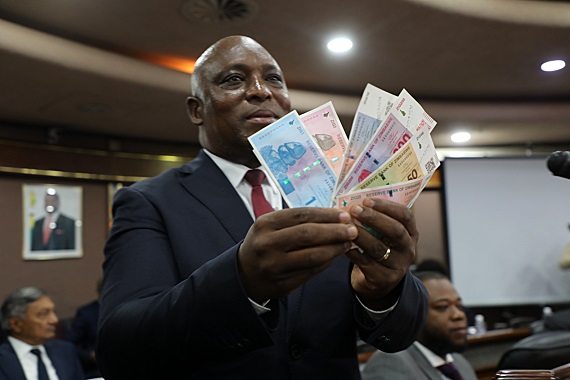
“Having a national currency is useful in dealing with emergencies. Zimbabwe and countries such as Ecuador, El Salvador, Montenegro and Kosovo have adopted the US dollar as their national currency. While adopting the US dollar has helped in the short-term to solve these countries’ economic problems, this has also spawned a set of other challenges in their economies. It is clear that for such countries to attain their long-term goals, they need a local currency.”
Dr Nyasha Kaseke
Correspondent
THE Reserve Bank of Zimbabwe (RBZ) recently introduced a new structured currency — Zimbabwe Gold (ZiG) — which saw the roll-out of different denominations last week in a bid to improve convenience to the public.
The currency is backed by gold, precious commodities and foreign currency reserves.
The question most people are asking is: Is ZiG the ideal currency for Zimbabwe?
From basic economics, an ideal currency is that which enjoys widespread usage both inside and outside its own national territory.
As such, there is need to promote the wide usage and acceptance of ZiG for it to be an ideal currency.
In Zimbabwe, the wide acceptance of ZiG in shops and the transport sector is paramount for it to be an ideal unit.
The major characteristic of an ideal currency is acceptability, regardless of whether it is gold-backed or not. It needs the trust and confidence of the market to consider it as a currency.
If it fails to garner widespread acceptability and usage, then it loses that character of being an ideal currency.
Motivations behind introduction of ZiG
From a macro-economic perspective, there were many motivations behind the introduction of ZiG, which we shall discuss below.
Own currency
One of the major motivations was for Zimbabwe to have its own currency that can be used as a medium of exchange, and/or store of value.
Previous attempts to introduce a local currency failed on these two major functions of money and ended up being used as tokens for change.
It has to be noted that the acceptance of a local currency as a medium of exchange is still limited given that the majority of transactions are being done in United States dollars.
Now the question that needs to be answered is whether ZiG will pass this test of being widely accepted as a medium of exchange or not.
Competitiveness
The new currency is envisaged to make the country competitive in terms of exports.
Zimbabwe’s neighbours, which all use their domestic currencies, are more competitive than the country.
It is basic economics for exporting countries to reduce prices of their products when exporting into the region and recover from local sales where they can sell at a higher price.
Without a stable domestic currency, exporting becomes less attractive and where it is done, it is to maintain capacity of production.
Insulation
In introducing ZiG, monetary authorities sought to insulate Zimbabwe’s economy from adversarial foreign policies and monetary measures. Having your own currency helps you maintain your sovereignty.
A country needs to have its own currency used as the local medium of exchange.
Relying on other countries’ currencies means you do not have control and cannot influence their supply, which can be problematic for the economy.
You also do not influence the value of those currencies, but only accept and use them.
On the political front, having your own currency makes it easier for a country to insulate itself from foreign measures that cause havoc in local markets.
Using another nation’s currency would in practice oblige the country’s citizens to submit to whatever oversight and regulation of their payments system the home country of the unit chose to undertake.
Development
It is easier to pursue national economic development objectives while using a domestic currency.
Having a national currency is useful in dealing with emergencies.
Zimbabwe and countries such as Ecuador, El Salvador, Montenegro and Kosovo have adopted the US dollar as their national currency.
While adopting the US dollar has helped in the short-term to solve these countries’ economic problems, this has also spawned a set of other challenges in their economies. It is clear that for such countries to attain their long-term goals, they need a local currency.
Also, in times of dire national emergency, for example, a financial crisis, or a war, governments have often resorted to currency inflation as a desperate but necessary means of raising revenue — the inflation tax.
They would not have that option if they did not have their own currency to manage.
The use of a foreign currency would expose the country’s citizens to the risk of having to pay an inflation tax to another country.
How Zimbabwe will benefit from ZiG
It is common knowledge that any country with a domestic currency has the power to steer its economy in ways that directly benefit its citizens. As such, the introduction of ZiG automatically symbolises the country’s sovereign aspirations that are asserted in its independence in managing its monetary matters.
There are both micro- and macro-economic benefits to Zimbabwe of having its own currency. In times of a crisis, the country may benefit through its ability to influence exchange rates by devaluation of the domestic currency, which would encourage exports and discourage imports.
Japan offers a very good lesson in this.
The country’s currency is lower in value compared to units of its peer developed nations, but it remains a major exporter.
In addition, having an ideal local currency would make it possible for business and government to plan with certainty.
This was being affected by having a volatile currency.
Headwinds
In its early stage of introduction, ZiG is exposed to a wider spectrum of challenges.
From the word go, the issue of confidence from the public is a major bone of contention.
Some members of the public have lost confidence in local currencies that have been introduced over the years.
Some even believe ZiG was introduced through slashing of zeros from the Zimbabwe dollar.
This is why the monetary authorities and the Government must work hard to make ZiG an ideal currency.
Long-term prospects
In the long term, for ZiG to succeed, the monetary authorities and Government should consider legislating the pricing of all commodities in one currency. This will automatically eliminate arbitrage opportunities. A typical example is Zambia, where all prices are in kwacha.
In the neighbouring country, like many other states, if you are holding foreign currency, you have to exchange it at the bank or bureau de change for the local unit.
By so doing, all foreign currency will flow into the normal system and will be available for use in the normal systems.
Exchanging currencies outside the normal financial setup will only feed the black market.
It is the role of the monetary authorities to create a specified import cover for the country.
This will stabilise the currency as the monetary authorities will have control of the volumes and pricing of commodities.
In the long term, the central bank should minimise the printing of money as this results in too much money in the economy chasing too few goods. This has a tendency to increase prices; it is inflationary.
The infrastructure expansion projects in the form of dam and road construction should be budgeted for properly or should be funded through long-term securities that do not interfere with the supply of the local currency.
By so doing, we do not expose the local unit to unnecessary pressure.
Dr Nyasha Kaseke is an economist, economic researcher and adviser with interests in competitiveness, agriculture sector value chains and development.



 Online Reporter