admin
admin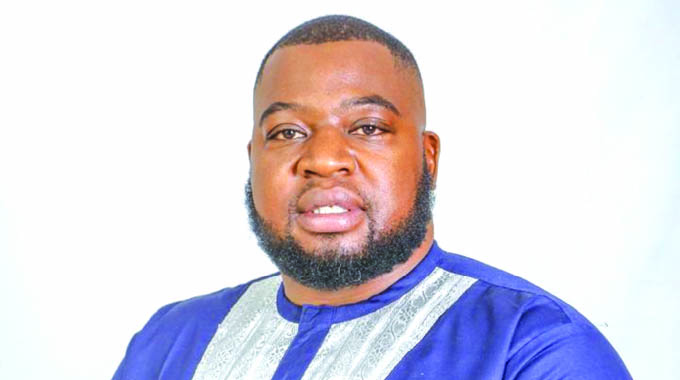
Elliot Ziwira, Senior Writer
It is a Monday late afternoon as Tendai Reki Mashayamombe, a fallen Catholic priest, sits in meditative silence behind the wheel of his modest white Mercedes Benz vehicle, his eyes welling up with tears as he reflects on the joy he misses – celebrating Holy Mass.
The soft radiance of the setting sun casts a warm light on his face, illuminating the deep lines etched on his forehead, exposing the turmoil that has ravaged his soul, as he takes The Herald into his confidence.
Outside, along George Silundika Avenue and beyond, Harare’s bustle reaches a crescendo in a quest to drown the persistent Monday blues, which usually weigh humanity down as it strives to keep body and soul in harmony.
Named Tendai by his mother, and Reki by his paternal grandfather, his spiritual journey marked by faith, sacrifice, purpose, and regret has been a tumultuous one; full of triumphs and tribulations, leaving him scarred, but not broken.
“I have not been ex-communicated or suspended from the Catholic Church,” Reki insists, adding: “I am just not a practicing priest. I had an amicable discussion with my archbishop in November 2021 wherein I opted to go home and reflect on my life.”
It was this reflection that would later take a heavy toll on him, as he finds himself exiled and stranded on Morality Mountain, leading him to contemplate dying by suicide before taking the route of redemption.
An inspiring call to the priesthood
Born on November 6, 1983, in Warren Park, Harare, Reki’s calling to the priesthood was clear.
Inspired by his father, Michael, who wanted to be a brother at Marist Brothers in Nyanga, and spurred on by his mother, a Catholic adherent and stickler to discipline, was drawn to the sacred rituals, the solemnity of the Mass, and the promise of a life devoted to serving the Lord.
“Having been an altar server, I believe my spiritual calling was inspired by God’s love; drawn by Jesus’ love, by the character called Jesus, and the need to be with him,” he reveals.
Reki attended Belvedere Primary School from 1989 to 1995 before enrolling at Ellis Robins School between 1996 and 1999.
After his Advanced-Level at Trust Academy in 2001, he registered for a Bachelor of Commerce degree in Marketing Management with the University of South Africa (UNISA) in 2002.
Caught between pursuit of the word and a career in marketing, he took a decisive step of faith and dropped out of university.
On September 8, 2004, aged 20, the young aspiring diocesan priest enrolled at Saints Thomas More and John Fisher Chishawasha Seminary in Mashonaland East, about 25km east of Harare, joining a class of 55 others.
Leaving behind the familiar comforts of family and friends, he embarked on a nine-year journey of study, prayer and discernment.
Reminiscing on his experiences at the seminary, Reki says: “A seminary is an amazing and beautiful space, which, like a boys’ boarding school, is full of fun and varied characters. It is a bubble of great joy.”
However, the fortress it creates alienates the individual from the real world, which would likely haunt him in future. Given only to the study of theology and philosophy — a field close to his heart, Reki’s reality followed a routine.
The day of his ordination, August 3, 2013, was a moment of joy, as he became “alter Christus,” another Christ, to his flock.
Sparring with the devil: Navigating the celibacy terrain
Following his ordination in 2013, Reki’s spiritual journey took him to parishes in Sanyati, All Souls Mission in Mutoko between 2013 and 2015, and St Dominic’s Dema from 2015 to 2017.
In the meantime, he studied for an Honours degree in Philosophy at the University of Zimbabwe, to which the seminary was affiliated, between 2005 and 2008 and an Honours in Religious Studies from 2008 to 2012. He also pursued a Master’s degree in Media and Society Studies at the Midlands State University (2017-2019).
His star shining ever brighter, he was posted to Assumption of Our Lady parish in Rhodesville, Harare — a pinnacle of success, where he would be stationed between 2017 and 2020.
From preaching in rural areas to being a chaplain at Dominican Convent, one of the most reputable schools in Zimbabwe, to proselytising in an esteemed parish, Reki had fountains of wisdom, captains of industry, academics, and politicians eating from his palms.
With new responsibilities coming up as social communications director for Harare (2015-2020), director for Africa Catholic Social Communications (Signis) from 2017 to 2021, and Radio Maria Zimbabwe director (2020-2021), he traversed the globe.
Preaching to over 50 000 listeners across the world on the ZimRoma platform that began in Mutoko in 2014, his stock grew, and so did his ego. As pride gripped him, responsibility weighed him down, and the devil’s snares relentlessly increased, the young priest lost his will to keep the vows of celibacy.
Aware that celibacy is “the state of voluntarily being unmarried, and sexually abstinent for a religious purpose,” he desired to “attain it wholly and perfectly,” and “live a priestly life”.
“I didn’t understand the psychological implications of celibacy on the psyche of a young man,” Reki admits, his voice tinged with regret.
“I wasn’t prepared for the challenges that come with it, and the snares of the devil that awaited me in the ministry.”
Since his exposure to the real world in 2013, Reki’s fort, invigorated by nine years of training behind the seminary’s walls in which the word “love” was taboo, collapsed under the weight of temptation.
He found himself torn between his duty to God and his own human frailty.
His walls of protection, prayer and meditation crumbled to the ground, taking with them his moral compass. Eventually, around 2019, he dropped his guard.
“I became immoral in ways that were not desirable to the church; and I burnt my fingers,” Reki says.
Faced with a potentially explosive situatio n— an entanglement, Reki had an amicable conversation with Archbishop Robert Ndlovu of the Archdiocese of Harare in November 2021 in which he opted to “go home and reflect.”
The struggle was intense, and the fall was hard. His faculties to function as a priest were withdrawn. The decision was a difficult one, yet he knew it was necessary.
“I thought I had attained it all, but I was wrong,” he says, his eyes far gone.
Stranded on Morality Mountain
Leaving the comfort of the church, where he was poised for greatness as director of Radio Maria Zimbabwe, foregoing the 2022 incoming presidency of Harare Dawn Rotary Club, and a slot on the board of a public institution, Reki retreated to rural Dema, Seke in Mashonaland East Province.
Vanquished, ostracised, alienated, and drenched in tears of regret, he tottered on the fringes of reality.
“In my depression, I contemplated ending my life,” he says.
Exiled on Morality Mountain for more than two years, his road to redemption has been long and arduous. He has had to confront his own demons, to acknowledge his mistakes, and to seek forgiveness.
“I regret not abiding by the precepts of the church. I do not blame anyone, but myself,” he says.
“I think there comes a moment when you know you are sinking, but you think you will be at the surface in no time.
“I regret every act of transgressing the teaching of the church.”
Reki reveals that in the past recent years, he has endured ruthless blows on his character, personality and office, which, somehow, cemented his resolve. He believes that criticism, chastisement and being misunderstood are the lot of those who follow Jesus Christ.
“This is the fate of my life,” he says.
He insists he misses the priestly fraternity, celebrating Holy Mass, and the potential to contribute to the Catholic media community.
“I miss the amount of respect and love that the church bestowed unto me. I was young, and to be called Father was noble and divine, indeed,” Reki admits.
The redemption: Birth of Believers’ Network
Through Believers Network, an inter-denominational ministry born in December 2023, Reki has found a new sense of purpose.
He preaches every day on social media, visits the sick, consoles the burdened, and counsels the doubtful. His message is one of hope and healing.
Reflecting on how the Catholic Church has equipped him to be a global citizen, he emphasises that Catholicism and Pentecostalism are two traditions trying to reach the same goal, led by “the same Spirit and under the same Throne”.
The three years of isolation have helped him to bond with Jesus and deepen his commitment to prayer. Through this intimacy and introspection, he has cultivated a deeper understanding and respect for women, recognising their role as counterparts in God’s plan of procreation.
Concerning marriage, Reki says: “I am not married, but I believe that the institution is a noble calling from God,” adding, “Sadly, we need to pray for married couples, for they are going through the most spiritual attacks, breakups and divorces.”
Forming an interdenominational ministry, Believers Network, a platform for believers to connect, share their faith, and support one another in their spiritual journey, has broadened his understanding of traditional conservative and liberal contemporary believers.
“I love how Pentecostals express themselves during praise and worship, personal prayer and spontaneous promptings of the Holy Spirit. I admire how conservatives are grounded in traditions of the church, and support each other,” he points out.
As he looks to the future, at 40, Reki is reminded of Moses and the significance of the number 40. Like Moses, who returned to Egypt to begin the greatest migration known to men, he is poised to start a new chapter in his journey. His life, an open book, as he calls it, proves the power of faith and redemption.
“I am not a saint,” Reki says, his eyes cast downward. “I am a sinner, but I am trying to follow Jesus the best way I can. I have made my mistakes, and I have the scars to show it, but I am mindful of how God has healed me.”
He wonders why he has been this honest, knowing how humanity draws excitement in trauma and suffering.
“People may choose to pray for me, support me or criticise me, but like Christ on the Cross, I’ve closed my eyes and opened my arms ready to receive anything that comes,” Reki says.
“I hope my story can inspire others. I hope, too, that they can see that even in failure, there is hope. Even in darkness, there is light.”
The streets are quieter now, as Harare takes another life — a kind of sleepless existence common to the daring. Reki has become a part of it now, having moved to Warren Park, from Dema, where he owns a small plot, and keeps a handful of pigs and some chickens.


 Online Reporter