Online Reporter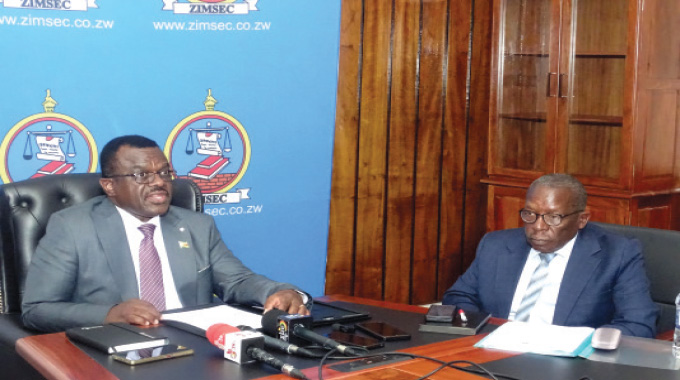
Ivan Zhakata, Zimpapers Correspondent
THE Zimbabwe School Examinations Council (Zimsec) yesterday released the November 2025 Advanced Level (A-level) examination results, posting a national pass rate of 95,75 percent, a gentle but meaningful rise from 94,58 percent in 2024. The figures arrive as a welcome affirmation of steady academic resilience and momentum across classrooms and study rooms nationwide.
The Council said the results reflected both a rise in the number of candidates and improvements in performance across both school and private candidates. The upward trend suggests growing confidence in learning and assessment systems, and a tightening alignment between teaching, preparation and outcomes — as much a story of persistence as it is of progress.
Addressing journalists in Harare, Zimsec board chairperson Professor Paul Mapfumo said a total of 36 635 candidates sat for the examinations, compared to 33 585 in 2024, representing a 9,08 percent increase. The expansion in candidature underscores continued demand for A- level qualifications, as young people position themselves for tertiary study and professional pathways in an economy that prizes skill and accreditation.
Of these, 36 282 candidates wrote two or more subjects, with 34 740 achieving Grade E or better, the minimum requirement to pass two or more subjects. The breadth of engagement across multiple subjects further speaks to a system sustaining academic breadth — even as learners navigate resource constraints and a competitive environment.
“The increase in the national pass rate demonstrates the commitment of candidates, teachers and school administrators to academic excellence despite ongoing challenges in the education sector,” Prof Mapfumo said.
His sentiment casts the results as a collective achievement — earned through long evenings, careful timetables and the quiet discipline that underpins scholastic success.
He said co-ordinated efforts between schools, exam markers, Zimsec staff, the Ministry of Primary and Secondary Education, and state security agencies contributed to the smooth administration of the examinations. Such collaboration is the unseen scaffolding of credibility and integrity, ensuring that each script is assessed fairly and every result reflects genuine attainment.
School candidates continued to perform strongly with 31 451 students sitting for the examinations. The consistency of school based performance is a stabilising force, as classroom instruction, pastoral support and peer networks combine to keep learners focused and resilient throughout the examination cycle.
Of these, 31 296 wrote two or more subjects, and 30 169 achieved Grade E or better, translating to a pass rate of 96,39 percent, up from 95,18 percent in 2024. This represents an improvement of 1,21 percentage points, signalling consistent performance among Zimbabwe’s school going candidates. Incremental gains, year on year, are often the most durable — born of patient teaching and measured preparation.
Private candidates also recorded marginal gains. Their progress, often forged in evenings and weekends, is testament to determination outside the traditional classroom setting, with learners balancing study against work and family responsibilities.
Of the 5 234 private candidates who sat for the examinations, 5 036 wrote two or more subjects, with 4 571 passing, giving a pass rate of 90,77 percent, slightly higher than the 90,52 percent recorded in 2024.
Even small increases matter; they suggest pathways widening and opportunity accumulating for those charting independent routes through education.
Professor Mapfumo said the results were achieved through careful planning, adherence to examination protocols and collaboration across the education sector. “The successful administration of the November 2025 A-level examinations was achieved through a common purpose, ensuring the integrity and credibility of the results,” he said. In a landscape where trust is everything that shared purpose is the bulwark of public confidence.
The results have started to be accessed online from yesterday, 4pm via the Zimsec portal at https://results.zimsec.co.zw. Digital access brings a welcome immediacy to the anxious wait, allowing candidates to see their efforts reflected at a click, wherever they are.
The portal will remain open for five days, after which candidates are advised to collect their results from their respective examination centres. The physical collection, a rite of passage in its own right, ensures records are properly issued and queries correctly routed.
Heads of centres have been required to collect results from the Ministry of Primary and Secondary Education Provincial Directors starting Monday, January 12, 2026. The administrative choreography behind results day is precise, ensuring that centres are ready to support learners as they plan their next steps.
Zimsec expressed appreciation to all stakeholders involved in the examination process, including teachers, markers, school administrators, Ministry officials and security agencies for their dedication and professionalism. Recognition of this chain of effort is fitting; the journey from classroom to certificate is a collective enterprise.
The release of the results comes as Zimbabwe’s education sector continues to recover from disruptions caused by economic challenges and the Covid-19 pandemic. The stable pass rates indicated resilience among learners and educators, reflecting an ability to maintain academic standards even in a challenging environment. It is a story of endurance as much as attainment — proof that continuity can be crafted from careful practice and institutional resolve.
While the national pass rate is encouraging, gaps remain in subject specific performance, particularly in sciences and technical subjects. Stakeholders continue to call for increased investment in learning resources, teacher training and infrastructure to further improve educational outcomes. The next horizon is clear: equip the laboratories, modernise the workshops, and strengthen the pipeline from secondary school into STEM rich tertiary and vocational tracks.
Professor Mapfumo urged candidates to build on their success. “We congratulate all students who passed and encourage those who did not to continue working hard. The A-level results are a stepping stone to further education and professional development,” he said. The message is generous and forward facing — there is space for celebration and for renewed effort alike.
The results mark a critical milestone for students preparing to transition to tertiary education or vocational training, with universities, colleges and professional institutions expected to start admissions and placement processes in the coming weeks. For thousands of young people, the next chapter begins now — forms will be filled, choices weighed, and futures sketched in sharper lines as they step from examination halls into new corridors of possibility.