Online Reporter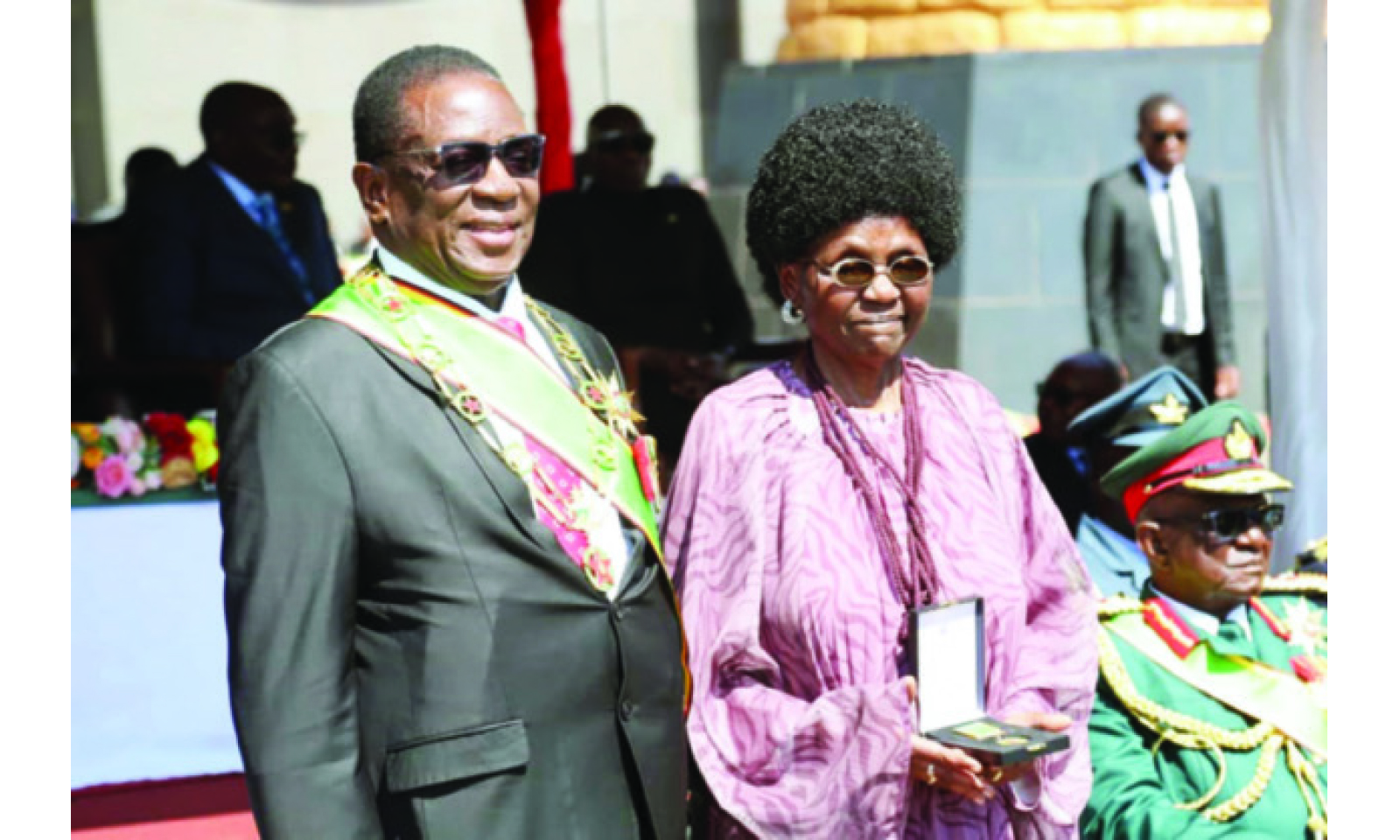
Rumbidzayi Zinyuke-Senior Health Reporter
AS the nation basks in the glow of its Heroes Day and Women’s Month commemorations, one name resonates with particular clarity, Dr Madeline Nyamwanza-Makonese, Zimbabwe’s first black female medical doctor and only the second on the African continent.
Now in her 80s and still a practising physician, her life is evidence of what determination, resilience and service to country means.
This year, the nation recognised her extraordinary contributions with the Robert Gabriel Mugabe Commendation Award for Service in Human Capital Development, an honour she describes as both humbling and affirming.
“I feel both honoured and favoured by the nation and also by Almighty God. It is a blessing to be honoured as a hero in my lifetime. This award means the journey I have walked has not been in vain. It is not something I take lightly, because being recognised among figures who symbolise Zimbabwe’s progress and development is something I never imagined when I started my journey,” she said.
The seed of a dream
Dr Nyamwanza’s story began in Penhalonga at St Augustine Mission, a place where poverty and promise existed side by side.
Born into a family of nine children, she grew up in a modest family.
The mission was run by monks and nuns whose passion for education shaped her earliest years.
They believed every adult should be able to read and write, and that children should go to school.
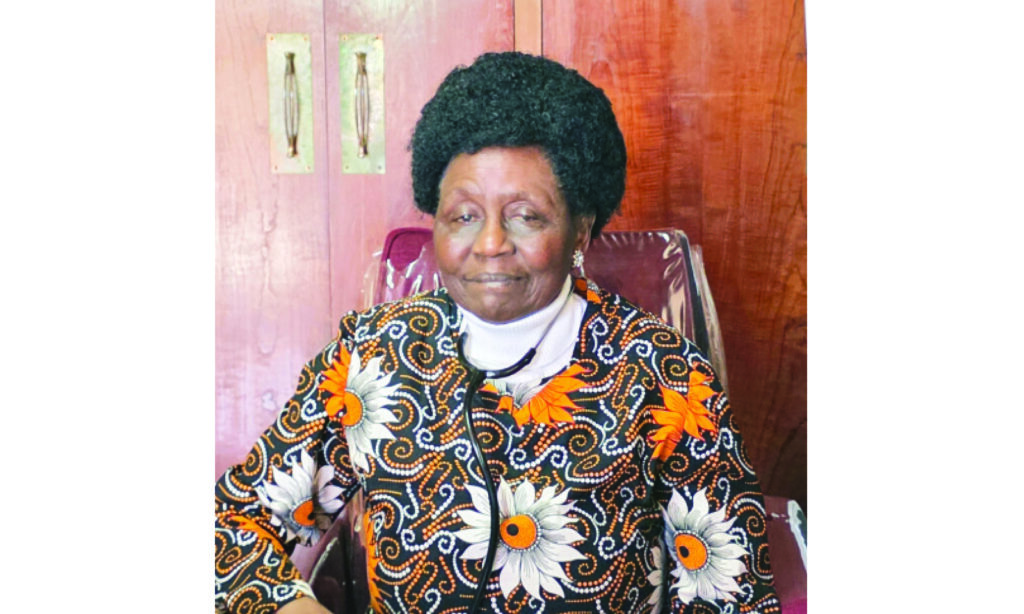
Dr Nyamwanza goes down memory lane during a recent interview.
Her life’s course changed at the age of nine, when the interest in becoming a medical doctor was ignited in her.
“My father used to work at the mission as a gardener, and he would come home and tell us stories about people he had heard of, like Herbert Chitepo, the first black lawyer in Zimbabwe, or Dr Agri from West Africa. One day he told us about a white couple, the husband a veterinary surgeon and the wife a medical doctor. That is the moment a flame was lit in my heart. I wanted to be that doctor. From then on, I was just aiming and working towards becoming one,” she said.
Defying the norms of an era
In colonial Rhodesia, the very idea of a black woman becoming a doctor seemed absurd to many.
Girls were expected to marry young and devote themselves to domestic duties.
For some families, educating daughters was seen as a waste of resources.
But in the Nyamwanza household, that thinking had no place.
“My father was different. He encouraged both boys and girls equally. He believed in pushing us as far as our abilities would take us,” she said.
Even so, the resistance came from her peers. Throughout primary and secondary school, she was consistently at the top of her class, a fact that irritated the boys.
“The boys didn’t accept that I was top of the class. But I topped the class from Grade One right up to Standard Six. And then in secondary school, I was also top of the class. When I was in Form One, the teachers asked each of us what we wanted to do after school. Most people said they wanted to be teachers, clerks or police officers. When it was my turn, I said I wanted to be a medical doctor, and they all burst out laughing, especially the boys. At that time there were no black female doctors in Zimbabwe, so to them it was almost unthinkable. But my headmaster looked at me and said, ‘Yes, Madeline, you can become a doctor. You need to work hard in mathematics and sciences, and you will get it. You are a clever girl.’ That encouragement meant everything to me,” she said.
Her academic path was not without logistical hurdles. At Goromonzi High School, a shortage of science teachers meant she and a few others were sent to Fletcher High, a boys-only school in Gweru, for chemistry lessons.
With no facilities for girls, she boarded at the headmaster’s house, using the staff ladies’ restroom, because there were no toilets for female students.
These were small inconveniences in the face of a much larger mission.
Breaking the barrier
In 1965, she achieved a milestone few could have imagined: enrolment at the University of Rhodesia Medical School.
It was still a time of entrenched racism, with strict segregation in hospitals and education.
Her graduation on November 24, 1970, was historical. She was the first Rhodesian African woman to graduate from medical school, and only the second female medical doctor in Africa.
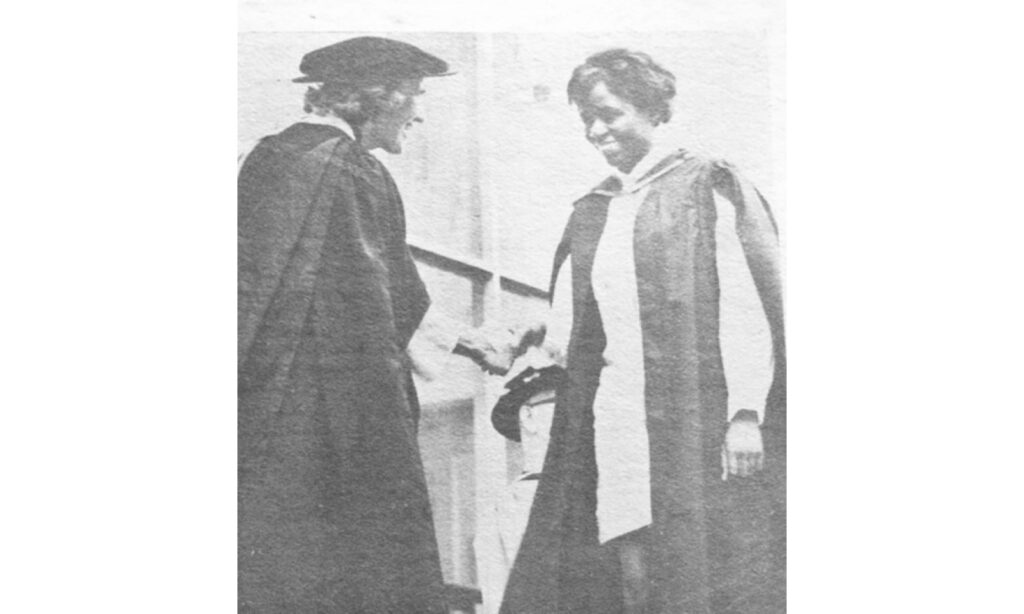
Dr Nyamwanza (right) receives her degree from Prof Monica Wilson of the University of Cape Town in 1970.
Her achievement sent ripples through the nation, inspiring young women to dream bigger.
She began her career at Mpilo Hospital, one of the few facilities that admitted black patients at the time.
Under colonial rule, Harare Hospital (now Sally Mugabe) and Mpilo served black communities, while Parirenyatwa (then Andrew Fleming) and United Bulawayo Hospitals were reserved for whites.
Mission hospitals filled some of the gap, but healthcare access was still highly unequal.
A career spanning generations
Over a period of more than five decades, Dr Nyamwanza has served in hospitals across the country, witnessing the transformation of Zimbabwe’s health sector.
Today, provincial and district hospitals operate nationwide, supported by networks of clinics and village health workers who play a crucial role in immunisation campaigns and epidemic response, from cholera to Covid-19.
She has also been a vocal advocate for the education of girls, particularly in rural areas, where cultural barriers and economic hardship still limit opportunities.
Honours and legacy
The Robert Gabriel Mugabe Commendation Award is the latest in a lifetime of honours recognising her pioneering spirit and contribution to human capital development.
A wall in her office is lined with similar lifetime awards she has received in the course of her work.
Yet for Dr Nyamwanza, her legacy is not defined by plaques or ceremonies, but by the lives she has touched and the minds she has inspired.
“Don’t allow any issues of gender or culture to inhibit your dreams. You can be all you want. Work hard, trust God and the sky is the limit,” she said.
Still practising at her age, she remains a fixture in the medical community, a reminder that service is not bound by age.
Her journey from a simple schoolgirl in Penhalonga to a celebrated national icon is a testament to what determination, faith, and education can achieve in the face of systemic barriers.
For the multitudes of women and girls she has inspired, Dr Nyamwanza is more than a doctor: she is a trailblazer, a mentor and a living symbol of the Zimbabwean spirit.