Online Reporter
Fatima Bulla-Musakwa, [email protected]
As a person living with albinism, Ms Rhoda Bula Bula has endured a life marked by rejection, stigma, and discrimination since her birth 33 years ago.
Her story is not just one of personal struggle but a stark reflection of the systemic challenges faced by scores of people with albinism across the country and beyond, where ignorance, healthcare inaccessibility, and societal prejudice converge to create a life-threatening crisis.
When Rhoda’s father discovered that his new-born daughter had albinism, the initial joy of parenthood evaporated almost instantly. In his family lineage, giving birth to a child with albinism was unheard of – a phenomenon interpreted as a curse too unbearable to accept.
And so just three months after Rhoda’s birth, her father abandoned the family, refusing to acknowledge a child he could not comprehend. This was Rhoda’s first encounter with rejection. It also would not be her last.
Growing up in the Greenspan community under Chief Chizunga in Mberengwa, Rhoda faced relentless mockery and dehumanisation. Locals hurled derogatory names like “musope” and “inkawu”, reducing her identity to a spectacle of difference.
“As the only child with albinism in the community, life was difficult,” she recalls. “Even at school, other children would gather around just to look at me or mock me. People would stare at me while others said my skin was similar to that of a pig,” she recalls as she looks back at the dark, abysmal passages of time.
The psychological toll of this constant scrutiny forced Rhoda to withdraw from social gatherings, avoiding events where she might become the target of whispers and ridicule. Yet what hurt most was not the ignorance of villagers, but the similar attitudes she encountered at school, an institution meant to represent knowledge, enlightenment, and opportunity.
Rhoda’s visual impairment, a common characteristic of albinism, made learning exceptionally challenging. She required large-print textbooks and assignments, yet these were never provided.
Sitting at the back of the classroom meant straining to see the chalkboard, while sitting closer required her to look upward into harsh light that further damaged her sensitive eyes.
Teachers, seemingly indifferent to her plight, would erase notes before she could copy them, dismissing her needs with the cold justification that “the class could not be delayed by one person.”
The consequences were devastating. Rhoda fell perpetually behind in her schoolwork, frustration mounting with each missed lesson. She ultimately attained 15 units at Grade 7 and passed five subjects with four Ds and a B at ‘O’ Level, grades that hinted at potential rather than failure.
“People should be informed that we are not a laughing stock,” she says.
“It is important to have awareness programmes for influential people like teachers because they have the power to build or destroy future generations.”
As Rhoda entered adulthood, her health deteriorated. Severe lesions developed around her left eyelid, prompting trips to Morgenster Mission Hospital. While her right eye received treatment, the more critical left eye was scheduled for intervention the following year, a delay that would prove costly.
Despite having the US$150 needed to collect her test results, hospital staff turned her away, citing a focus on emergency cases only.
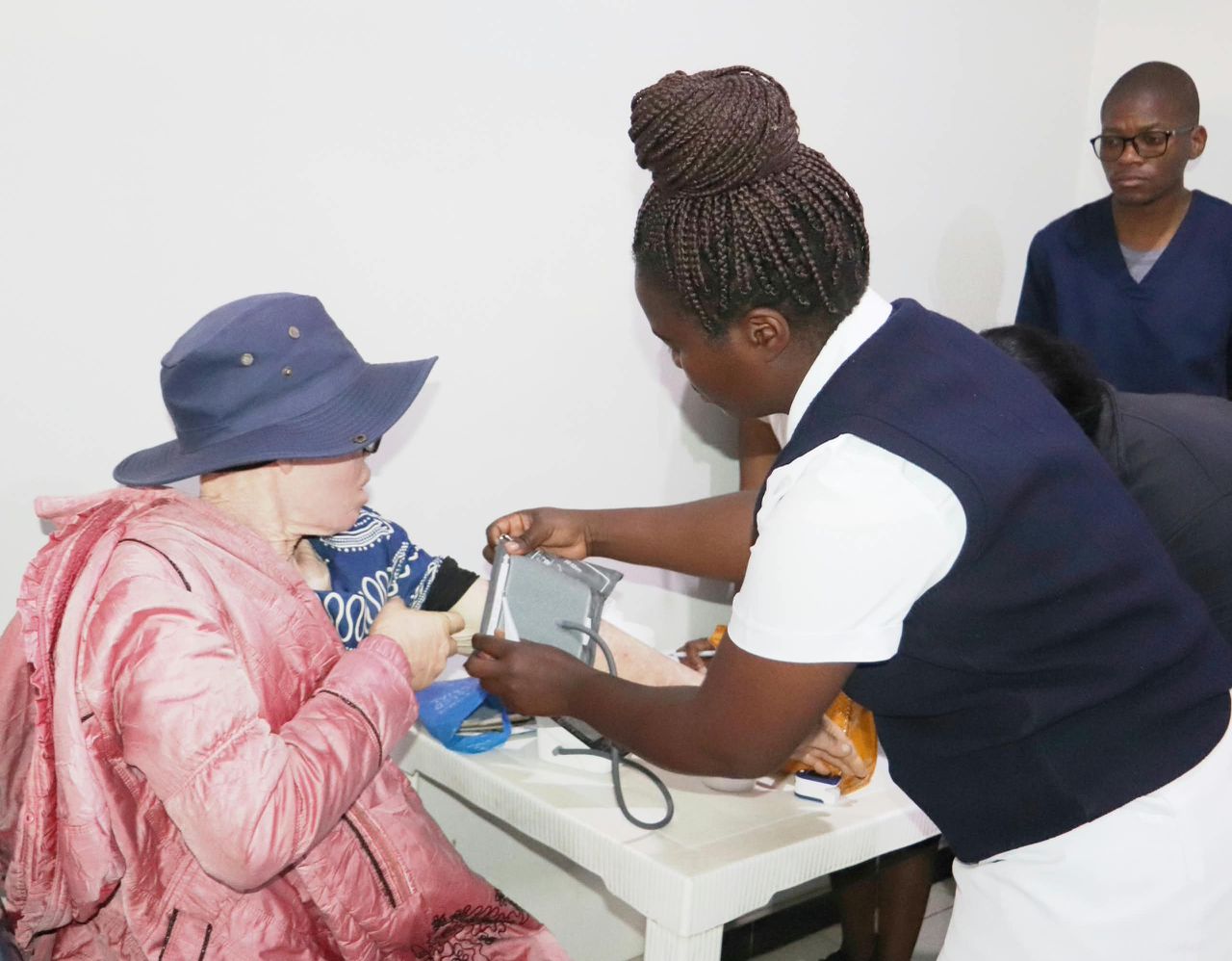
Back home in Mberengwa, stigma took on new dimensions. As a young woman, Rhoda became the target of men who professed love only to exploit her vulnerability. One such relationship ended abruptly when she announced her pregnancy; the man abandoned her immediately. Yet Rhoda soldiered on, giving birth to a baby boy who did not inherit albinism.
Her worsening eyesight soon compromised her ability to perform menial jobs, the only source of income available to her. Stuck at home, struggling to feed her child, Rhoda’s situation seemed hopeless until news arrived of a free skin cancer Derma Surgical Camp for people with albinism.
Rhoda’s experience underscores a crisis affecting scores across Zimbabwe and the wider African continent. While albinism affects approximately 1 in 17 000 to 1 in 20 000 people globally, sub-Saharan Africa experiences dramatically higher prevalence rates ranging from 1 in 5 000 to 1 in 15 000 overall, with isolated communities reaching as high as 1 in 1 000.
Zimbabwe’s national average sits around 1 in 4 700, though certain populations such as the Tonga community in rural areas experience prevalence rates of 1 in 1 000, among the highest recorded worldwide.
School-based studies in Zimbabwe have documented prevalence estimates between 1 in 2 883 and 1 in 4 928 depending on the region, suggesting that tens of thousands of Zimbabweans live with albinism. Yet comprehensive national census data remains lacking, a gap that hampers effective policy planning and resource allocation.
For people with albinism in Zimbabwe, accessing dermatological care is prohibitively expensive. A single consultation with a dermatologist for cryotherapy costs between US$200 and US$300, a procedure required as frequently as lesions develop.
When surgical intervention becomes necessary, patients face bills exceeding US$5 000. Compounding this is the severe shortage of specialists: Zimbabwe has only five dermatologists, historically concentrated in Harare, with just one recently based in Bulawayo.
Daily survival demands additional expenses: sunscreen lotions, sun hats, and protective clothing which cost an average of US$60 to US$70 monthly, expenses that must be sustained for life.
Moreover, the condition requires working in shaded areas to avoid sun exposure, severely limiting employment opportunities in a country already grappling with socio-economic challenges.
Children in rural areas who often walk to school without sunscreen, face heightened risks of developing skin cancer due to prolonged sun exposure.
The human cost is staggering. Studies indicate that the majority of people with albinism in Zimbabwe do not live beyond the age of 40, primarily due to preventable and treatable skin cancer.
People with albinism benefit from robust protection under multiple international human rights instruments, though no single treaty specifically addresses albinism.
Key conventions include the Convention on the Rights of Persons with Disabilities (CRPD, 2006), which prohibits discrimination on the basis of disability and guarantees rights to health, education, and an adequate standard of living.
The International Convention on the Elimination of All Forms of Racial Discrimination (ICERD, 1965) proscribes discrimination based on colour, directly relevant to albinism-related prejudice.
In 2015, the United Nations Human Rights Council adopted Resolution 29/9 on “Attacks and Discrimination against Persons with Albinism,” marking the first UN resolution specifically addressing albinism. This was followed by the appointment of a UN Independent Expert on albinism, tasked with monitoring violations and promoting protective measures globally.
Zimbabwe made notable progress in recent years towards recognising and protecting the rights of people with albinism. The landmark Persons with Disabilities Act of 2025 explicitly recognises albinism as a disability under Section 34(h), mandating that “persons with albinism shall be entitled to the necessary support” including health services, education, and protection from discrimination. This legislative development aligns Zimbabwe with its obligations under the CRPD, which the country ratified in 2013.
Thanks to the generosity of a bus operator and a friend who offered free transport and accommodation, Rhoda reached Southlea Hospital in Harare.
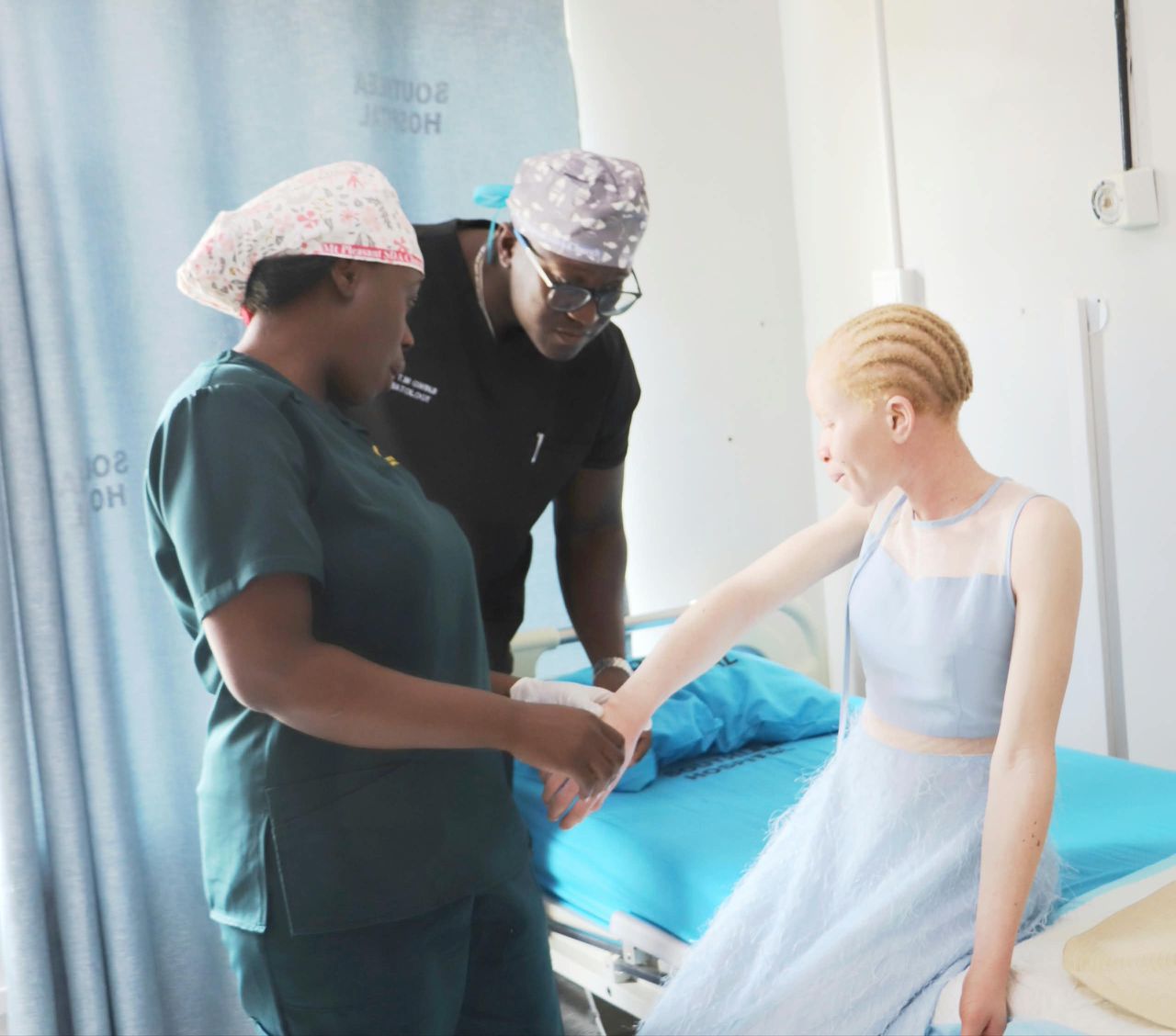
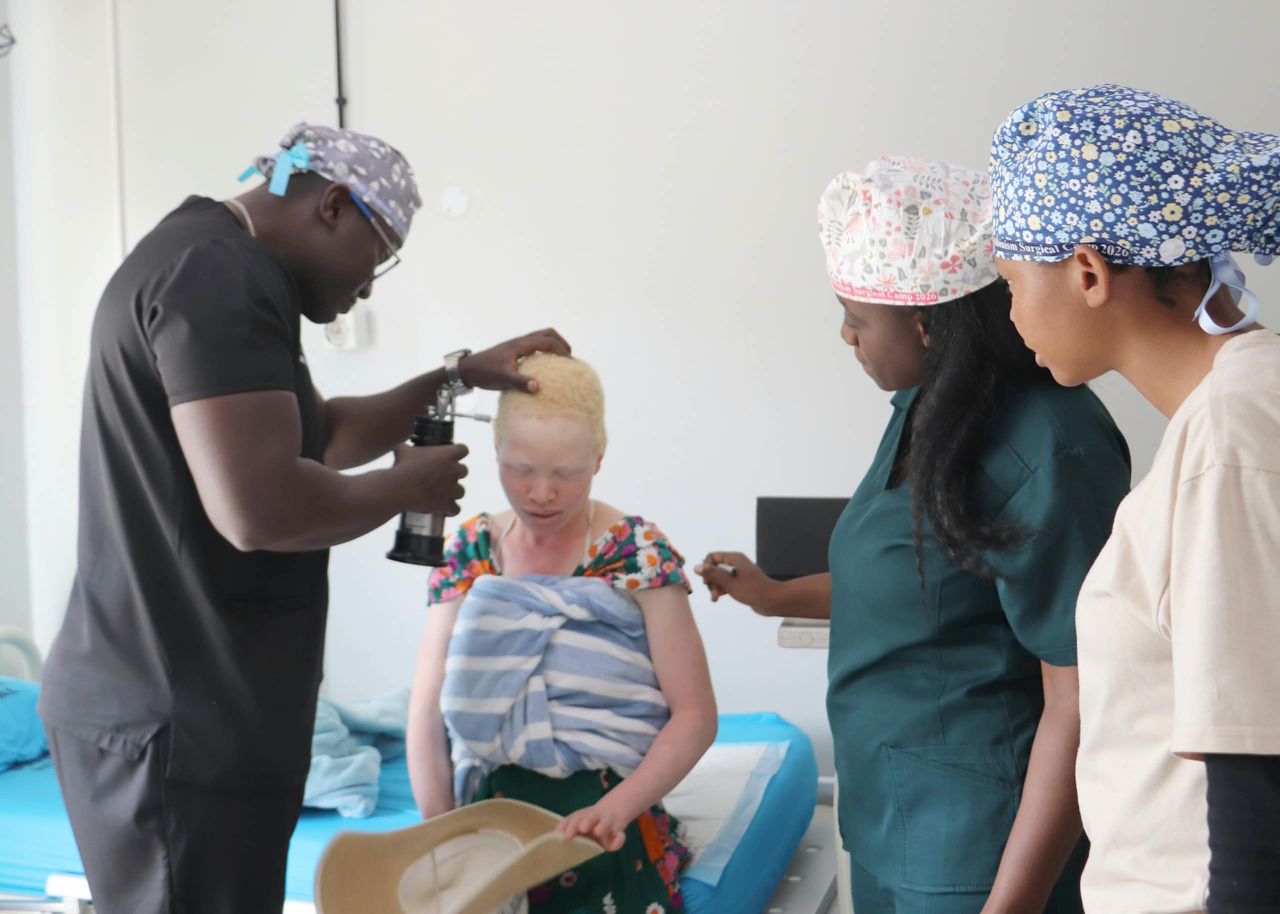
The Derma Surgical Camp, hosted by Mt Pleasant Seventh Day Adventist Church in collaboration with Noble Hands Foundation and Southlea Hospital, targeted people with albinism from Harare and surrounding areas, although many people travelled from as far as Mutoko, Binga, Masvingo, Bulawayo and Rusape.
Specialists from the Global Cleft and Climate Facial Foundations, representing both private and public health sectors, provided free dermatological surgical care.
The process began with registration, followed by dermatologist screening for skin cancer and related conditions. Based on findings, patients received treatments ranging from cryosurgery to oral oil therapies, with serious cases referred for minor or major surgeries.
Mr Willard Musiyarira, Executive Director of Noble Hands Foundation Zimbabwe, emphasised the critical nature of such initiatives.
“It’s actually a luxury for many, as most who came for treatment were being screened for the first time in their lives. We are looking at people who are now 40 to 50 years old. They have never been screened for skin cancer, so this is something which is very critical,” he said.
At the recent camp, 88 individuals were screened with 67 receiving cryotherapy, a procedure using extreme cold to freeze to remove abnormal tissue. Ten surgeries were conducted, six under minor procedures and four requiring general anesthesia. Biopsies were collected from four patients, three were admitted post-surgery, and five were referred for tertiary treatments.
Dr Munyaradzi Marowa, Resident General Practitioner at Southlea Hospital, explained the gravity of the situation.
“Most of the people we saw will live with pre-malignant conditions; they will turn into malignant conditions, and that is the most common cause of death among people living with albinism. If they are receiving treatment, it is going to improve their health to a greater extent,” said Dr Marowa.
Since the programme’s provincial rollout in 2024, Masvingo has recorded the highest number of people with albinism affected by skin cancer, highlighting the urgent need for expanded outreach.
Dr Sylvia Muvhuti, Health Ministries Director in the Seventh Day Adventist Church North Zimbabwe Conference, stressed the need for ongoing efforts.
“This is an indicator of the need for us to take care of the needs of people living with albinism and also those with special needs in our communities,” she said.
“Such initiatives should be done more often, maybe quarterly or at least biannually.”
As the day concluded at Southlea Hospital, Rhoda had undergone cryotherapy, resolving half of her immediate health concerns.
The remaining challenge was securing funds to collect results from opticians to assess the depth of lesions surrounding her eyes.
Although uncertainty lingered, the camp had reignited her hope, a fragile but vital belief that her eyesight could still be salvaged, and that her story, like those of countless others, might yet turn towards dignity, health, and acceptance.
Zimbabwe’s legal recognition of albinism as a disability represents a critical step towards equity and inclusion. But translating policy into practice requires sustained investment in healthcare infrastructure, public education campaigns to combat stigma, and targeted economic support for affected families.
International conventions provide a robust framework for accountability, but domestic political will and resource allocation will ultimately determine whether people like Rhoda can access the dignity, health, and opportunity their rights guarantee.