Online Reporter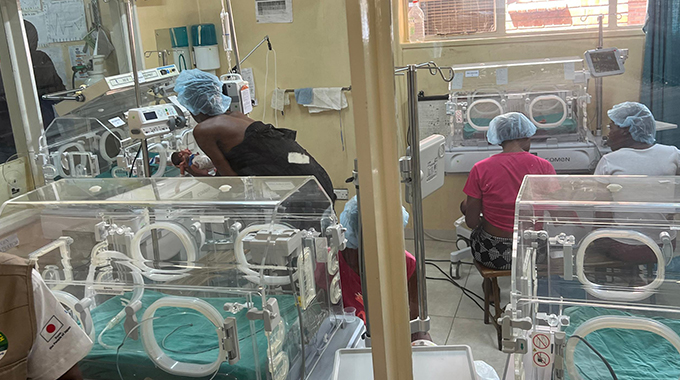
Sukulwenkosi Dube-Matutu, [email protected]
GWANDA Provincial Hospital has received critical equipment for its neonatal ward, a development expected to improve the survival and care of premature and critically ill newborns while reducing the need to transfer some babies to other major referral hospitals in Bulawayo for specialised treatment.
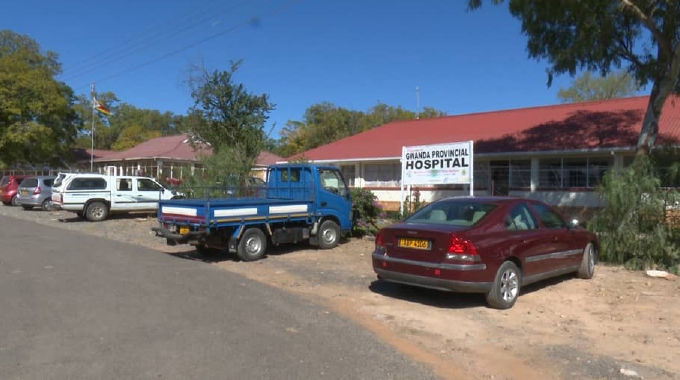
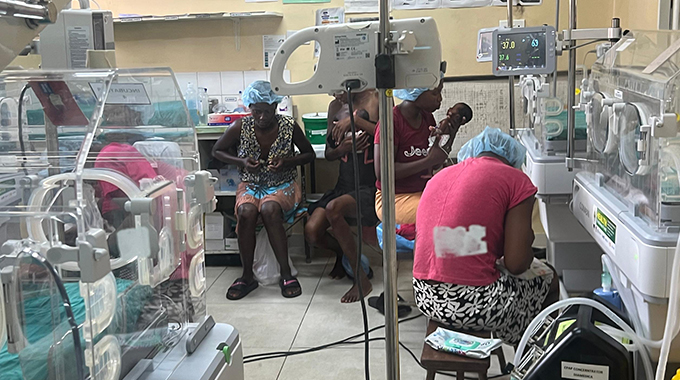
The hospital, Matabeleland South Province’s major referral centre, recently received four incubators, four infusion pumps and two phototherapy machines under a Government-funded programme to equip neonatal units across the country and reduce newborn mortality.
Gwanda Provincial Hospital medical superintendent Dr Shadreck Gororo said the equipment had significantly strengthened the institution’s capacity to provide maternal and newborn healthcare.
“We recently received four incubators, four infusion pumps and two phototherapy machines for our neonatal ward. This has gone a long way in helping us to care for newborns, especially premature babies and those who develop jaundice,” he said.
Previously, some critically ill newborns had to be transferred to Mpilo Central Hospital and the United Bulawayo Hospitals for specialised care.
“Having this equipment has reduced the need for transferring some of the babies to Mpilo Central Hospital or UBH.
“We thank the Government for its commitment to the modernisation of healthcare delivery in line with the National Development Strategy 2,” said Dr Gororo.
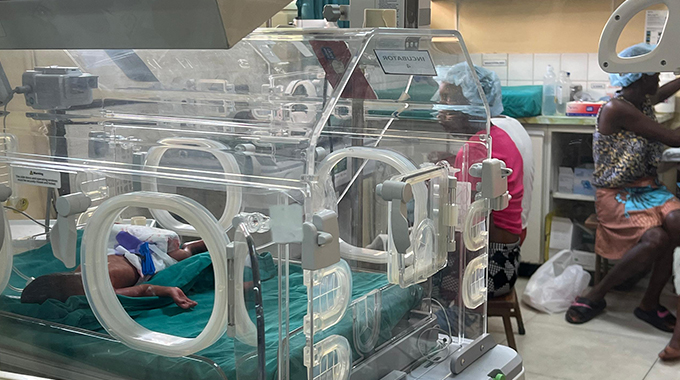
Neonatal wards provide specialised round-the-clock medical and nursing care for premature, low-birth-weight and critically ill babies.
Dr Gororo said the hospital’s role as a major referral centre made it essential for its neonatal services to be adequately equipped.
The hospital is now lobbying for resources to establish a neonatal intensive care unit, which would enable it to handle more severe cases.
For expecting mothers and families in the province, the investment has brought renewed confidence in the public health system.
Ms Bridget Ncube, a local resident, said the availability of modern equipment at the maternity unit was particularly significant for families who could not afford private healthcare.
“Some of us cannot afford to go to private hospitals or engage private doctors, meaning this is the only place we can turn to. I’m glad to see this equipment as it gives me confidence that my premature baby will be taken care of,” she said.
“We thank Government for giving us access to free maternal services, but we also need access to the necessary equipment such as these incubators.”
The neonatal equipment is the latest addition to Gwanda Provincial Hospital’s growing range of critical care services.
An Intensive Care Unit was also recently established at the institution, ending years in which critically ill patients requiring intensive care had to be referred to Bulawayo.
The hospital, situated along the busy Bulawayo-Beitbridge Highway, also receives victims of serious road traffic accidents, making the expansion of its critical care capacity increasingly important.
Over the years, the institution has undergone several developments, including the establishment of a cost-recovery pharmacy last year, which has improved the availability of medicines and surgical sundries.
The hospital pharmacy has also introduced the internal production of methylated spirit sanitisers, toilet-cleaning detergents and liquid soap, a move aimed at reducing procurement costs, lowering recurrent expenditure and improving supply reliability.
Last year, the hospital also expanded its laboratory testing capacity.
However, despite being upgraded from a district hospital to a provincial referral facility, infrastructure development has not kept pace with the institution’s expanded role.
The resulting pressure has contributed to congestion, limited expansion capacity, compromised infection prevention and reduced efficiency in the delivery of specialist services.
Government has since committed to expediting the construction of a new provincial hospital on a 46-hectare piece of land that has been availed in Gwanda.
The developments at Gwanda Provincial Hospital dovetail with the National Development Strategy 2 and the National Health Strategy (2026-2030), which prioritise universal health coverage, infrastructure modernisation and equitable access to quality healthcare.
Government’s broader health agenda includes upgrading provincial, district and rural health facilities, equipping hospitals with modern diagnostic equipment and strengthening laboratories and critical care services.