Andrew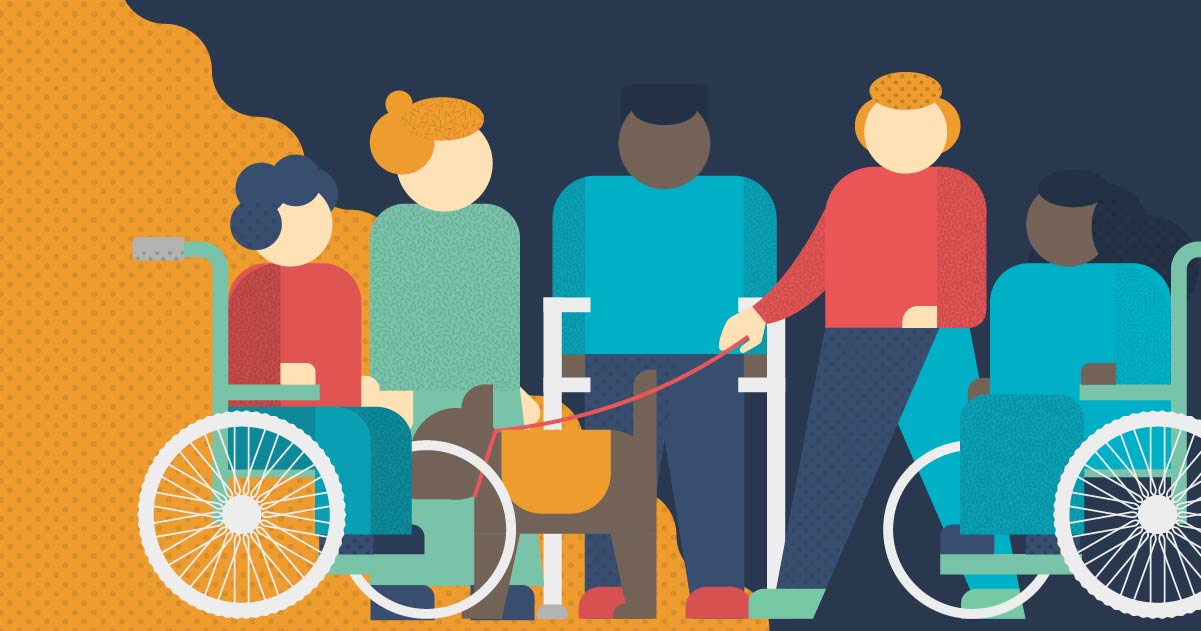
Disability Issues
Dr Christine Peta
IN this article, I unpack the link between devolution and disability.
Some scholars define devolution as a process in which the central government grants powers to subnational governments, in a process where local and provincial tiers of government are created. The idea is to foster development from grassroots levels, through citizen participation that also includes those with disabilities.
Persons with disabilities include those who have long-term physical, mental, intellectual and sensory impairments which, in interaction with various barriers, may hinder their full and effective participation in society on an equal basis with others. Devolution seeks to achieve growth and development that is equitable, shared and sustainable for the benefit of all.
We cannot achieve equity and shared, and sustainable growth and development if we leave persons with disabilities behind.
The multi-dimensional and multi-layered nature of disability, demands collective responsibility and accountability within the context of devolution.
Section 264 (2) of the Constitution of Zimbabwe, Amendment (No.20) Act, 2013 outlines the specific goals and objectives of devolution in Zimbabwe as follows: a) to give powers of local governance to the people and enhance their participation in the exercise of the powers of the State and in making decisions affecting them, b) to promote democratic, effective, transparent, accountable and coherent Government in Zimbabwe, c) to preserve and foster the peace, national unity and indivisibility in Zimbabwe, d) to recognise the right of communities to manage their own affairs and further their development, e) to ensure equitable sharing of national and local resources, and f) to transfer responsibilities and resources from the national government in order to establish a sound financial base for each provincial and metropolitan council and local authority.
In any case, the concept of devolution acknowledges the significance of empowering communities for sustainable development.
Thus, disability inclusion should be a priority. There is no community without a person with disabilities. Among other things, good governance in devolution encompasses empowerment of the poor and vulnerable groups, thus affording them the opportunity to participate in making decisions on issues that affect them.
Good local governance brings Government closer to communities and accords people with disabilities opportunities to participate in political processes and development initiatives.
As decisions are made locally and closer to grassroots levels, proceeds from resources are more likely to be directed towards meeting the felt and expressed needs of the local people.
Likewise, involvement of persons with disabilities in processes of socio-economic transformation and democratisation is a critical factor in the development process and has the potential to achieve better results in terms of human development.
The Government of Zimbabwe is clearly creating an enabling environment under which the needs and concerns of persons with disabilities are addressed in every province, sector and across all thematic working areas that are enshrined in the National Development Strategy 1 (NDS1) 2021-2025. Collaboration is important because disability inclusion across all provinces and sectors, within a context of devolution, cannot be achieved by using a “silo” approach. Just like everyone else, persons with disabilities have human rights, hence they should occupy space in all facets of life including in employment, education, healthcare, housing, music, sport, disaster risk management and many other areas.
This group also needs the opportunity to participate in decision making on issues that affect them.
The idea is not to foster passive participation, in which persons with disabilities are made to make choices from predetermined limited alternatives, but the aim is to achieve an active and meaningful participation. This should not only be done at governance level.
All of us must embrace the active and full participation of persons with disabilities and their families and representative organisations, as we seek to explore, create and strengthen opportunities for among other things, decent work, education, healthcare, housing, access to information and justice for persons with disabilities.
Metaphorically, disability is in everything and disability is everywhere. Let us work together to end discrimination, marginalisation and exclusion of persons with all kinds of disabilities. By doing so, we leave no one and no place behind.
Dr Christine Peta is a Disability, Policy, International Development and Research expert who is the National Director of Disability Affairs in Zimbabwe. She can be contacted on: [email protected]


 Online Reporter