admin
admin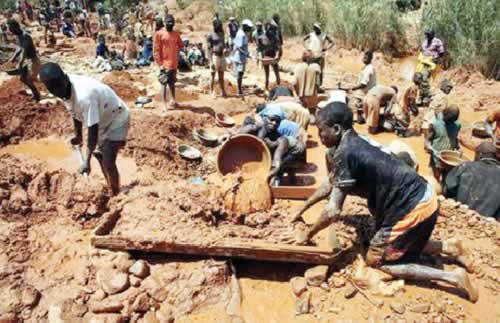
Perspective Stephen Mpofu
In a land where the environment is increasingly coming under siege by unscrupulous fortune seekers, the government should go beyond rhetorical protection to practical steps to ensure that the environment as a basis of the existence of Zimbabweans is protected and be seen to be protected.
Which suggests that in the ongoing controversy over alluvial gold mining along the Mazowe River the government should not merely verbalise its ban on anyone mining gold on that important river but should put its foot down hard to insure that the river is protected for present and future generations.
Those hell-bent on enriching themselves with alluvial gold on the Mazowe River by digging up the river reportedly paid sums of money to some authorities for permission to dig gold and even brought in heavy equipment for that purpose, apparently defying the government ban on mining along the river in question.
Not only that, but in a bid to justify their ambitions the gold hunters went so far as to cite Australia and Canada as countries where alluvial gold mining took place without any damage being caused to the environment. But those countries are not Zimbabwe and the alluvial gold mining there probably takes place under the sea — and seabed mining is known to have taken place in some countries overseas with obviously no danger caused to the sea. But the Mazowe River and many other rivers in Zimbabwe to which gold hunters have laid siege are not seas and are wont to be silted, thereby depriving people and livestock of water needed for domestic use, including irrigation as well as for watering livestock.
Alluvial gold miners are also known to use cyanide in their search for the precious metal and the practice obviously poses danger to humans through contamination of water in rivers and dams. But probably the greatest threat that alluvial gold miners pose to Zimbabwe is the death of the rivers that they besiege — and rivers are the arteries through which the life blood of the nation, any nation for that matter, flows.
With global warming and climate change spawning recurrent drought — witness what is already happening in this country — many rivers face certain death which, in this pen’s view, will certainly be quickened up if gold panners are given free rein on the rivers of this country which those of us alive today have a duty to protect for future generations.
In a forthcoming book on land and other socioeconomic sector reforms, this writer suggests that local authorities and companies that discharge raw sewage and dangerous chemical waste respectively into rivers and dams should be made to pay an environmental rehabilitation levy — a fund used specifically to repair any damage, such as pollution or poisoning of the water caused by irresponsible human action.
Such a move might restrain or cause industries and local authorities to protect the environment.
Zimbabwe is basically an agricultural economy in which rivers such as the Mazowe and others elsewhere across the country have an important role to play, especially now with calls for the revival of defunct irrigation schemes and the creation of new ones to grow food all year round, where necessary, in order to boost the country’s food reserves which have seriously dwindled due to drought in some parts of the country, hence the importation of food now underway.
With carbon gases being pumped into the atmosphere by some developed and developing economies and which, according to scientists take long, long to breakdown, climate change caused by global warming is a phenomenon with an indefinite end – and this means that worse is likely to come. Therefore any little rain we get must be preserved in rivers and dams that should be safeguarded against siltation by gold hunters.
Under the economic blueprint, Zim-Asset, Zimbabwe plans to setup economic zones to bolster growth in the economy through various activities. Water will obviously be a must for the economic zones to thrive and achieve their set goals, so that our sources of water, or water reservoirs will need to be protected for the interest of the nation as a whole rather than be left at the mercy of a few alluvial gold hunters who will strike and leave behind dead rivers.
And because trees and grass are vital agents in the conservation of water, they should be spared the axe, the matchstick and the cigarette butt of irresponsible citizens.
Each year trees and grass on vast tracts of land are burnt to cinders by veld fires started either to aid hunters in their pursuit of game in forests, or to scatter seeds in pastures for fluffy new grass to grow to feed livestock.
People should be educated about the dangers of desertification resulting from their irresponsible activities against the environment with water becoming a scarce resource in a desert. Moreover, water is crucial in turning the wheels of industry, particularly at a time when the call to industrialise in Sadc is growing louder and louder still.
The trick in preserving our resources lies in education with penalties, legal or otherwise serving as measures to enforcement environmental protection for the good of our nation.
Socio-economic development underpinned not by a degraded but rather by a protected, robust and stable environment is a sine qua non for a better tomorrow and a happy people.



 Online Reporter