Online Reporter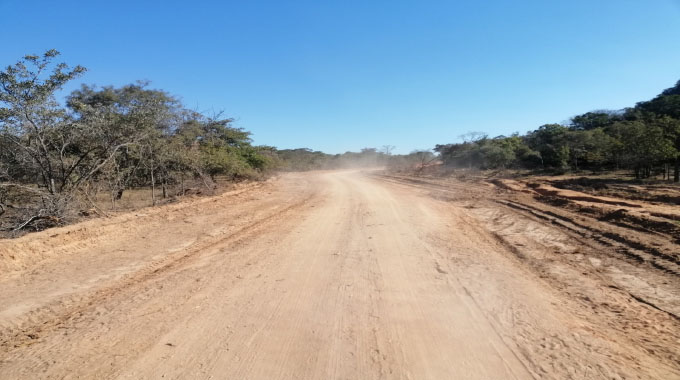
Tapera Gwezhira, [email protected]
FOR many people living in the remote communities of Fumugwe, Mkuwa and surrounding areas in Matobo District, a simple journey to a clinic, school, market or business centre has never been simple. It often meant travelling long distances on poor roads, paying high transport costs and enduring delays that many urban residents would find hard to imagine.
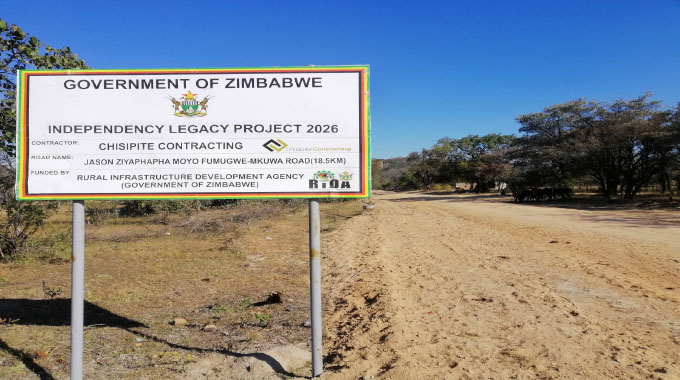
That is why excitement is growing across the area as the 18.5-kilometre Jason Ziyaphapha Moyo (JZM) Fumugwe-Mkuwa Road nears completion and prepares to open to traffic.
The road, which has been constructed by Chisipite Contractor under the Rural Infrastructure Development Agency (RIDA), is one of the Government’s Independence Legacy Projects. For local communities, however, it represents much more than a road. It is a gateway to easier travel, improved access to essential services and new economic opportunities.
A recent inspection of the project found that construction is now about 98 percent complete. Major works such as bush clearing, road formation, gravelling and the construction of 38 culverts have all been finished.
What remains are final touches before the road is officially handed over to the community. These include opening some drainage channels, adding gravel on a few sections, widening narrow stretches and painting guide markers near culverts.
For residents who have waited years for reliable road infrastructure, the finish line is finally in sight.
Matobo District Development Coordinator Mr Obey Chaputsira said the road is expected to transform access to services for people living in Wards 13, 18 and 23.
According to Mr Chaputsira, residents in the area have for years been forced to take lengthy routes to reach important service centres.
“The road will greatly improve access to essential services and reduce travelling costs for local communities. It also strengthens connectivity between Kezi and Plumtree via Figtree, creating a shorter and more convenient route for motorists and transport operators,” said Mr Chaputsira.
He said communities previously travelled between 100 and 120 kilometres to access services in Mapisa, but the new road will shorten that journey to about 40 kilometres.
For many families, that reduction will mean more than saving fuel or transport fares. It could make the difference between reaching a hospital on time or not. It could mean farmers getting their produce to market faster. It could mean children and teachers having easier access to schools throughout the year.
Mr Chaputsira noted that public transport has long been a challenge in the area because transport operators were often reluctant to use roads that were difficult to navigate, especially during certain times of the year.
With a modern and improved road now in place, he believes transport services are likely to increase, making travel easier and more affordable for local people.
He also pointed out that the route traditionally used by communities depends on a bridge that often becomes impassable during the rainy season when rivers flood.
The new road will provide an important alternative route, ensuring that communities remain connected even when other roads become inaccessible.
For villagers who have lived with these challenges for years, the road is already changing how they view the future.
Mr Njabulo Sibanda, a resident of Fumugwe, said the project has brought new hope to many households.
“We had serious problems, especially when transporting sick people to hospital. There was no proper road and reaching Mapisa Hospital took a lot of time. It was painful,” he said.
Like many residents, Mr Sibanda remembers the difficulties people faced during emergencies, particularly when medical attention was urgently needed.
He said the poor state of the road network also pushed up transport costs, placing an additional burden on already struggling families.
“Transport was very expensive. But now we hope life is going to be better. God has intervened and we are very thankful to RIDA and the contractor. They persevered even during the rainy season when their machinery was sinking in swampy areas.”
For residents, the road is expected to bring practical benefits that will be felt almost immediately. Easier movement of people and goods could help lower transport costs, improve access to services and create opportunities for local businesses.
Mr Sibanda believes the community will benefit significantly from the development.
“Our lives are now better. We believe transport fares will come down. We are grateful for what has been done for us,” he said.
While celebrating the progress made, he appealed for further road development in the area.
He urged the Government to consider opening another route linking Fumugwe and Marula, arguing that it would create an even shorter connection to Plumtree and Bulawayo while improving access to health facilities and other essential services for communities along that corridor.
Behind the completed road lies a story of determination and perseverance by the construction team.
According to Chisipite Contractor Operations Manager Mr Lameck Ngundu, the project was among the most challenging road construction jobs the company has undertaken.
The difficulties began with the terrain itself. Large sections of the route passed through swampy ground that made construction extremely difficult, particularly during the rainy season.
“We did three times the work we were initially asked to do. We encountered unsuitable soil formations and had to excavate deeply and place large quantities of gravel to stabilise the road,” he said.
Building the road required additional resources, technical expertise and extended working hours to overcome challenges that were not fully apparent when the project started.
Mr Ngundu said the company often had to battle harsh conditions to keep construction moving.
“Our machinery kept sinking during the rainy season, but we fought against all odds. There were times when we worked throughout the night under immense pressure to meet deadlines.”
At the height of construction activity, the contractor deployed significant machinery to the site, including 10 tipper trucks, three excavators, four graders, two bowsers and two compactors.
Despite the difficulties, Mr Ngundu expressed pride in what the team had achieved.
“We are happy to have participated in this Independence Legacy Project. The road should serve the community for many years before requiring major rehabilitation and is capable of safely carrying heavy loads,” he said.
He also thanked local villagers for supporting the project and cooperating with construction teams throughout the process.
As the final stages of work are completed, expectations remain high among residents who hope the road will become a catalyst for development across the district.
Better roads often do more than connect places. They connect people to opportunities. Farmers gain easier access to markets. Businesses can move goods more efficiently. Learners and teachers can travel safely. Patients can reach health facilities more quickly.
For the people of Fumugwe, Mkuwa and surrounding communities, the JZM Fumugwe-Mkuwa Road represents exactly that kind of change.
After years of isolation, difficult journeys and limited transport options, local residents can finally look forward to a future where movement is easier, services are closer and opportunities are within reach. For them, this is not simply the completion of a road project. It is the beginning of a new chapter.