Online Reporter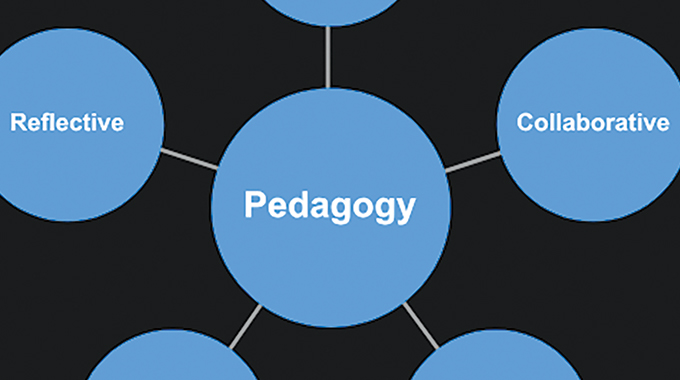
Kennedy Mandaza
TRUE to the saying, “the only thing constant in life is change,” the education field has not been spared change. Education is now more than just the transfer of knowledge from teacher to learner — it has become a transformative process that shapes the future of individuals and societies alike. As such, the traditional “one-size-fits-all” approach to teaching and learning, which was once considered effective, is increasingly proving inadequate in meeting the diverse needs of today’s learners.
Since the demands of education are evolving with time, necessitating the need to foster a generation of learners who can thrive in an increasingly complex world, Zimbabwe’s secondary school education system needs to embrace a pedagogical approach that is adaptive, research-informed, and driven by continuous improvement.
The ways in which teachers engage learners, assess their progress, provide feedback, and manage data that drives educational decision-making must also change. For Zimbabwe, like many other countries, the need for transformational, research-informed pedagogy is more pressing than ever.
It is without doubt in my mind that teachers as the central figures in the educational process, should play a pivotal role in shaping and driving this transformation through continuous engagement in research and development in pedagogy, assessment, and data management systems, which seek to enhance the quality of teaching and learning in Zimbabwe.
Across the globe, teaching as a profession has been evolving. The methods and approaches that worked a decade ago are no longer as effective in the present day. New theories of learning, advancements in technology, societal changes and the shift in the needs of learners, now shape the new order in education. Therefore, it is crucial that teachers engage in continuous research and development to remain effective, relevant and responsive in their practices.
Research in pedagogy — the science and art of teaching — has become a necessity more than ever before. Such research helps teachers understand how learners learn, what motivates them, and what strategies best support their intellectual and emotional growth.
In Zimbabwe, it is long overdue to interrogate the traditional pedagogical approach rooted in the “chalk and talk” method, where teachers lecture and learners listen passively. While this approach may have been effective in the past, it no longer meets the needs of today’s learners, who are exposed to diverse sources of information and constantly changing technological environments.
It is time research on pedagogy places emphasis on teaching and learning methods responsive to the needs of all learners. Alternative methods which create active, learner-centred learning environments which encourage critical thinking, problem-solving, collaboration, and creativity — skills that are vital in the 21st century, should be considered. Teachers should embrace the notion that learning is not a one-directional process where information is simply transmitted from teacher to learner. Instead, it should be an interactive, evolving process, where both teachers and learners actively contribute to the construction of knowledge.
This is the basis upon which research on pedagogy should be conducted in order to create an educational system in Zimbabwe that is more flexible, diverse, and has a research-based approach to teaching. Teachers should now embrace differentiated instruction, which tailors lessons to learners’ individual learning needs, interests, and readiness levels. Collaborative learning, adaptive instruction, and flipped classrooms are all pedagogical innovations that have emerged through research.
While these approaches empower learners to take ownership of their learning and encourage active engagement, teachers must actively invest in research to be better equipped to implement these methods effectively, fostering a deeper connection with learners and promoting more meaningful learning experiences.
As they say, ‘‘no pain, no gain’’, the Ministry of Primary and Secondary Education in Zimbabwe, must support teachers by introducing professional development programmes that encourage ongoing learning about the latest pedagogical practices. By creating opportunities for teachers to engage in research, workshops, and seminars, the education system in Zimbabwe can promote the adoption of evidence-based teaching practices in schools across the country.
Assessment is another critical component of the educational process where teachers should continuously research and develop. In any education system, assessment plays a central role in measuring learner progress, identifying areas of improvement, providing feedback, and making informed decisions about instructional strategies.
However, in Zimbabwe, assessment of learners has often relied on high-stakes, summative assessments, such as end-of-term, and end-of-year exams, that emphasise rote memorisation and recall, rather than demonstrating critical thinking, problem-solving, and creativity. While these assessments do provide some measure of a learner’s understanding, they fail to capture the full spectrum of a learner’s abilities and knowledge, hence the need for research.
This is where the role of the teacher in shaping and transforming assessment practices becomes crucial. Teachers must move away from traditional, summative assessments and instead embrace more formative and authentic assessment methods. Research in assessment has shown that formative assessments, which take place during the learning process, offer more valuable insights into a learner’s understanding and allow for timely interventions when necessary. These assessments might include quizzes, group discussions, presentations, peer assessments, or even projects that encourage learners to apply their learning in real-world contexts.
In Zimbabwean secondary schools, assessment should not only focus on measuring knowledge but also on fostering skills such as critical thinking, creativity, and problem-solving. Thanks to the introduction of the Heritage-based 5.0 project-based curriculum, teachers will be forced to research on formative and authentic assessment methods. These methods have shown that learners perform better when they are given opportunities to demonstrate their learning through project-based assessments, group work, and real-world problem-solving tasks. These forms of assessment encourage active engagement and allow learners to apply what they’ve learned in meaningful real-life contexts.
By embracing research, teachers must also be open to experimenting with new forms of assessment, such as performance-based assessments, where learners are required to demonstrate their learning through practical tasks and projects. This shift allows teachers to assess a broader range of skills, including creativity, communication, and collaboration, which are vital for success in the modern world. This the fulcrum of the Heritage Based 5.0 curriculum.
Furthermore, teachers should incorporate self-assessment and peer-assessment strategies, which foster a sense of ownership and responsibility for learning among learners. Research shows that when learners are involved in the assessment process, they gain a deeper understanding of their own learning journey and are better able to set goals for improvement.
As the educational landscape evolves, it is becoming increasingly data-driven, needing effective data management systems for improving teaching and learning. Teachers play an integral role in the collection, analysis, and interpretation of educational data. Effective data management systems allow teachers and school administrators to track learner progress, identify learning patterns, and make evidence-based decisions that can improve teaching and learning outcomes.
In Zimbabwe, many schools still rely on paper-based record-keeping and manual tracking systems, which are cumbersome, time-consuming, error-prone and inefficient. By adopting modern data management systems, teachers can more efficiently track learner performance, monitor attendance, and assess behaviour patterns. This data can then be used to personalise instruction, identify at-risk learners, and create tailored interventions to help learners succeed.
It is high time Zimbabwean schools invested in modern data management systems which can streamline the process of collecting, analysing, and using educational data. Research has shown that when data is effectively managed and analysed, it can significantly enhance decision-making at every level of the education system. For instance, teachers can use data to identify which learners are struggling with specific concepts and adjust their teaching strategies accordingly. School administrators can use data to identify trends in learner performance, allocate resources more effectively, and implement targeted interventions for underperforming learners.
I wish to argue that the quality of teaching and learning in Zimbabwe’s secondary schools depends on the continuous growth and development of teachers. Teachers must not only impart knowledge but also be active participants in the ongoing research and development of pedagogy, assessment methods, feedback practices, and data management systems. By moving away from outdated, one-size-fits-all approaches and embracing new teaching strategies informed by research, adopting innovative assessment practices, and using data to make informed decisions, teachers can enhance the educational experience for every learner.
However, this transformation requires a concerted effort from all stakeholders — eachers, administrators, policymakers, and the community. Teachers must be supported with ongoing professional development and access to the latest research and tools that enhance their teaching practice. Schools must invest in modern technology and data management systems to better track and analyse learner progress. Policymakers must prioritise funding for research and development initiatives that focus on improving the quality of education.
In the end, teachers are not just teachers; they are the architects of the future, shaping the minds and aspirations of the next generation. Ultimately, the goal is to create a flexible, responsive, and inclusive education system that recognises the unique needs of every learner. By embracing continuous research and development, Zimbabwe can move towards an education system that is truly transformative and prepares learners not just for exams, but for life in an increasingly complex world.