


 admin
adminThe Zimbabwe Agenda for Sustainable Socio-Economic Transformation is a blueprint largely in harmony with Sadc’s Industrialisation Strategy and Roadmap and the African Union’s Agenda 2063.
An estimated US$27 billion is required to finance Zim-Asset, and here is one proposal to unlock this funding.
Mega projects enunciated by the blueprint can be financed by friendly nations through concessionary loans and grants similar to the provisions of amenable multi-national financing institutions.
SMEs would then be financed internally mainly through the Infrastructure Development Bank of Zimbabwe, the Industrial Development Corporation, AgriBank, and the fiscus.
In addition, favourably-disposed financing agencies; non-governmental organisations and reforming Western nations could also play complementary and supplementary roles across the four Zim-Asset Clusters in the unfolding matrix.
It should be highlighted though, that success in the Value Addition and Beneficiation; Food and Nutrition and, to some extent, Infrastructure and Utilities clusters will lead to increased tax revenues.
These taxes will then accrue to the Fiscus, thereby increasing capacity to fund the fourth Cluster.
We have already seen China and Russia take a major and unassailable lead in mega projects.
China is involved with energy; water; coal and other utilities; transport and agriculture while Russia features in the US$3 billion platinum project in Darwendale.
Other mega projects that can be funded similarly include the Lupane gas project, which also has a fertiliser production element; the outstanding Zambezi-Matabeleland Water Project and various roads and rail works.
Zimbabwe should take full advantage of both long-established and emerging multi-lateral financial institutions, and not solely rely on traditional ones that tend to impose stringent, unfriendly and outdated conditionalities.
Financing institutions include the China Export and Import Bank, China Investment Bank and Asia Investment Bank.
The World Bank and IMF have in the past proved hostile and hamstrung by illegal Western economic sanctions on Zimbabwe.
Local institutions like the IDBZ; the IDC and AgriBank need to be well-funded and sufficiently capitalised first to play meaningful and decisive roles as financing agencies.
Such entities, in my view, should have core capital bases of not less than, say, US$1 billion each.
Preferably, such capital bases should be about US$5 billion each.
China has for long called on Zimbabwe to bring forward “bankable projects” for possible funding, and these three institutions stand out as ideal candidates for such funding.
When and after receiving financial injections of this nature, these institutions can then also be listed on the local bourse to, among other benefits, improve corporate governance practices and systems.
We can take a leaf from China’s experience. According to recent global statistics, the Asian giant had three of its institutions on the world’s 10 biggest quoted entities list.
Of these three, two were public enterprises (whose major equity is held by the Chinese government).
In Zimbabwe, parastatals have often been regarded as a perennial drain on the Fiscus and incapable of running efficiently and profitably.
This is a flawed point of view, if you ask me.
I have had the benefit of practical experience and, to my utter surprise, I have also found this to be a misguided view.
Once quoted, these public entities would be expected to focus on their core mandates, which by then would be financing bodies to the exclusion of roles as implementing agents or that of holding equity and trying to play controlling roles in companies they would have financed.
In the IDC’s case, their immediate focus would be reviving collapsed industries.
Such an initiative should be synchronised with the relatively new notion of special economic zones, which will result in new value-addition and beneficiation enterprises.
Zimbabwe is not in the position of Francophone countries, which are, in my view, a classic case of neo-colonialism.
On the basis of the Colonial Pact still subsisting today, these countries are bound to surrender 65 percent of their export earnings to the French treasury in Paris.
France enjoys the right of first refusal in the purchase of natural resources or produce at prices set and determined mainly in Paris.
Further, 20 percent of proceeds from these commodities is surrendered to the French treasury to service existing or future debt and other financial obligations due to France.
This, therefore, leaves these former French colonies with an inadequate 15 percent as “free funds” for all their needs, and they end up borrowing from … you guessed it – France!
These rather exploitative arrangements have only had the positive effect of making France the economic giant it is not, to the prejudice of Francophone Africa.
As alluded to earlier, Western nations and agencies that now want to do business with Zimbabwe should be welcomed to finance Zim-Asset; regional industrialisation projects and Agenda 2063, but only on our terms.
Trade, in particular, must be free, fair and equitable.
Of course, Zim-Asset’s financing requirements cannot be met solely under the model outlined above, but the model puts the funding we require well within reach and grasp.
The same goes for Sadc’s industrialisation programme and Agenda 2063.
Should other financing sources be required, we should then concurrently and vigorously pursue them.
The following are additional legal options:
(a) Reparations and compensation for colonial injustices and/or atrocities committed by Britain; and
(b) Illicit capital outflows to mainly Western countries.
Patriotic Zimbabweans were only recently shocked by news of the very long existence of skulls of our First Chimurenga heroes and heroines, which are being kept and displayed in historical museums in London.
At the very least, this warrants some remorse, apology and compensation from former colonial power, Britain.
Successful lawsuits for compensation by victims of the Mau Mau Rebellion in Kenya in the British courts are encouraging.
Namibia is taking the same route against Germany for atrocities committed against one of its biggest tribes, the Heroes, when the European power occupied that territory.
If such compensation is not urgently and voluntarily tendered in Zimbabwe’s case, then it should, therefore, be urgently sought and secured through the international justice system.
The same system should also be relied upon to secure justice for Zimbabwe for heinous atrocities committed by the same coloniser in the Second Chimurenga and the ruinous effects of the illegal economic sanctions on the country today.
Also, Zimbabwe has been a major victim of illicit capital outflows to the Western world.
These vices include massive gold smuggling through South Africa for refining and export abroad; under-invoicing of products like tobacco; the clandestine export of thousands of tonnes of diamond ore from Marange and the ongoing export of platinum ore for supposed refining.
If all such cases and others not mentioned here are pursued through the international justice system and fair compensation is secured, these could constitute massive inflows into our Sovereign Wealth Fund, part of which could be utilised to finance Zim-Asset and/or its successor blueprints.
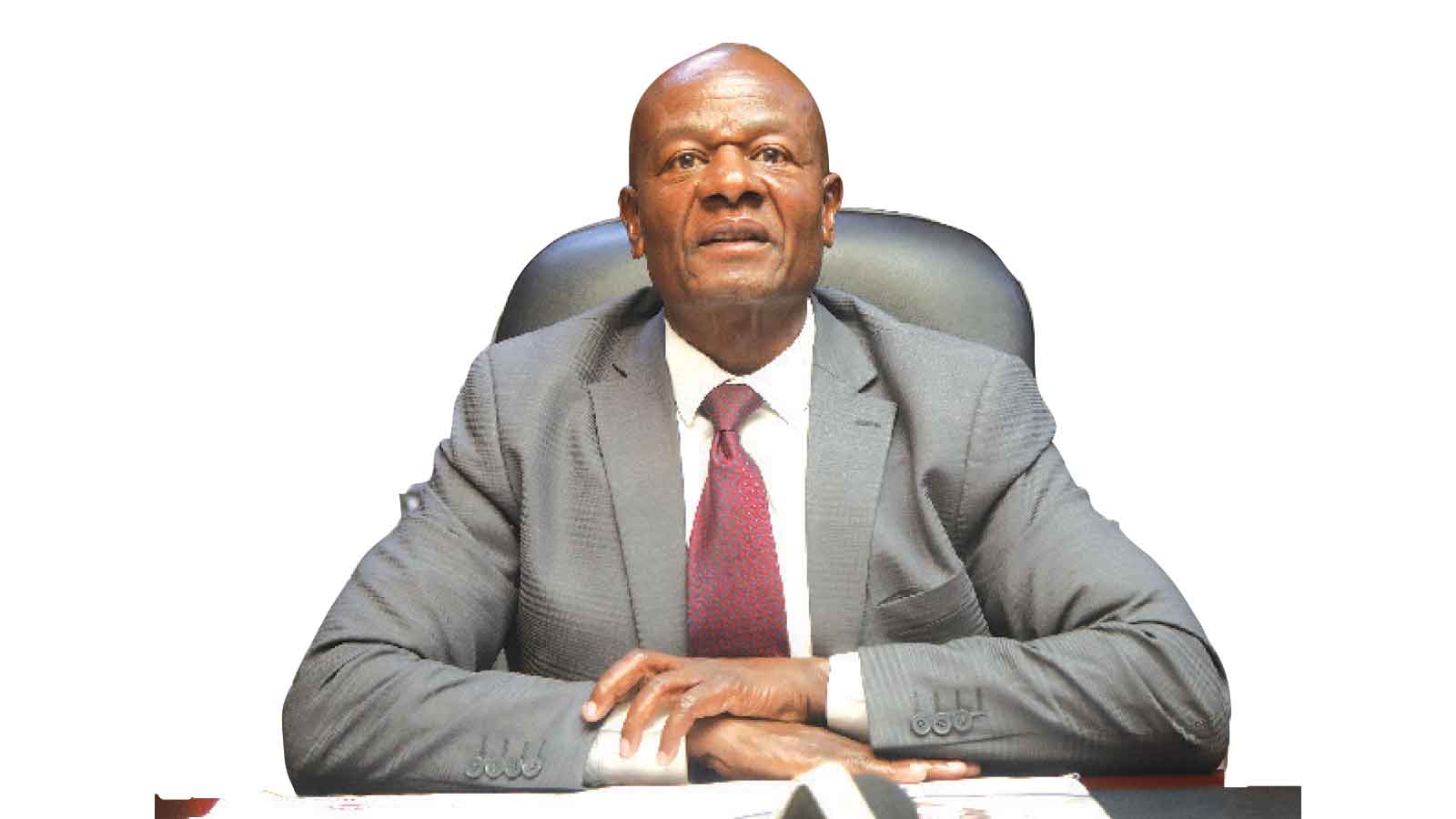
Mr Edmore Ndudzo is a certified public accountant and chartered accountant. He was Harare’s first black City Treasurer, and writes in his personal capacity.


 Online Reporter