Bruce Ndlovu [email protected]
FROM high above Bulawayo, the divide is almost as striking as it is uncomfortable. If one were to open Google Maps and look at the City of Kings and Queens from above, two different cities appear to emerge.
To the east, the landscape is splashed with green, the leafy canopies of established low-density suburbs giving the impression of a city living comfortably under the shade of its trees. To the west, however, the picture changes dramatically. Bulawayo’s high-density suburbs appear brown, their relative lack of tree cover exposing a harsher, less forgiving urban landscape. It is a distinction that
Mayor David Coltart has said is impossible to ignore, and one that speaks to a history of unequal urban development.
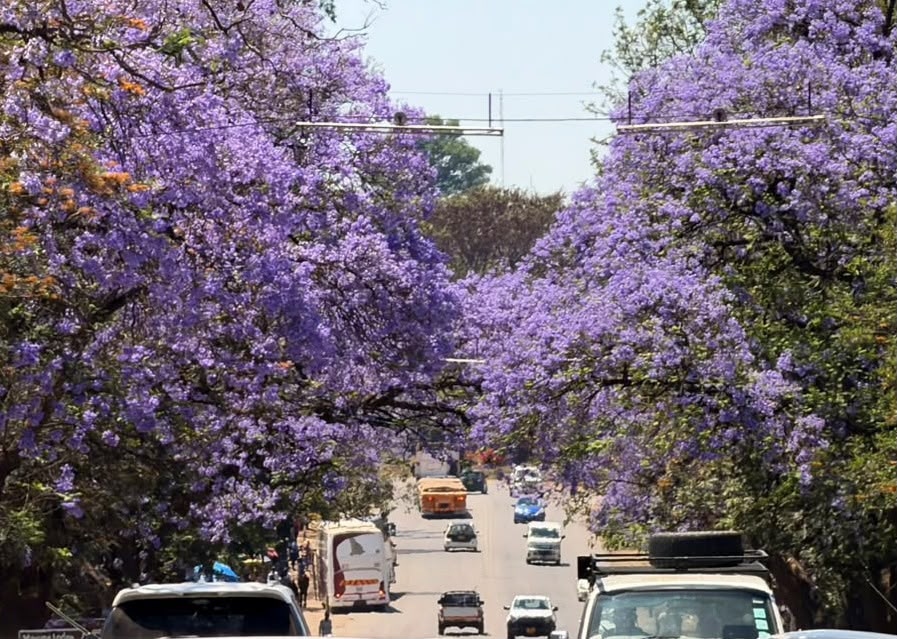
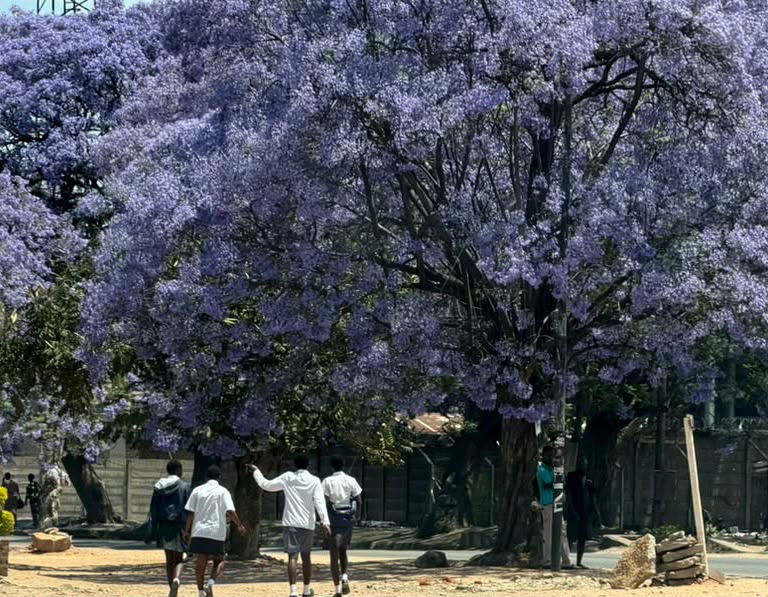
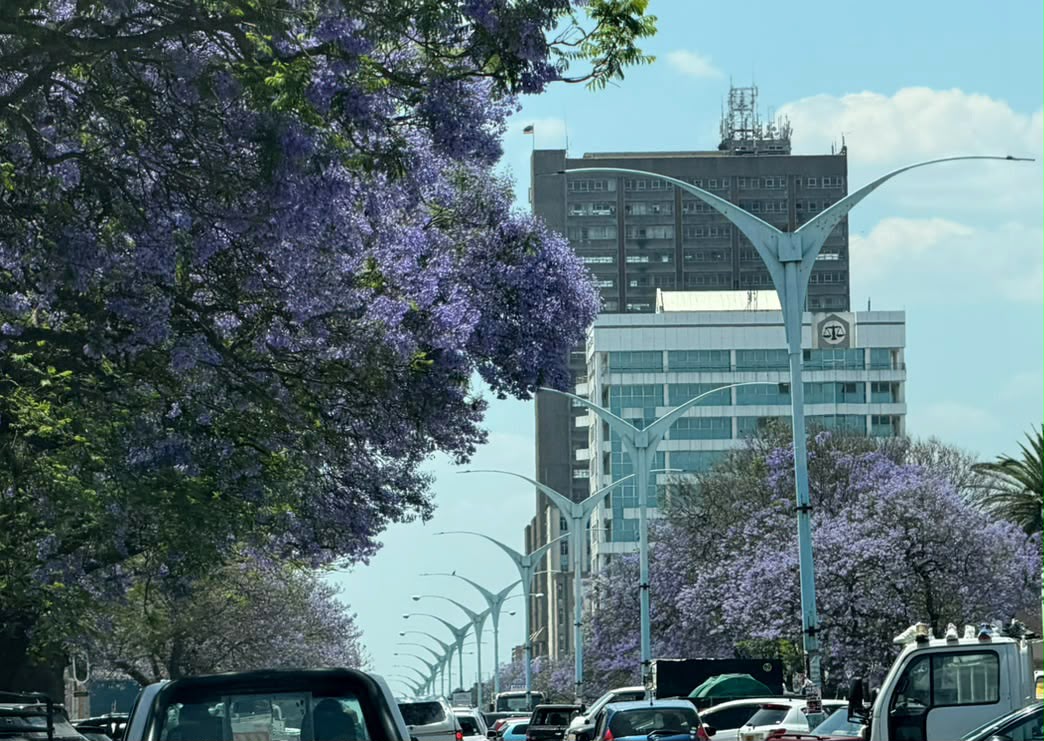
As spring arrives and Bulawayo’s celebrated jacarandas begin their annual performance, the city’s old divisions acquire another shade of purple. While the jacaranda is one of the most beloved symbols of spring in Bulawayo, its beauty is not shared equally. The tree, with its generous canopy and spectacular violet blossoms, is largely a feature of the city’s eastern and traditionally affluent neighbourhoods. In the eastern high-density suburbs, where the need for shade and greenery is arguably greater, the jacaranda is a much less familiar sight.
If trees could be accused of taking sides, the jacaranda would have a particularly uncomfortable case to answer.
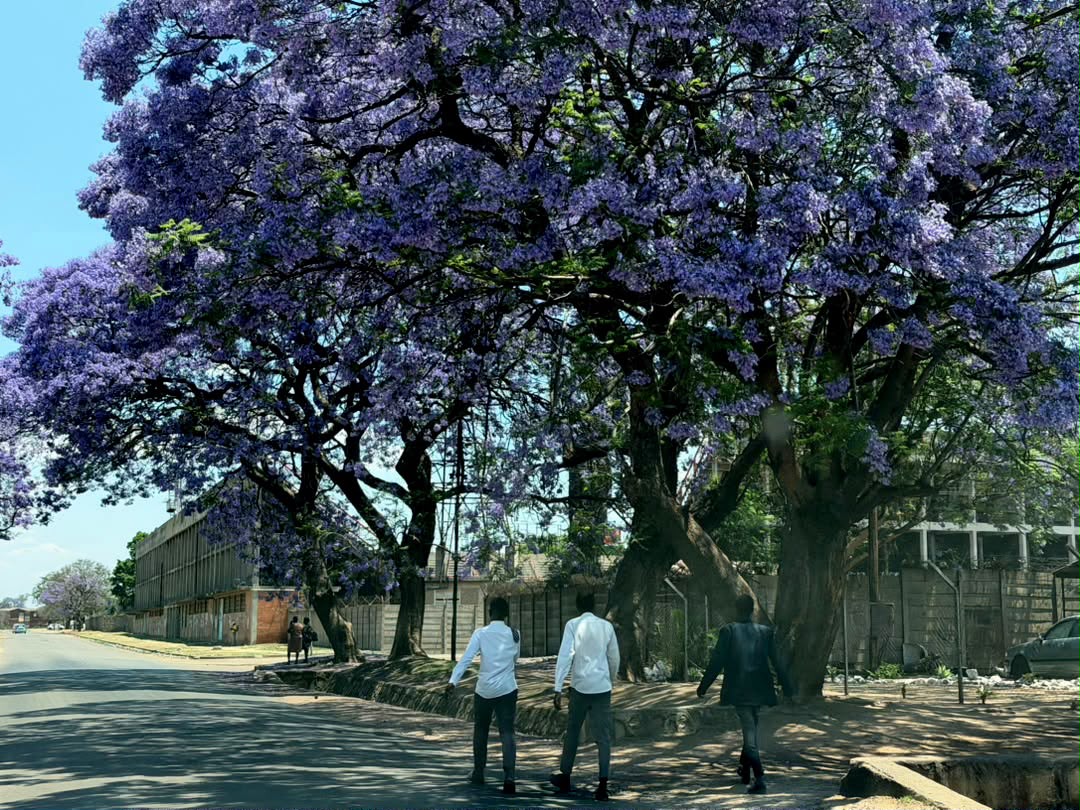
Every September and October, it returns to the streets with the confidence of an old aristocrat, carpeting pavements and gardens with purple flowers, seemingly oblivious to the fact that its seasonal generosity has been reserved for only one half of the city.
It is almost as if the jacaranda has inherited the prejudices of the colonial town planners who first gave it a home in this part of the world. This is perhaps that is where its story becomes more complicated. The jacaranda is not indigenous to Zimbabwe. Its origins lie in South America, but its journey across the world was facilitated by colonial expansion. Along with ornamental favourites such as bougainvillea, it became part of the botanical vocabulary of British colonial settlements, finding its way into gardens, streets and public spaces across the now fallen Empire.
In Africa, its purple signature can be found in cities such as Pretoria, Johannesburg, Blantyre,
Harare, Nairobi, Nakuru and Kampala.
Bulawayo, too, embraced the tree, which gradually became part of the city’s visual identity, particularly in its older, leafy suburbs.
There is a certain irony in the fact that a tree imported from another continent has become one of the most recognisable symbols of spring in a city whose indigenous vegetation has historically received considerably less attention.
According to an article titled Cabbages and Kings, published in The Herald on December 17, 1958,
Zimbabwe’s first jacaranda was planted in 1899 or 1900 in the garden of what was then 13
Montague Avenue in the then Salisbury. The street, previously known as Cape Avenue, has since been renamed Josiah Chinamano Avenue, with the original property now identified as 23 Josiah Chinamano Avenue.
When Jacaranda Mews was subsequently developed on the property, the historic tree was preserved. A plaque once stood in the grounds of number five, declaring it to be the first jacaranda planted in the then Salisbury or Southern Rhodesia, around 1900.
Bulawayo’s own relationship with the tree must be understood against this history.
The jacaranda has, of course, done little to discourage its admirers. Its flowering season remains one of the most anticipated natural spectacles on the city’s calendar. After shedding their leaves during the colder months, the trees suddenly burst into colour as temperatures rise. Their branches become crowded with clusters of purple and blue-violet flowers, transforming ordinary streets into picturesque avenues.
For a few weeks, the city seems to soften as the fallen blossoms form colourful carpets beneath the trees, while their expansive canopies provide welcome shade from the increasingly unforgiving sun.
There is something almost theatrical about the transformation. The jacaranda spends much of winter looking bare and unremarkable, only to emerge in spring as though it has been saving its finest performance for an appreciative audience.
It is easy to understand why generations of residents have developed an affection for it.
In Johannesburg, for instance, the jacaranda has become so deeply embedded in the city’s identity that its flowering season is practically a cultural event. The University of Pretoria has even suggested that Johannesburg may now have more jacarandas than Pretoria, the city whose purple spring is particularly famous.
The enormous canopies that frame beautiful homes today were often planted decades, sometimes generations, ago. What appears to be an effortless natural feature is actually the result of decisions made by people who understood the long-term value of trees.
Yet the jacaranda’s beauty also comes with an ecological complication. The tree is classified as an alien species and can become invasive. Its light, winged seeds are easily dispersed by wind, allowing it to spread beyond gardens into natural environments, where it can compete with indigenous vegetation. This is one of the reasons why Bulawayo is now reconsidering its relationship with exotic trees.
Speaking at the official opening of an indigenous tree pocket forest at Centenary Park last year,
Mayor Coltart announced an ambitious plan to plant 10 million indigenous trees across the city
over the next decade.
The initiative is part of the local authority’s broader environmental programme, which seeks to
restore ecological balance while addressing the unequal distribution of green spaces across
Bulawayo.
Coltart said the city wanted to transform its appearance over the next 10 to 20 years through
indigenous tree nurseries, urban micro-forests and school-based planting initiatives.
He returned to the striking contrast visible on satellite images of the city, arguing that the brown
landscape of high-density suburbs was evidence of historical neglect.
“Our rural areas are blessed with naturally regenerating forest ecosystems sustained by birds,
animals, and insects, not human hands. Yet in the city, we have planted poisons like syringas and
jacarandas. They’re dying now, leaving us browner and poorer for it,” he said.
The mayor’s remarks may be uncomfortable for those who have grown attached to the jacaranda,
but his argument is not difficult to understand.
Why should the privilege of growing up beneath a generous tree canopy be determined by the
suburb in which one is born?
“Why should only low-density suburbs have shade, clean air, and birdsong? We need every child in
Mpopoma or Nkulumane to grow up under a umkhomo (baobab tree), not a withering syringa,” he
said.
The plan is not simply about replacing one tree with another. It is also about restoring the
relationship between communities and their natural surroundings.
The city’s environmental policy includes the development of urban micro-forests, school-based
nurseries and stricter regulations governing exotic species. Mayor Coltart said communities,
particularly young people, would have an important role to play in the programme.
“We must empower communities to grow their own nurseries and re-green Bulawayo’s neglected
spaces. They are not uniform. There are literally about 100 species. We have drawn these from
obviously the region. It’s not just a matter of planting trees,” he added.
The significance of indigenous trees extends beyond their ability to provide shade.
Speaking at the same event, African Indigenous Tree Planters representative Busi Malunga
described the restoration programme as an act of cultural reclamation as much as environmental
conservation.
“Today, we are not just planting trees, we are sowing seeds of resilience, pride, and possibility,” she
said.
“These trees are not just carbon sinks or shade providers but they are living libraries of medicine,
food, and ancestral knowledge. When we lose indigenous trees, we erase chapters of our history and
compromise our future.”
It is an argument that places the jacaranda in an interesting position. For all its beauty, it cannot
offer the same connection to local ecosystems and ancestral knowledge as the indigenous trees that
once formed part of the region’s natural landscape.
There are already efforts to change the way Bulawayo thinks about its environment.
Green Hut Trust, responding to Coltart’s call for micro-grants under the Youth Climate Action
Fund, developed Project Guquka, an initiative targeting two interconnected challenges: solid waste
management and urban greenery.
The project seeks to encourage communities, particularly young people, to take responsibility for
their surroundings while helping restore Bulawayo’s tree cover through the planting of indigenous
species.
Its emphasis is on selecting trees that are better suited to local conditions, support biodiversity and
provide practical benefits, including food through fruit-bearing varieties.
The ambition is to make streets and public spaces greener while improving air quality and
strengthening the city’s resilience to climate change.
In this emerging vision of Bulawayo, the jacaranda may no longer enjoy the unquestioned status it
has held for generations.
It would be unfair, however, to suggest that the tree itself deliberately set out to discriminate
against Bulawayo’s eastern suburbs. It did not draw the city’s boundaries, decide where the leafy
avenues would flourish or determine which communities would enjoy the benefits of carefully
planned green spaces.
Yet, through the peculiar magic of personification, the jacaranda makes a convenient defendant in a much larger historical case.
Every spring, it returns to remind Bulawayo of its beauty, but also of the inequalities hidden beneath that beauty. It stands proudly along streets where generations of investment have allowed it to flourish, seemingly content to leave other parts of the city waiting for their own green revolution.
Perhaps the jacaranda should be reminded that spring belongs to everyone.
The children of Nkulumane, Mpopoma, Emganwini and Cowdray Park deserve their own seasonal spectacles. They, too, deserve streets where birds gather, where shade offers relief from the summer heat and where trees become part of childhood memories.