Mashudu Netsianda [email protected]
FOR 16-year-old Waita Matebula Sibanda, the daily walk to school was more than a journey to the classroom. It was a battle against the sun.
Growing up in Nsenga, Binga District, Waita and her brother, both with albinism, walked a combined 22km to and from school every day, exposing their skin to prolonged ultraviolet (UV) radiation.
The consequences were distressing. Both developed moles and blisters, while their damaged skin became increasingly difficult to manage.
Their ordeal was compounded by limited healthcare services in their rural community, forcing them
to travel to Binga District Hospital for treatment.
Her brother’s condition deteriorated and he was eventually transferred to Mpilo Central Hospital in
Bulawayo, where he was diagnosed with skin cancer and placed under palliative care.
Financial constraints prevented him from completing the prescribed treatment and he later died.
Waita was also left with severe skin damage and wounds caused by prolonged sun exposure. Her
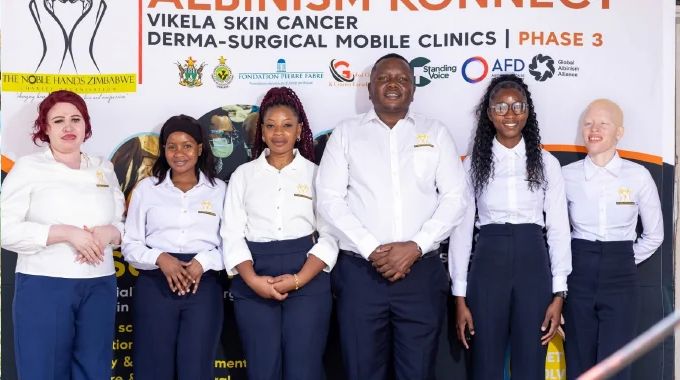
education was increasingly affected until Noble Hands Zimbabwe, a Bulawayo-based organisation
supporting people with albinism, people with disabilities, orphans and disadvantaged communities,
intervened.
Waita is now attending school in Bulawayo, with the organisation assisting with her educational
and medical needs.
Her story is a sobering reminder that, for people with albinism, exposure to the sun can have
consequences far beyond temporary discomfort.
As Zimbabwe experiences rising October temperatures, the risks are becoming more difficult to
manage for people whose livelihoods, education and daily responsibilities require them to spend
long hours outdoors.
For a schoolchild walking several kilometres to class, a farmer tending crops or a vendor selling
goods by the roadside, avoiding the sun is not always an option.
However, without adequate protection, repeated exposure to ultraviolet radiation can cause severe
skin damage and increase the risk of developing skin cancer.
For many people with albinism, the challenge is not simply understanding the dangers. It is finding
the resources to protect themselves.
Noble Hands Zimbabwe Trust executive director Willard Musiyarira said the organisation had
encountered several cases of skin cancer among people with albinism, particularly those whose
livelihoods depended on outdoor work.
He recalled cases involving people working in tea plantations in the Eastern Highlands, where
spending long hours in the sun without adequate protective clothing or sunscreen had exposed
them to serious skin complications.
“In Manicaland, we had cases of people with albinism fighting skin cancers because they survived
by working in tea plantations. That exposes them to the sun as well because when it comes to
plantation work, you work throughout the day for you to earn money and be able to look after your
families,” he said.
The situation is particularly dire in rural communities, where access to healthcare facilities and
protective products is often limited.
“The temperatures are quite high, yet access to services is also quite low because people have to
travel a long distance to go to a clinic, shops and schools,” said Mr Musiyarira.
He said the cost and availability of sunscreen is a major obstacle for many families.
“Many people with albinism, mainly in the rural areas, do not have the adequate resources to cater
for their skin challenges. Skin challenges that are due to albinism are a human rights and public
health issue that must be attended to from birth until they die,” he said.
Mr Musiyarira said the quantities of sunscreen available to some people were inadequate for their
daily protection needs, leaving them exposed despite understanding the risks.
He warned that children were particularly vulnerable, recounting cases of young people who had
developed skin cancer after years of inadequate protection.
“We have buried children who died because of skin cancer. It’s so painful that many of these
children are so disadvantaged that they would also have to walk something like eight to 10
kilometres to get to school,” he said.
Mr Musiyarira said the organisation was increasingly encountering people with skin cancer in their
teens and early adulthood, underlining the need for earlier intervention and better access to
preventive care.
However, for people who depend on farming and informal trading, avoiding direct sunlight means
sacrificing income.
In Sigodini Village, Matobo District, Matabeleland South, Mr Whiteman Moyo, a farmer, said rising
temperatures had forced him to cut short the hours he spent working in his fields.
“During the hot periods, I can no longer spend long hours in the fields. By 8AM, it would already be
too hot, forcing me to return home. As I speak, my brother is battling skin cancer because of the
heat and is admitted to a hospital in Maphisa,” he said.
Mr Moyo also struggles with poor eyesight, another challenge associated with albinism, which
further limits his ability to work.
The combination of skin vulnerability and visual impairment makes earning a living particularly
difficult. Spending fewer hours in the fields may reduce sun exposure, but it can also affect
agricultural productivity and household income.
For Mr Moyo and other farmers in similar circumstances, the choice is often between protecting
their health and completing the work needed to sustain their families.
The same dilemma confronts informal traders in urban areas, where finding shade is not always
possible and leaving work early can mean losing customers and income.
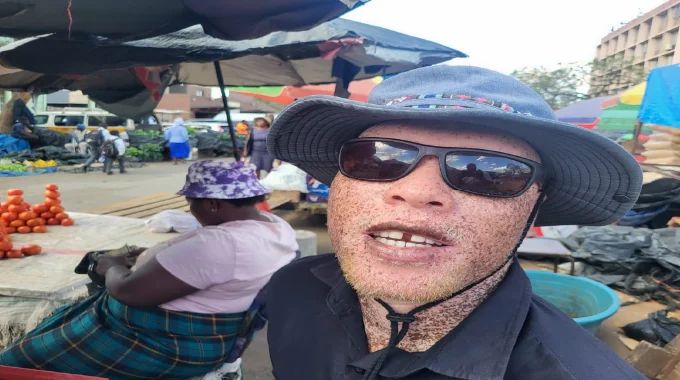
In Bulawayo, Mr Anesu Kudzerema (29), a vendor operating at the Fifth Market area, said the
heatwave had worsened his anxiety about his skin.
“With this heatwave, for us with albinism, it’s a terrible moment. Sometimes the skin develops
rashes such that you end up panicking and wondering whether those are the early signs of the
deadly skin cancer, which in most cases is the leading cause of death for people with albinism,” he
said.
Mr Kudzerema said that although he understood the dangers of prolonged sun exposure, financial
challenges often made it difficult to stay indoors.
“Due to these high temperatures, you end up failing to engage in other businesses that expose us to
the sun even if there is a lot of money involved. Even when people like us understand the risks of
sun exposure, we also lack the resources to protect ourselves consistently,” he said.
After losing his job at a bakery in 2022, Mr Kudzerema turned to vending to support his family.
He said he had left his former employment after his employer wanted to transfer him to a room
with ovens, where the temperatures were not conducive to his skin condition.
Now, his working day involves balancing the need to earn a living against the risks of spending hours outdoors.
“Sunscreen lotions are quite expensive, especially those that can protect you for 24 hours, and some
of us cannot afford them. As informal traders, we spend the whole day at work under the sun, which
means you also need to protect your skin,” said Mr Kudzerema.
His visual impairment presents additional challenges in running his business, including difficulties
identifying torn banknotes, which can leave him counting losses when he needs money to restock.
Mr Kudzerema said he sometimes reported for work as early as 6AM to avoid the worst of the heat,
but still faced long working hours.
His experience illustrates how the effects of albinism extend beyond healthcare, influencing
employment opportunities, income security and everyday independence.
Bulawayo-based dermatologist Dr Rulani Makondo said people with albinism were particularly
vulnerable to the damaging effects of ultraviolet radiation because their bodies produce little or no
melanin, the pigment that gives colour to the skin, hair and eyes and helps protect the skin from the
sun.
“Without adequate protection, prolonged exposure can cause sunburn, premature skin ageing and
precancerous lesions that may develop into skin cancer. Melanin deficiency predisposes people to
the harmful effects of ultraviolet radiation,” she said.
“In Zimbabwe, this risk is multiplied by the environment. We are saying every hour that’s spent
outdoors causes cumulative DNA damage in people with albinism.”
Dr Makondo said squamous cell carcinoma was among the most common skin cancers affecting
people with albinism and could be particularly aggressive if not detected and treated early.
She said people with albinism could develop precancerous lesions from a young age, with invasive
skin cancers becoming more evident in young adulthood.
“The danger is compounded when suspicious sores or other skin changes go untreated because of
financial constraints or difficulties accessing specialised medical services,” said Dr Makondo.
She noted that Zimbabwe does not have a national registry specifically tracking skin cancer among
people with albinism, making it difficult to establish the full extent of the problem.
However, the 2022 national census recorded 9 753 people with albinism in the country.
For those living in remote communities, reaching a facility equipped to identify and treat skin
cancer can involve long journeys and additional expenses.
Dr Makondo said early detection and consistent sun protection were essential in reducing
complications.
She recommended broad-spectrum sunscreen with a sun protection factor (SPF) of at least 50,
offering protection against both UVA and UVB radiation.
“SPF measures how well a sunscreen protects your skin from UVB rays, which cause sunburns and
play a major role in causing skin. The sunscreen lotion should be applied at least 15 to 30 minutes
before going outdoors,” said Dr Makondo.
She also advised people with albinism to use wide-brimmed hats, long-sleeved clothing and UV-
protective wraparound sunglasses, while limiting exposure during hours of extreme sunlight.
“Where possible, outdoor activities should be scheduled for the early morning or later afternoon,
when ultraviolet radiation levels are generally lower,” said Dr Makondo.
However, such advice can be difficult to follow for people who have to work outdoors throughout
the day or children who must walk long distances to school.
In 2025, the World Health Organization (WHO) added broad-spectrum sunscreen to its Model List
of Essential Medicines for the prevention of skin cancer in people with albinism. The decision
recognised sunscreen as a medical necessity for this population rather than simply a cosmetic
product.
The development strengthens calls for countries to consider how sunscreen can be made more
accessible through their own public-health systems.
Dr Makondo called for sunscreen with an SPF of at least 50 to be included on Zimbabwe’s essential
medicines list and provided free of charge to people with albinism at public health facilities.
She said preventive care should be accompanied by routine skin examinations, early treatment of
suspicious lesions and improved access to specialised services.
Zimbabwe also has a legal framework that recognises the healthcare needs of people with
disabilities. The Persons with Disabilities Act, 2025, provides for access to free or affordable healthcare and specifically recognises that people with albinism are entitled to necessary support.
“Schools could also help by providing shaded play areas and adjusting outdoor activities during
periods of intense sunlight, while employers and local authorities could consider shaded
workspaces and arrangements that reduce prolonged exposure,” said Dr Makondo.
For Waita, the death of her brother is a harsh reality of the consequences of inadequate protection
and delayed access to treatment.
Her experience also highlights the particular vulnerability of children who must walk long distances
to school, often with limited access to sunscreen, protective clothing and specialised healthcare.
While the heatwave has brought these challenges into sharper focus, the need for skin protection
does not end when temperatures fall.
Dr Makondo emphasised that people with albinism require year-round protection from ultraviolet
radiation, alongside regular screening and prompt medical attention for suspicious skin changes.
“We are saying, for rural families, informal traders and agricultural workers, that protection must
also be affordable and accessible. Without it, the ordinary routines of attending school, tending
crops and selling goods can carry a serious health risk,” she said.