

 Online Reporter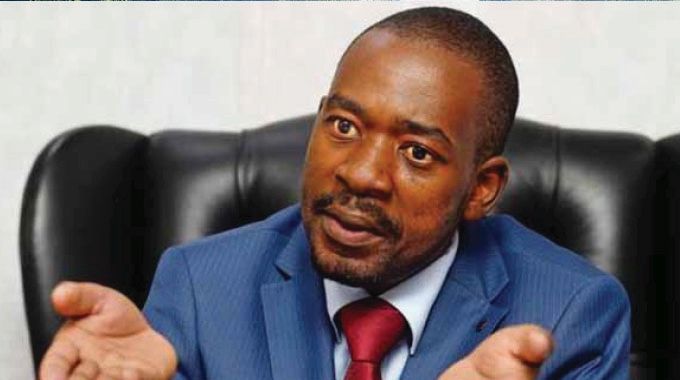
Alexander Rusero and Ranga Mataire
Nelson Chamisa’s re-emergence into Zimbabwe’s political arena has been met with quiet scepticism.
For many years, he embodied the emotional and symbolic core of opposition politics, commanding mass rallies and mobilising youthful energy. His gravitas was not accidental; it was earned by his ability to translate ephemeral disillusionment into political momentum.
Yet, politics is ultimately about timing, context, and moments. Leaders rise not merely because they are gifted, but because historical conditions align in their favour. Nowhere in the world has emotional inclination ever been turned into reality overnight unless one is a socially awkward kindergarten avid follower of Harry Potter or Alice in Wonderland where reality is infused with phantasmagorical episodes.
Since his withdrawal from formal party politics, Zimbabwe’s political landscape has not stood still. The ground has shifted. Zanu-PF has recalibrated its political strategy.
Through targeted empowerment initiatives, infrastructure development, agricultural support schemes, and visible service-delivery projects, the ruling party has sought to re-anchor its legitimacy in material outcomes rather than rhetorical appeals.
The revival of a “politics of deliverables” has contrasted sharply with an opposition tradition that, in recent years, leaned heavily on slogans, moral claims, and protest symbolism. While governance deficits remain, the ruling party’s effort to reclaim lost ground through tangible programmes has complicated opposition messaging and narrowed the space for purely emotive mobilisation.
At the same time, Chamisa’s return unfolds against a radically altered global context. The liberal democratic narrative that once underpinned much of Africa’s opposition politics has lost its persuasive power. While yesterday the opposition used to ride on an unquestionable blind endorsement from some powerful Western nations, the global context has changed.
Many of the countries that were opposition buffers are having to grapple with their own myriad of domestic and geopolitical issues. In the case of America, the change of administration has led to drastic changes of its foreign policy. Many of quasi-democracy groups that used to be funded by the United States government have folded following the withdrawal of funding.
Zanu-PF’s longevity, the birth of a Second Republic whose major foreign policy thrust is anchored on engagement and re-engagement has resultantly forced erstwhile adversaries to rethink and re-model their policies.
Across the world, democracies are grappling with polarisation, inequality, institutional decay, and declining public trust. Western liberal models, long presented as normative benchmarks, are increasingly questioned even in their countries of origin. This global fatigue with democracy discourse has weakened the moral leverage that opposition movements traditionally enjoyed. Appeals to “democratic restoration” now resonate less in an international environment preoccupied with security, energy, migration, and geopolitical competition.
Closely linked to this shift is the gradual decline of the NGO and donor-driven political ecosystem that sustained much of Zimbabwe’s opposition infrastructure. Civil society funding has contracted, international advocacy has softened, and Western influence has become more selective and pragmatic.
For decades, external support networks functioned as critical pillars of opposition survival, providing resources, platforms, and diplomatic pressure. Their weakening represents a structural blow to an opposition movement that has not yet fully reconstituted itself as a self-sustaining, locally embedded political machine. In this environment, moral legitimacy alone is insufficient; organisational depth and economic relevance have become decisive.
Chamisa’s own political trajectory adds another layer of complexity. His abrupt departure from active leadership left millions of supporters politically stranded, disoriented, and demobilised. Many invested emotionally, financially, and socially in his leadership, only to witness a sudden withdrawal without a clear succession plan or institutional transition.
His return inevitably raises uncomfortable questions: What guarantees exist that this will not happen again? Has the underlying culture of personalised leadership changed? Or are supporters once more being asked to suspend doubt in favour of hope?
None of this negates Chamisa’s historical significance or political skill. He remains a recognisable opposition figure of his generation. However, political capital depreciates when it is not converted into durable institutions.
Charisma fades when it is not anchored in systems. And legitimacy weakens when continuity is disrupted. A comeback, therefore, is not merely about visibility; it is about rebuilding trust through consistency, predictability, and organisational renewal. While he has variously branded himself as representing the young and the future, his autocratic tendencies have placed him in the crosshairs of the public.
Many Zimbabweans will remember how in the run-up to the 2023 Harmonised Elections when he, as leader of CCC, banned the holding of primary elections and insisted on an archaic way of electing representatives through open affirmation of lining behind an aspiring candidate. He called it “bereka kumusana”. It was a shocking development that revealed a dastard psyche that is anti-transparency and anti-democratic. His attempt to centralise power on himself and ban any official titles on any of his top members further painted him as a leader who despises accountability.
Many of his top lieutenants felt disillusioned and the flaring up of political divisions witnessed after the elections was inevitable. Instead of retracing his footsteps and trying to make amends with his colleagues, Chamisa decided to leave politics claiming that his party had been infiltrated. Some believe his unceremonious departure from politics signalled the end of his political career as hordes of his supporters were left in political quandary rudderless.
Zimbabwe does not benefit from a weak or fragmented opposition. A governing party is most effective when it is challenged by a credible, disciplined, and policy-driven alternative. A formidable opposition sharpens accountability, deepens policy debate, and reminds those in power of the weight of their mandate. In that sense, Chamisa’s return should be judged not by crowd sizes or rhetoric, but by whether it contributes to the construction of a mature, institutionalised political force.
One hopes that this moment marks not a nostalgic replay of past scripts, but a sober recalibration. If Chamisa can transform personal popularity into collective leadership, slogans into programmes, and emotion into organisation, his return may yet be consequential.
If not, it risks confirming that while he once defined a political moment, history has quietly moved on.
For Zimbabwe’s democratic health and governance quality, the country deserves better than recycled cycles of rise, retreat, and return. It deserves an opposition equal to the seriousness of its national challenges, and a ruling party constantly reminded of its duty to serve.


The supposedly return of Nelson Chamisa into mainline opposition politics must never be taken lightly in the face of what happened in Syria and Venezuela, and equally so in Tanzania, Cameroon and Uganda after their elections and the threat Iran and South Africa face from Trump and company. We have warned the leaders of this country not to read too much into the supposedly conciliatory approach that the USA offered through its embassy recently. It was however very ambiguous and as usual, rhetorical. Chamisa could be a Trump project in its infancy. Remember he didn’t need the whole Venezuelan population’s buy in to capture Nicolas Maduro and his wife and establish a new regime. What Zimbabwe must be wary of is not the effigy of Chamisa in our politics but the resurrection of Western World interest in removing liberation movements from governments in Southern Africa using proxies.
The supposedly return of Nelson Chamisa into mainline opposition politics must never be taken lightly in the face of what happened in Syria and Venezuela, and equally so in Tanzania, Cameroon and Uganda after their elections and the threat Iran and South Africa face from Trump and company. We have warned the leaders of this country not to read too much into the supposedly conciliatory approach that the USA offered through its embassy recently. It was however very ambiguous and as usual, rhetorical. Chamisa could be a Trump project in its infancy. Remember he didn’t need the whole Venezuelan population’s buy in to capture Nicolas Maduro and his wife and establish a new regime. What Zimbabwe must be wary of is not the effigy of Chamisa creeping back into our politics but the resurrection of Western World interest in removing liberation movements from governments in Southern Africa using proxies. Nelson’s father (MHSRIP) was a decorated military man in Ian Smith’s Rhodesian army. A man who died with blood of our liberation heroes dripping from his hands. In Shona we say Mwana wenyoka inyoka. Nelson cannot be trusted.