


 Online Reporter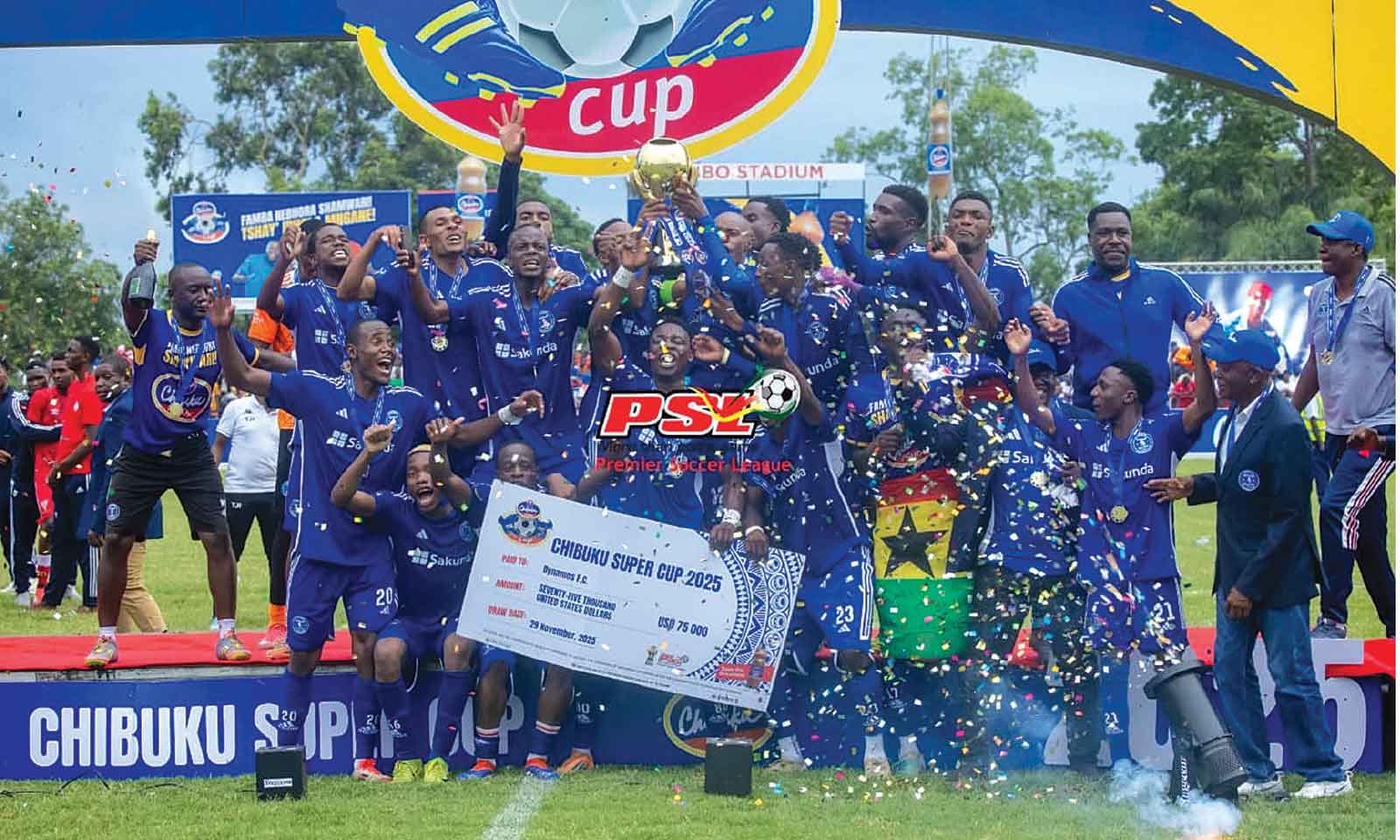
Veronica Gwaze
Zimpapers Sports Hub
THE just-ended Premier Soccer League (PSL) season will be remembered at Dynamos as a long, punishing ride that came close to breaking the country’s biggest club.
For months, DeMbare lived on a knife edge.
Missed chances, muddled tactics and constant internal strife dragged them into a fight they never expected to be part of.
Week after week, the log table told a story that felt unreal for a club of its size.
Dynamos were not chasing titles; they were running from relegation.
Early warning signs were there from the start.
Results were not coming, performances lacked conviction and frustration spilled into the stands.
Supporters turned their anger on the leadership and the technical bench, demanding change as fear replaced belief.
It took time for the club to accept how deep the trouble ran, but by May, action finally came.
Lloyd Chigowe was dismissed and Saul Chaminuka took over, arriving just a week after leaving Kwekwe United.
His mandate was clear: Stop the slide. Restore order. Save the season.
Instead, the crisis deepened.
Dynamos managed just one win in 10 matches under Chaminuka and sank to 17th place in an 18-team league.
Confidence drained away, followed by discipline.
In July, Chaminuka was suspended and later fired after a run of poor results and off-field chaos.
His downfall was sealed in June 2025 when he ordered his players off the pitch during a match against FC Platinum, leading to its abandonment.
The PSL fined him US$4 000 and handed him a two-match touchline ban.
Dynamos were docked points, a 3-nil defeat was recorded and their already fragile season took another calamitous turn.
By then, relegation no longer felt theoretical.
It felt inevitable for a club with a claimed following of seven million.
“We were fighting relegation, but we still could not believe it until later in the season,” said Dynamos marketing executive David Chikomo.
Denial lingered even as the log table screamed danger.
When the reality finally sank in, the club moved again; this time with urgency.
Kelvin Kaindu was appointed, tasked with one onerous mission — Keep Dynamos alive.
The Zambian coach arrived with little time and less room for error.
The pressure was immense, but his impact was immediate.
Something shifted. Belief returned. Structure followed.
Under Kaindu, Dynamos went on an 11-match unbeaten run.
Wins and draws began to stack up, yet survival stubbornly refused to come easily.
“It is until the time we hired coach Kaindu that we realised we were in trouble. We went 11 games without defeat, yet we still found ourselves in relegation . . . ,” said Chikomo.
“This was a tough phase, but we had to keep the faith and trust the coach.”
On the final day of the season, nothing was settled.
Dynamos entered the afternoon still staring into the abyss.
Every touch carried weight.
Every minute stretched.
A goalless draw against FC Platinum proved just enough.
Help came from elsewhere.
When the dust settled, DeMbare finished 13th, bruised but alive.
Relief barely had time to settle before the club shifted focus.
A week later, Dynamos poured everything into the Chibuku Super Cup and emerged champions for the third straight year.
Silverware softened the scars, but it did not erase the lessons.
The escape raised uncomfortable questions that refuse to go away.
Dynamos’ season began with uncertainty and ended with survival, but the cracks were visible throughout.
Preparation was thin. Resources were stretched. Shortcuts were taken.
“If a club fails to prepare well and in time for a coming season, they are bound to find themselves struggling because there is no cutting corners in the game,” said CAPS United legend and analyst David Sengu.
“Preseason preparations are the foundation, so if the foundation is not laid well, then the structure will be shacky. This has been one of the major shortcomings of some of these traditional giants since the time I was a player.”
For a club of Dynamos’ stature, preseason trials told their own story.
Traditionally, giants like Dynamos, CAPS United and Highlanders rely on development structures and carefully selected signings.
This season, Dynamos leaned heavily on trials and lower-division recruits, largely because they had little choice.
Operating on a zero budget, the club signed Leeroy Mavunga, Enasio Perezo Jnr, Jairos Kasondo, Ephraim Gwekwerere from Division Two, Frank Agyemang and free agents Tellmore Pio and Clive Mandivei.
The gamble failed. Results suffered. Confidence dipped further.
“The club failed to support the coach. Sadly, this is not new because even during our time that is what they used to do,” said a former Dynamos player.
“When a coach is not given resources or freedom to get players of his choice, even results may not come.”
Mid-season, the club turned again to free agents, bringing in Denver Mukamba, Felix Hammond, Issaka Mohammed and Wisdom Mutasa.
They were short-term fixes, but they mattered.
Mukamba inspired a vital 3-2 win over eventual champions Scottland.
Mohammed steadied the defence.
Mutasa slotted in seamlessly.
Around them, younger players grew.
Kaindu brought clarity and a defined tactical plan.
Goalkeeper Prince Tafiremutsa stood tall. Vusa Ngwenya and Shadreck Nyahwa drove midfield energy.
Captain Emmanuel Jalai anchored belief.
Club owner Bernard Marriot and his executive began to see something different.
“We saw a different light when coach Kaindu took charge and beat MWOS, CAPS and Scottland when we least expected it,” said Chikomo.
“The wins made us finally see light in the 2025 PSL season and start believing.”
Still, the damage done earlier persisted.
The abandoned FC Platinum match left Dynamos with a three-goal swing that haunted them.
They finished on 39 points, level with Chicken Inn and Highlanders, but sat lowest of the three due to a minus six goal difference.
Survival should have triggered urgency.
Instead, familiar patterns are emerging again.
Kaindu, the man who pulled them back from the edge, is currently home in Zambia after joining newboys Hardrock.
Mohammed has reportedly left.
Ngwenya, Nyahwa and Tafiremutsa are yet to be secured on new deals.
While rivals move early in the transfer market, Dynamos appear hesitant.
Chikomo insists otherwise.
“We are recruiting players and making sure we keep most, if not all, of the players who made survival possible in 2025,” he said.
“We are active in the market . . .”
Off the field, questions persist.
Sponsorship remains thin.
Since the Sakunda deal ended in 2021, no major benefactor has stepped in.
The Nyaradzo Score Pack has reportedly stopped.
Merchandise remains more of an idea than reality. Players are still owed signing-on fees.
Tensions continue to simmer behind the scenes.
The danger is clear.
If Dynamos stay on this path, the next season could bring the same fear, the same chaos and the same late scramble for survival.
“This year taught us that there are no shortcuts in football, and that going forward, we need to be more organised and build a team that can win a championship,” said Chikomo.
“Finishing the season with two gold medals in our toughest year made it all sweet and taught us to prepare better next time.”
They escaped this time. Barely.
The question now is whether Dynamos will finally listen to what this season tried so desperately to teach them.



