Online Reporter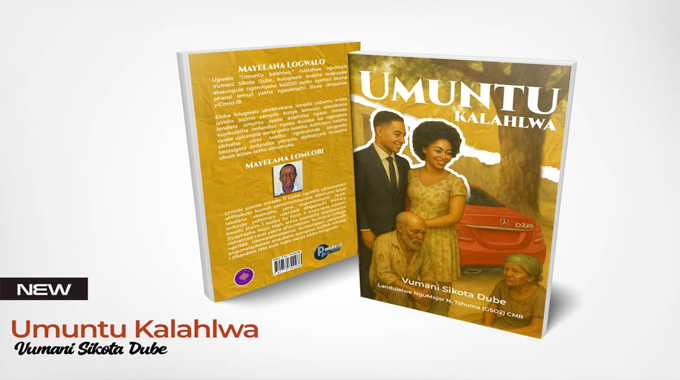
Mbulelo Mpofu, [email protected]
IN any country, military personnel are entrusted with the solemn duty of safeguarding peace, protecting borders and upholding national stability. In Zimbabwe, that calling often conjures images of discipline, precision and unwavering service. Yet, every so often, someone emerges who reminds us that the human spirit cannot be confined to rank, uniform or regiment. Major Vumani Sikota Dube of the Zimbabwe National Army (ZNA) is one such figure — a man who has stepped beyond the parade ground and marched straight into the literary landscape, carrying with him not a weapon, but a story.
His debut book, Umuntu Kalahlwa (A person is never abandoned completely), published on January 16 this year, is far more than a creative outing. It is a deliberate cultural offering — a quiet but defiant act of preservation, crafted in the enforced stillness of the Covid-19 lockdown, when the world was suspended and introspection came easily to those who paused long enough to listen to their ancestors.
Born in Silalatshani in 1972, the ninth of fourteen children, Major Dube’s life story unfurls like a lesson in grit. From Emganwini Primary to JZ Moyo High School, from technical college to the ZNA in 1995, and finally rising to the rank of Major, his path has been one of discipline and endurance. Yet beneath the uniform, beneath the cadence of drills and the language of command, lived a storyteller waiting for the right moment to speak. The pandemic — strange, still, terrifying —became that moment.
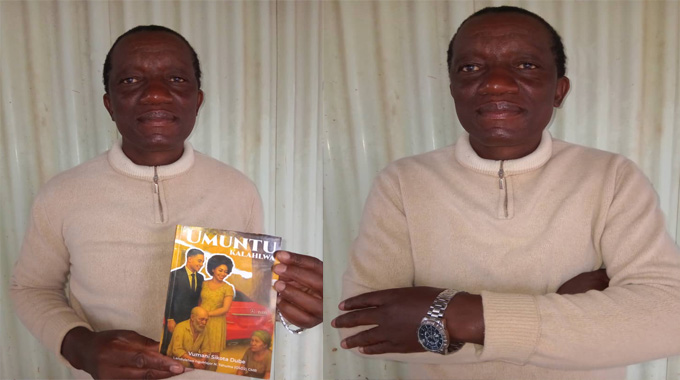
“The only good hours to rest are when one is laid in his/her grave. While confined at home, I utilised that moment to contribute . . . for a better future and development. As the saying goes, ‘Akuchithwa amanzi nxa inkukhu isilahlekile, kodwa uyabamba eyinye umdeni utshebe’ (You don’t pour away the water when a chicken is missing, but you hold the pot for the family),” Dube stated, speaking with the stoicism of a soldier and the tenderness of a cultural custodian.
Umuntu Kalahlwa is anchored deeply in Ndebele culture and the universal philosophy of ubuntu — that shimmering truth that we exist because others do. Even before one turns the first page, the cover whispers this essence: Ngangezwe seated on a stool, MaNdebele resting on a mat — a tableau of structure, harmony and enduring roles. But the heart of the book beats far beyond imagery.
Dube plunges the reader into the rituals that shape identity, foregrounding cattle minding as a sacred rite of passage — a space where boys learn responsibility, forge camaraderie and exchange playful rivalries that later mature into brotherhood. Traditional weddings erupt across his pages with colour and song, affirming unity through feasting and celebration.
Conversations unfold with reverence — elders receiving deference, children learning etiquette, communities speaking in tones both formal and warm. Death and burial rites — amanzi, umbuyiso, ukwabiwa kwelifa — are captured with painstaking detail, reminding readers how culture steadies the human heart in times of loss.

The book becomes, at its core, a hymn to family virtues: unconditional love, respect across generations, empathy, memory making, the preservation of heritage and the bravery of forgiveness. Dube circles back repeatedly to his own definition of humanity: “Umuntu (a person) is described by how one interacts with others, their behaviour, what others say about their well-being,” — illustrating how characters inevitably face consequences “according to their behaviours which define their humanities.”
He does not turn away from society’s shadows. Instead, he shines a clear, unwavering light on the vulnerabilities endured by children — the misuse of resources meant for them, the cruelty of child labour inflicted by jealous guardians, and the wounds of physical abuse within extended families.
“I was inspired by the saying, ‘ukuzala yikuzimbela’ (to bear children is to plant a seed). Children are the future. They need good grooming at all costs.” Through the characters of Mabhatshi and Mafikizolo, who rise “from rags to riches,” he offers young readers hope, resilience and a reminder that one’s beginnings do not define one’s destiny.

Despite the contrast between the rigid world of military life and the fluidity of storytelling, Major Dube sees harmony between the two. His training in Civic Military Relations informs his commitment to cohesion, dignity and legacy — values that seep through every chapter of his book. Storytelling, he believes, is a powerful “soft power”, a means of shaping minds without issuing commands.
“As a serving Major, how does this contribute?” he asks, before invoking the nation’s founding pillars. He recalls Dr Simon Muzenda’s cry to “work together,” Dr Joshua Nkomo’s dream of Zimbabweans “caring for each other,” President Mugabe’s call for “a society that cares,” and President Mnangagwa’s enduring mantra, ilizwe lakhiwa ngabanikazi balo (The nation is built by its owners). “These words give us mandate,” Dube asserted. “I emphasise peace and harmony . . . preserving values, cultures, good cohesion and care for all citizens equally . . . to build a better nation.”

The title Umuntu kalahlwa distils the book’s soul with gentle precision. It is a reminder that no person is ever truly lost — that even amidst abuse, neglect and injustice, there exists a path framed by peaceful resolution, community support and cultural identity. Vengeance is rejected outright because, as he writes, “the one who lives by the sword dies by the blade.” Instead, the narrative leans into family unity and the transformative balm of forgiveness.
Dube’s message ultimately glows with hope. He urges readers to embody the THINK ethos: Think positively throughout, Have humanity, Inspire others, do Necessary things, and practice Kindness always.