Londile Moyo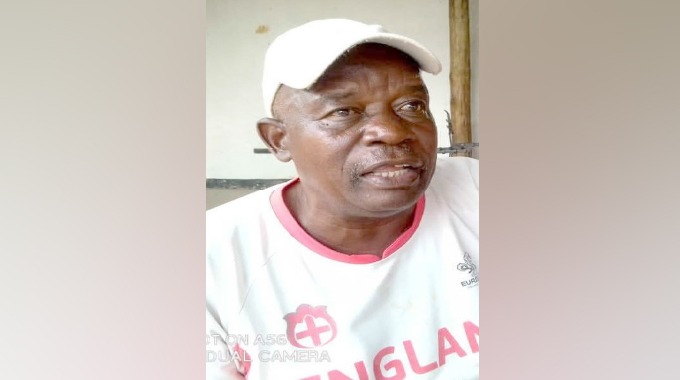
Lovemore Dube [email protected]
ALI DUBE, one of Zimbabwean football’s most revered figures, has given an emphatic thumbs up to the construction of the new Maphisa Stadium and the decision to stage today’s Independence Cup final featuring Highlanders and Scottland FC on Matabeleland South soil.
For Dube, the moment carries a deeply personal resonance. A son of KoNdiweni Village near Kezi, his homestead sits along the Maphisa–Kezi Road, opposite Shashani High School, close enough to hear the rhythm of everyday life in a district that has long followed football from the margins rather than the centre.
He speaks with quiet pride about finally seeing his district boast a stadium worthy of the game, describing it as a defining step for local sport and a sign that big football has truly arrived. For years, he notes, Matabeleland South had been starved of proper facilities, with only a handful of schools and mines offering grounds that came close to acceptable standards.
Positioned almost at the heart of the province, Maphisa lies within 300 kilometres of even its most remote corners. Once just a service centre in Matobo District, it is steadily growing into a bustling township driven by mining, retail and agricultural activity. Yet until recently, football infrastructure lagged far behind that development.
Before Government named Maphisa as the host of this year’s Independence Day celebrations, the district had no recognisable football venue to speak of. So bleak was the situation that Matobo FC, who compete in the Zifa Central Region League, were forced to use a pitch at Minda Secondary School.
The arrangement was tolerated in the spirit of keeping the game alive, honouring the sacrifices of sponsors, community members and players who refused to let organised football die in the district. Alongside Matobo FC, teams like Matopo High Rangers and Kezi Strikers had carried the torch for association football, often against overwhelming odds.
On the eve of the Independence celebrations, Dube did not hide his admiration for the transformation underway. He praised Government for stepping in and delivering infrastructure that promises lasting impact, not just for football, but for athletics and sport development at large.
“This is a very good development for the district and sport. We now have a football field with turf and terraces, it is a welcome development,” said Dube.
He also welcomed the choice to bring two of the country’s biggest clubs to Maphisa on such a significant day, describing it as a rare gift to local supporters who have long admired these teams from afar.
“Fans are going to enjoy watching the country’s biggest football teams Highlanders and Scottland. They are teams that they read about in newspapers and internet or watch on television, but with the decision to have celebrations in Matobo, they will watch the teams live and see their favourite players. Highlanders is popular there and people have never watched it,” said Dube.
Beyond his words of praise, Dube’s own legacy looms large over Zimbabwean football history. An imposing centre back whose playing career was curtailed by injury and fierce competition before he could don Highlanders colours, Dube turned disappointment into destiny. Under the guidance of Mackenzie Duli Sibanda, he embraced coaching and went on to shape generations of talent.
From the mid 1970s onwards, he became one of the game’s great craftsmen, producing a remarkable lineage of footballers. Names such as Madinda Ndlovu, Peter Ndlovu, Summer Ncube, Musa Masango, Zenzo Moyo, Benjani Mwaruwari, Kelvin Maseko, Master Masiku, the late Makheyi Nyathi, Nkululeko Dlodlo, Willard Khumalo, Mercedes Sibanda, Tutani Moyo, Ernest Ncube and Nhlanhla Sithole represent only a fraction of the hundreds he mentored during nearly three decades at Highlanders.
Meanwhile, Matabeleland South Provincial Ministry of Sports officer Frank Baloyi has described the construction of Maphisa Stadium as a landmark development for the province, one that extends far beyond a single football match.
“It is a huge development for athletics. Now the district will have a standard athletics track, athletics will benefit in a great way and it’s a legacy people will use for eternity derived from the hosting of the celebrations in Matabeleland South,” said Baloyi.
He added that from a capacity point of view, the facility stands head and shoulders above others in the province, representing a significant leap forward for Matobo District.
“It is the biggest of our stadia in the province with the highest seating capacity,” said Baloyi.
“Toilets and dressing rooms have been finalised with tiles fitted. The district has never hosted an event as big as this and even the whole of Matabeleland South, this is a big gain for us,” said Baloyi.
With modern dressing rooms, proper ablution facilities and a well laid turf, Matobo FC are now expected to migrate from Minda Secondary School to the new stadium. The move is anticipated to further promote sports tourism in a district that has already been welcoming teams from Beitbridge, Gwanda, Gweru, Shurugwi and Kwekwe.



 Online Reporter