admin
admin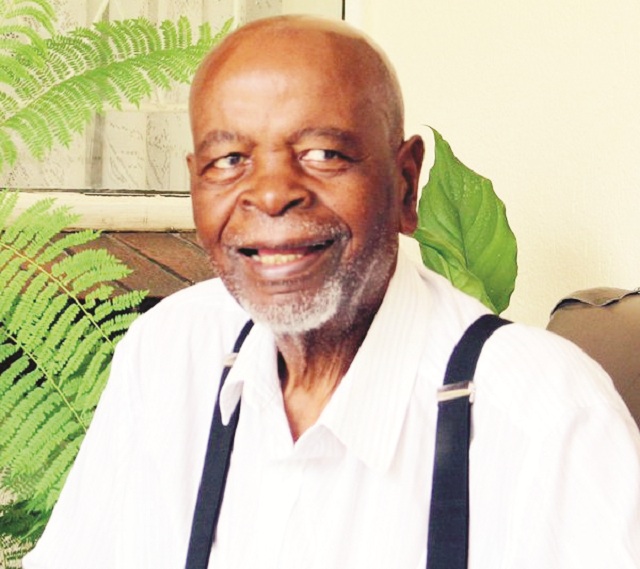

Pathisa Nyathi
HE sits defiantly in a wheelchair. In the background sweet melodies are wafting through the air. This is the backdrop to our short light hearted conversation. It is on 6 April 2017.
The occasion is the opening of the Mpilo Central Hospital radiotherapy facility which is being launched by the Minister of Health and Child Care, Dr David Parirenyatwa. The man in a wheelchair is Naison Khutshwekhaya Ndlovu and the sweet melodies are traceable to the Mpilo Hospital nurses in their lily white uniforms.
I bend my torso to align it with face. “Pathisa, where is my photograph?” he inquires. About two years ago I was asked to pen a short biography of the man as part of his 85th birthday celebrations which were scheduled to take place at his Luveve house. I used the photograph for the cover of the booklet that I wrote and published following several interviews conducted at his home. The photograph remained at my home long after publication of his abridged biography.
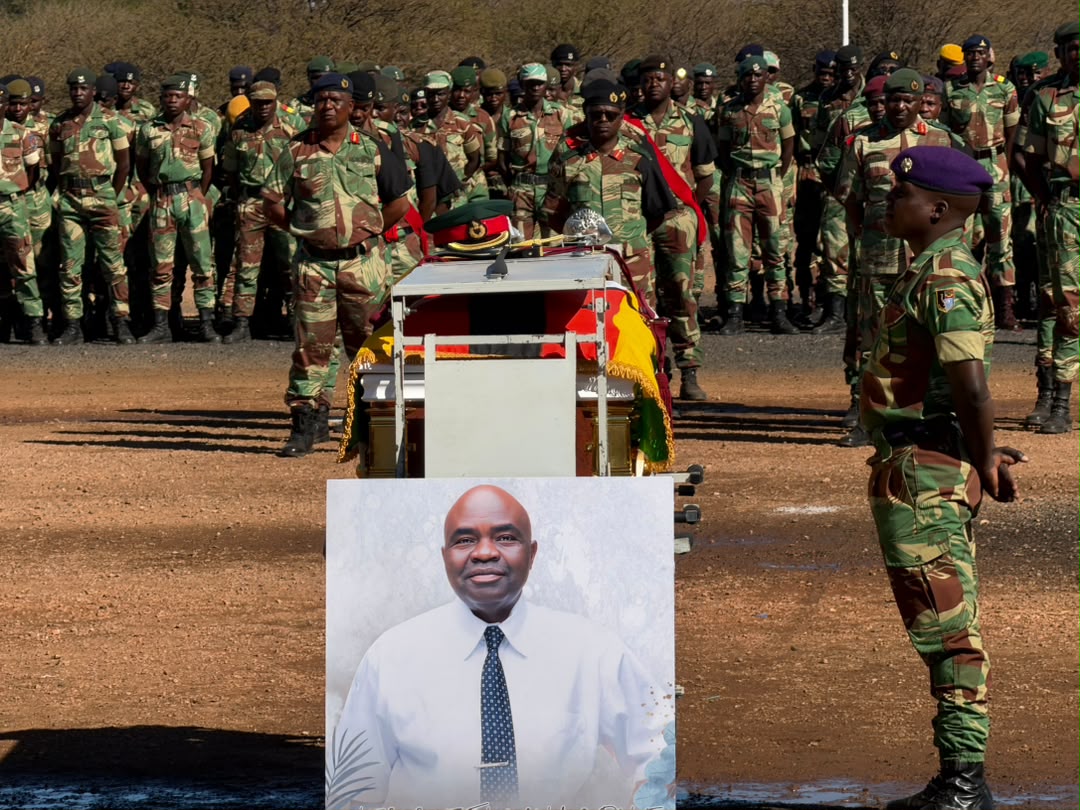
Little did I know I was meeting the man for the last time. This obituary is written in honour of a man who sacrificed immensely towards the attainment of Zimbabwe’s independence. NK, as he was affectionately known to his colleagues, was born on 22 October 1930 in Gwatemba. Originally the area was a native reserve under Chief Msindazi Dlodlo of Emakhandeni. Following the implementation of the 1931 Land Apportionment Act (LAA) the area was alienated by the colonial regime to create farms for whites. The area then came under the jurisdiction of the Insiza District.
One component of the LAA was the creation of native purchase areas to serve as buffer zones between native reserves and white commercial farms. NK was born to Khutshwekhaya Ndlovu and his wife Ndayeni Dube in the Bezha area, not far from Kumbudzi in today’s Umzingwane District. Bezha and surrounding areas were under the control of the Brethren In Christ Church (BICC) which had been established at Matopo Mission in 1898.
Khutshwekhaya converted to the BICC faith and that saw him being deployed to Emakhandeni where the BICC had a strong presence. With the appropriation of land at Emakhandeni the area where NK was born later became, in 1936, a Native Purchase Area (NPA). Evictions from Emakhandeni and those from adjoining Filabusi were vicious and saw a lot of families being evicted to distant places, notably the Shangani Reserve (Nkayi and Lupane) and Gokwe. Others remained behind on white farms where they paid rent but only to be evicted later to places such as near Ngundu in Masvingo.
Many books have been written on the story of evictions including Umhlaba Umangele by Ndabezinhle Sigogo, Creatures at the Top by Stephen Mpofu and Unsettled Land by Jocelyn Alexander. ZPRA commander Alfred Nikita Mangena’s parents were among those evicted from the same area. NK was later to learn about these racially motivated greed driven land appropriations. For him it was like attending a school of political education. More influences came to bear on him leading him to choose a political career that saw him incarcerated in prisons and finally going to join the liberation struggle in Zambia.
It was time for NK to attend school. He went to Beitbridge where his sister, married to J B Hove, lived. The school where he did First Year, Sub-standards A and B was called Majini Primary School and was run by the Lutheran Church which had schools in Mberengwa, Gwanda and Beitbridge. The year was 1938.
In 1940 he went back to enrol at Gwatemba Primary School which was run by the BICC. The next school was Wanezi Mission which was established in 1924 and also run by the BICC, and had Reverend Albert Brennaman as principal and Maphendla Moyo from Sikithi as Head Teacher. There he completed Standard 6 and enrolled at Umzingwane Industrial Government School for boys. The school had started in Tsholotsho, but relocated in 1945 due to the menace of malaria carrying mosquitoes. John Malcolm Hammond, a strict disciplinarian, was the principal. At the time Mazongo Ncube was the Head Prefect and deputised by Cephas Maphosa. A Mr. Bhule took them in Building Studies while Leather Craft and Tannery were the responsibly of Mothobi. Both Chinake and Furusa taught Agriculture.
Umzingwane Industrial Government School was a political training ground. Many of its graduates went on to become, initially, trade unionists and later nationalists. These included, inter alia, Benjamin Madlela, Joshua Mqabuko Nkomo, Stephen Jeqe Nkomo, Boysen Mguni, Edward Ndlovu and Jason Ziyapapa Moyo. Their industrial qualifications matched those of whites within the industry but were discriminated against on account of being Africans. Many politically oriented personalities used to visit Umzingwane School where they addressed students and raised their political consciousness. When NK was there Joshua Nkomo, Eric Tikili and Tennyson Hlabangana, all university graduates, used to visit the industrial institution.
NK specialised in Leather Craft and Tannery. At the end of 1949 he left Umzingwane to enter the world of work. He was armed with an industrial qualification and fired with political consciousness. His father had participated in World War II (1939-1945) and came back via Bechuanaland (now Botswana) sporting some military fatigue. Meanwhile, his son had trekked to Johannesburg, South Africa in search of greener pastures. When he came back, he had nothing to show for it save some driver’s licence. His father, keen to make sure he established himself, sold some cattle in order to buy him a bus. The bus, known as Super Express Bus Service, plied the Gwanda-Manama route. NK landed his first work experience in 1950 as bus conductor for the next 12 months.
NK’s brother-in-law, J B Hove, advised him to take up a teaching post. He heeded the advice and became a teacher at Vhutulula Primary School in Butururu in 1955. He did not stay long in Beitbridge. A vacancy opened up at Matopo Mission. Authorities at the BICC institution were looking for someone to teach Agriculture. They preferred one of their own. NK landed the job though he had not specialised in the field of Agriculture. He did not stay long there either.
Meanwhile, after the cessation of hostilities (World War II) in 1945, Bulawayo experienced industrial boom. Job opportunities became available. Many people came from various places in search of employment. Among the people who came were the disabled and the disadvantaged who did not get appropriate rehabilitation. One person who decided to offer assistance was Jairos Jiri, a man who arrived in Bulawayo from Bikita. He got assistance in his rehabilitation endeavours from persons such as Nkomo, Mike Masotsha Hove, Benjamin Burombo and the Bulawayo City Council (BCC). In October 1950 Jiri opened the first training workshop in Makokoba, with assistance from the BCC.
The year 1959 witnessed the official opening of the Nguboyenja Training Centre. Interns were being trained in the production of handicrafts. BCC provided both land and buildings. There arose a vacancy for one to instruct interns in Leather Craft. Meanwhile, the BCC had set up the African Department which was headed by Dr Hugh Ashton and was later deputised by Dr Eric Garget. The former arranged recruitment of one who was to become Leather Craft instructor. Three men were shortlisted and NK landed the post. He served at Jairos Jiri till the time he was incarcerated at Gonakudzingwa in 1965. NK lived in Makokoba or the Location, Bulawayo’s oldest township for Africans. He lived at 4-Boy, a term that meant there were four boys occupying a single room.
By moving to Bulawayo, NK found himself going straight into the eye of a developing political storm. This time he had been fired more by coming into contact with Tarcisius George Malan Silundika. At the same time he came under the influence of the Reverend Percy Ibbotson of the Wesleyan Methodist Church who was heavily involved in the activities of the African Welfare Society. Masotsha Hove, who was a Federal Member of Parliament on the United Federal Party (UFP), added some fuel to the seething political flame in NK’s mind.
In Bulawayo there was ample scope for him to thrust himself into the political arena. A year after his arrival in Bulawayo the first truly national African mass political movement was established. That was the Southern Rhodesia African National Congress (SRANC) which was formed at the Mai Musodzi Hall in Harare Township (now Mbare) in Salisbury (now Harare), on 12 September 1957. Joshua Nkomo led the party and NK became its ordinary card carrying member. It was during the days of his membership of the SRANC that NK cut his teeth in nationalist politics.
In February 1959 the Edgar Whitehead-led regime proscribed the SRANC during the so-called Emergency Regulations and numerous leaders including Vice-President James Robert Dambaza Chikerema, Maurice Nyagumbo and Bernard Mutuma were arrested and detained at various locations. The following year, on 1 January 1960, the National Democratic Party (NDP) was established, initially with Michael Mawema as President. Later in the year, Nkomo who since the banning of the SRANC had been in London, returned and took over the leadership of the party.
Once again, NK became an ordinary card carrying member of the NDP.
When the NDP was also proscribed in 1961, a new party was formed-the Zimbabwe African People’s Union (ZAPU) on 17 December of the same year. Once again Nkomo was its leader. This time NK became a committee member of the Bulawayo District chaired by Abel Siwela (first Executive Mayor of Bulawayo). Included in that committee were cadres such as Mgqibelo Ncube, Thenjiwe Lesabe and Mavava Khumalo.
TO BE CONTINUED NEXT WEEK


 Online Reporter