Online Reporter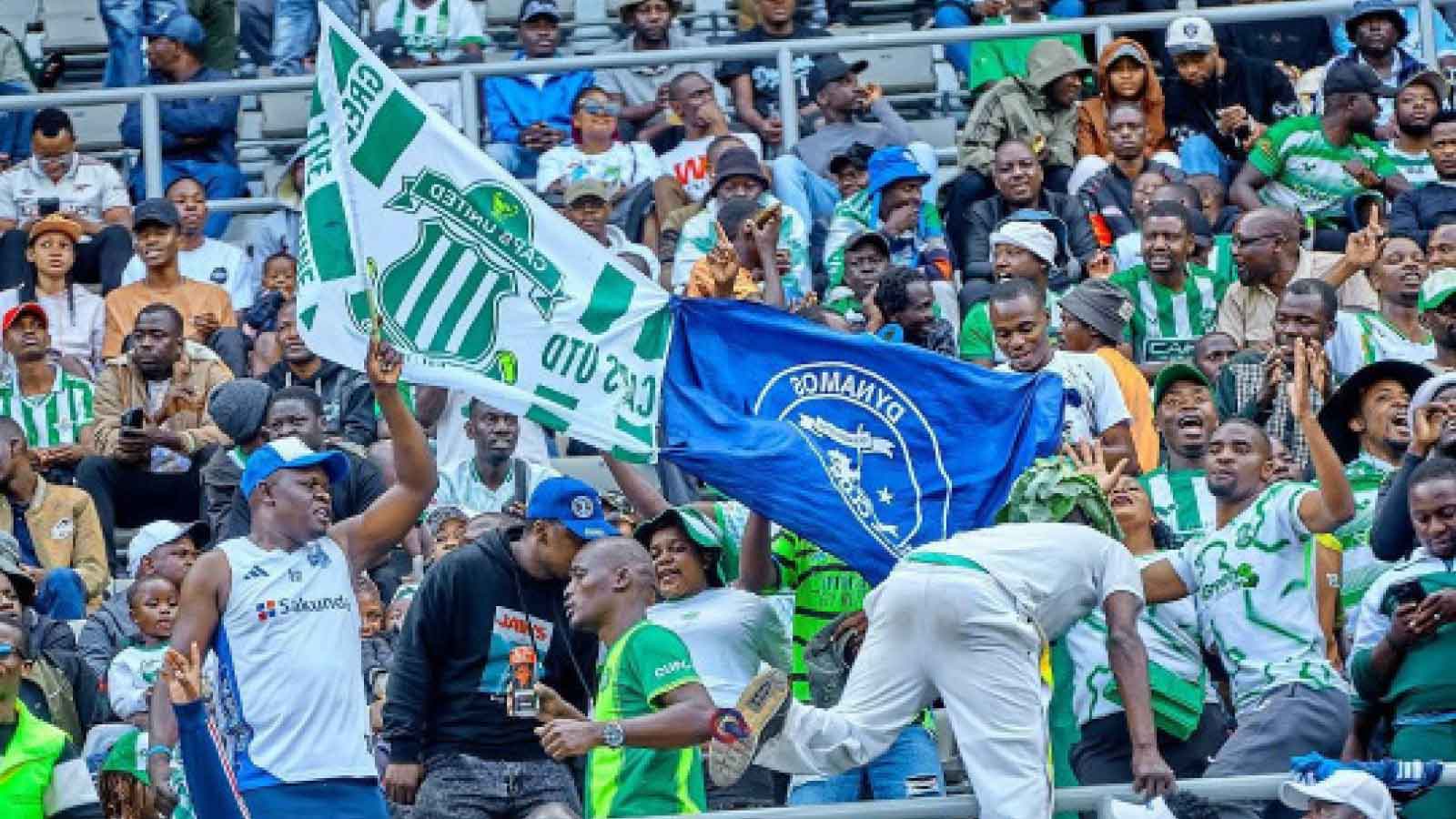
Tafadzwa Nyandoro
Guest Writer
THERE are moments in football when history takes a sharp turn and leaves even its oldest custodians rubbing their eyes in disbelief.
Moments when sworn enemies suddenly find themselves standing on the same side of the battlefield.
Not because they have forgotten their differences.
Not because they have stopped competing.
But because something bigger has emerged on the horizon.
Something powerful enough to make them realise they have more in common than they thought.
And, as CAPS United and Dynamos supporters exchange hugs and compliments that would once have been considered acts of treason, I cannot help but hear David Coverdale’s voice drifting through the speakers of a long-forgotten jukebox: “Is this love that I’m feeling?”
Because what else could explain this extraordinary sight?
Brothers at War, Now Brothers in Arms
For decades, the relationship between Makepekepe and DeMbare resembled that of two brothers fighting over an inheritance.
The fights were fierce, the insults were relentless.
The victories were cherished, the defeats were unbearable.
The Harare Derby wasn’t merely a football match.
It was an identity, some sort of religion, a way of life.
Yet today, as one scrolls through social media, listens to discussions in sports bars or eavesdrops on conversations in kombis travelling between Mbare and Highfield, something remarkable has emerged.
CAPS United supporters are defending Dynamos.
Dynamos supporters are defending CAPS United.
And, somewhere in the background, the rise of Scotland and Hardrock, has become the unlikely soundtrack to this strange bromance.
For years, football in the capital revolved around two suns — the Green Machine and the Glamour Boys.
Every other club existed somewhere in their shadows.
But then football changed.
Money arrived in new places, ambition found new homes.
Projects became more sophisticated.
Investment became more deliberate.
And suddenly clubs like Scottland and Hardrock began to look less like visitors and more like permanent residents in territories once reserved for the traditional giants.
That is when the old enemies started seeing each other differently.
Because, for the first time in generations, CAPS United and Dynamos supporters found themselves confronting the same uncomfortable reality.
The threat was no longer coming from across town.
The fear was no longer losing a derby.
The fear was becoming irrelevant.
The fear was waking up one morning and discovering that Zimbabwean football’s centre stage had moved without them.
Football history teaches us that nothing unites former rivals faster than a common threat.
Suddenly, a Dynamos supporter sees CAPS United not as the enemy but as a fellow custodian of tradition.
A CAPS United supporter sees Dynamos not as the villain but as a partner in preserving the old order.
And in the background, Whitesnake’s lyrics echo like prophecy:
“Is this love… or am I dreaming?”
Because this isn’t just romance.
It is survival.
It is two giants holding hands in the dark, hoping the spotlight doesn’t shift permanently to the new kids at the table.
The Harare Derby remains sacred.
The rivalry remains eternal.
But beneath the insults and banter lies a growing recognition that both clubs need each other now more than ever.
Because a powerful CAPS United makes Dynamos matter more.
A powerful Dynamos makes CAPS United matter more.
Together they represent decades of memories, legends, packed stadiums and football folklore.
The emergence of Scottland and Hardrock has, therefore, created an unexpected consequence.
It has reminded Makepekepe and DeMbare supporters of what they share — the songs, the history, the scars, the glory.
Whether that belief survives the challenge from the new money and the new ambition remains to be seen.
But for now, as CAPS United and Dynamos supporters find themselves cheering each other’s victories against a changing football landscape, David Coverdale’s question echoes louder than ever:
“Is this love?”
Maybe.
Or maybe it is simply two old giants looking across the room, noticing the new kids at the table and deciding that blood, after all, is thicker than rivalry.


 Bongani Ndlovu