Online Reporter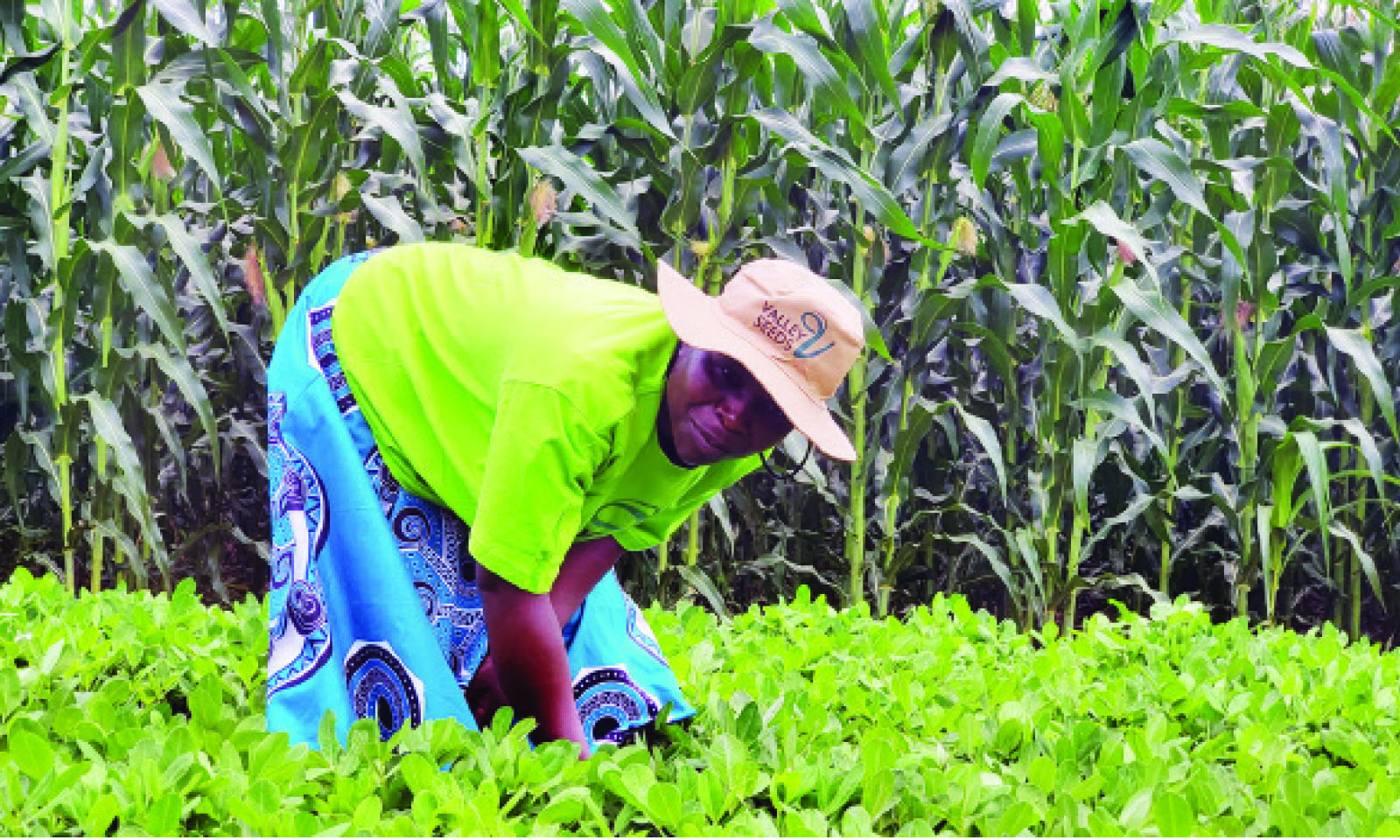
Theseus Shambare
THE sun beat down on Gogo Emily Takawira’s small plot in Chinhoyi.
Its warmth was a stark contrast to the intense worry in her heart.
Her calloused hands, weathered by decades of toiling the land, carefully gathered the mature maize cobs.
Each one represented a victory against the vagaries of the season, yet the overall yield was a familiar story: just about a tonne from her hectare.
Enough to feed her ailing daughter and grandson, perhaps a little extra to barter for other necessities, but far from the abundance she dreamt of.
“The rains were kind this year, unlike the last,” she said, her voice carrying the gentle rhythm of rural life.
“But the soil … it tires easily. And the money for the fertilisers is always a challenge.”
Gogo Takawira represents the backbone of Zimbabwe’s communal farming sector, her efforts contributing significantly to the national food basket, yet often constrained by the realities of subsistence farming.
Zimbabwe is estimated to have approximately 1,5 million smallholder farmers.
In comparison, for Simbayi Mafigu it was the introduction of the climate-proofed Pfumvudza/Intwasa programme in 2020 that marked her turning point.
The results were remarkable, enabling her to not only feed her family but also generate a surplus from just a hectare.
As Mafigu proudly declared, “Life has never been the same.”
This new found success, evident in her ability to connect electricity to her house and establish a thriving small business, showcased the tangible benefits of maximising output from a limited land area.
“I am expecting a bumper harvest, at least 5,5 tonnes,” she confidently stated, highlighting the success of her efforts in adopting modern farming practices.
This level of output from a relatively small plot undoubtedly caught the attention of agricultural authorities.
During a tour, Lands, Agriculture, Fisheries, Water and Rural Development Minister Dr Anxious Masuka directly addressed Mafigu, acknowledging her efforts and assuring her of the Government’s commitment to formalising land ownership.
“I expect you to follow the process and with the efficiency of the provincial and devolution office, I am confident that I can personally sign your paperwork soon, placing you on the list to receive your title deeds when your turn arrives,” the minister affirmed, directly linking her productivity to the promise of a title deed.
Meanwhile, less than a 25 kilometres north-west, in the fertile lands of Lion’s Den, Patrick Matadi (34) surveyed his sprawling commercial maize fields with a satisfied smile.
The combine harvester roared in the background, a testament to a bountiful harvest that would dwarf Gogo Cecilia’s entire output.
Matadi, a commercial farmer embracing modern techniques, is on track to achieve an astonishing 18 tonnes per hectare.
“I now want to join the 20-tonne club.
“Precision is key,” Kudenga explained, his eyes scanning the rows of uniform, healthy maize stalks.
“Soil testing, the right seed varieties, timely application of fertilisers and efficient irrigation — these are not luxuries, they are necessities for maximising yield. We treat farming as a business.”
His success story, while inspiring, highlights the stark disparities that exist within Zimbabwe’s agricultural landscape.
These two contrasting narratives, the modest harvest of Gogo Takawira and the bumper yield of Matadi, encapsulate the central paradox revealed in the recent Second Round of Crops, Livestock and Fisheries Assessment Report (CLAFA-2).
While the report celebrates a significant rebound in national maize production, projecting over 2,29 million metric tonnes — the “fourth highest ever production by the country,” according to the report — a closer examination reveals a critical underlying issue: alarmingly low average productivity per hectare.
For the current season, the country has 1,8 million hectares under maize and it is expected that farmers will harvest slightly over 2,3 million tonnes.
That translates to an average of just 1,3 tonnes per hectare, a very low productivity by any reckoning.
This national average, hovering around 1,27 tonnes per hectare, starkly contrasts with the potential demonstrated by farmers like Matadi.
The CLAFA-2 report itself acknowledges the need for improvement in this area.
It emphasises the importance of “comprehensive soil mapping and the decentralisation of soil fertility testing” to guide better nutrient management.
The report also touches upon the high cost of inputs, stating that the “localisation of the production of key farming inputs, such as fertiliser, which constitutes 30 to 40 percent of the production cost per unit area, has not progressed at the desired pace, making farming more expensive than other jurisdictions.”
This high-cost burden disproportionately affects communal farmers like Gogo Takawira, limiting their ability to invest in yield-enhancing inputs.
Gogo Takawira’s reality underscores this challenge. “The price of fertiliser keeps going up,” she lamented, wiping sweat from her brow.
“Sometimes, we have to choose between fertiliser and putting food on the table. It is a difficult choice.”
Her situation is not unique.
Many communal farmers face similar constraints: limited access to affordable financing, inadequate irrigation infrastructure, and reliance on traditional farming methods.
Matadi, on the other hand, benefits from economies of scale and access to capital.
“Investing in technology and best practices is crucial,” he asserted.
“It requires upfront investment, but the returns in terms of yield and efficiency are undeniable.”
His success highlights the potential of Zimbabwe’s agricultural sector when modern techniques and resources are effectively deployed.
Commercial Farmers Union president Dr Shadreck Makombe called for a total shift by farmers in order to achieve food security.
“The call to shift our focus to per-hectare productivity is spot on. This requires a multi-pronged approach: investing in soil health management, promoting the adoption of climate-smart agricultural techniques (like Pfumvudza/Intwasa demonstrated) even on a large scale, ensuring access to affordable and quality inputs, and strengthening extension services to empower farmers with knowledge and skills for higher yields.
“Perhaps a national audit of maize production costs per hectare, segmented by farming scale and region, could provide the hard data needed to inform targeted interventions. Let’s not just count the hectare; let us make every hectare count for more output,” he said.
While the projected 2,29 million tonnes of maize offers a significant improvement in food security compared to drought-stricken years, the low average yield suggests that the nation is still not maximising its agricultural potential.
Lands, Agriculture, Fisheries, Water and Rural Development permanent secretary Professor Obert Jiri acknowledged this.
“Agricultural intensification is the way to go as we modernise and transform our agriculture.
“Productivity thrust, producing the maximum possible per unit area, should be the primary focus going forward.
“Small and highly productive plots and fields, are critically important in this journey,” said Prof Jiri.
The CLAFA2 report itself hints at this, noting the need for “further capacitation of farmers (through farmer field schools), AGRITEX business advisors… and value chain actors.”
Bridging the gap between the yields achieved by commercial farmers like Matadi and the potential of communal farmers like Gogo Takawira is crucial for sustainable food self-sufficiency.
The tale of these two harvests serves as a powerful reminder of the dual nature of Zimbabwe’s agricultural story.
The resilience and hard work of communal farmers like Gogo Takawira are undeniable and form the bedrock of the sector.
As Zimbabwe celebrates a welcome rebound in maize production, the focus now shifts towards ensuring that every hectare yields its maximum potential. Only then can the nation truly move beyond relying on favourable weather patterns and consistently achieve food security for all its citizens, transforming the narrative from a tale of two harvests to a unified story of agricultural prosperity.