Chronicle Editor
Vusumuzi Dube, Online News Editor
ZIMBABWE last Wednesday joined the rest of the globe in commemorating World Water Day — a day which is held annually on 22 March to focus attention on the importance of fresh water and advocating for the sustainable management of fresh water resources.
The day is about taking action to tackle the global water crisis, in support of Sustainable Development Goal (SDG) 6: water and sanitation for all by 2030. In describing the significance of this day, Unesco director-general, Ms Audrey Azoulay noted that; “On this World Day, Unesco would like to recall the extent to which water, whose cycle is global, is permanently at odds with human boundaries. It is up to us to draw the necessary conclusions and to see it as what it is: a vital and common good of humanity, which must therefore be considered on the scale of humanity.”
However, for Bulawayo, the commemorations came at a time when the city is enduring one of its perennial water crisis. The local authority has since suspended its 72-hour water shedding regime and instead they have put in place a Provisional Water Supply Restoration Strategy where there is no definite schedule for water supply — water is supplied when it is available.
The city — the second-largest in Zimbabwe is currently facing a dire water crisis that is affecting residents in unimaginable ways. The city’s water supply has been dwindling for years, and the situation has only worsened due to climate change, population growth, and poor management of the available resources.
With water being a basic necessity for human survival, the residents of Bulawayo are facing an unprecedented challenge that is affecting their health, livelihoods, and overall quality of life. This thirsty city is now in dire need of immediate solutions to address the water crisis and ensure that its residents have access to clean and safe water.
An exploration of the root causes of the crisis, its impacts on the city’s residents, and the efforts being made to tackle the problem is the import of this article.
It sounds ironic however, that on a day the world was commemorating water day, the city was instead announcing that power outages have seen the system output volume dropping by over 50 percent from 120 megalitres a day to between 40 to 50 megalitres a day. In response to the dwindling water volumes the city reconstituted its water crisis committee and hired additional water trucks to deliver water to high-lying areas.
The local authority also brought out its begging bowl, calling on the donor community to assist with funding and in-kind donations of materials to repair and rehabilitate hand-pumps, as well as procuring 20-litre water containers for residents, particularly those in high-placed suburbs.
“One of the measures to try and alleviate the situation, includes reactivating the water crisis committee and welcoming well-wishers to participate in any way possible to alleviate the crisis. The city is also hiring additional water trucks to deliver water to high-lying areas such as Nkulumane, Emganwini, Pumula, Magwegwe, and Entumbane, and also using the existing infrastructure such as water kiosks strategically located throughout the city.
“Schools and clinics with functional boreholes and elevated tanks are encouraged to optimise these resources for the benefit of students and patients, and to add additional access water points accessible from outside the school’s boundaries. Residents are urged to avoid using unprotected wells and other water sources and to boil all water, whether from a borehole, water kiosk, water bowser, or water tap. Despite the dire situation, public health and hygiene practices must continue to be upheld,” said the city’s Town Clerk, Mr Christopher Dube, in a statement.
Bulawayo is a perennially “thirsty city” and has struggled to secure sustainable and long-term water resources for its citizens for over a century now. Women bear the greater burden triggered by the water crisis.
One question that comes to mind each time the issue of water shortage in Bulawayo is raised is: Is Bulawayo’s water problem man-made or a result of natural causes? Of course, the water stress can be attributed to several factors, including geographical location, and climate effects, however, it has been exacerbated by limited human intervention and poor planning on the part of successive councils.
This is an enduring problem for Zimbabwe whereby citizens continue to experience water problems even when water sources are full such as in Harare. Zimbabwe is a nation with over 10 000 dams. In his undergraduate degree thesis, titled Dry City: A history of water problems in Bulawayo, 1980-2014, Methembe Hadebe likens Bulawayo to an ecologically cursed region with low rainfall of between 400 millimetres to 600 milimetres per annum.
“One can conclude that water paucity of Bulawayo since 1980 has been necessitated by the geographical location of the city, population density straining water supply, obsolete water supply infrastructure, the decommissioning of dams, financial constraint and lack of resources to explore underground reservoirs in the Nyamandlovu Aquifer and Epping Forest,” notes Hadebe in his study.
Bulawayo United Residents Association (Bura) chairperson, Mr Winos Dube had no kind words for the local authority saying heads were supposed to roll in the council chambers as someone was sleeping on duty.
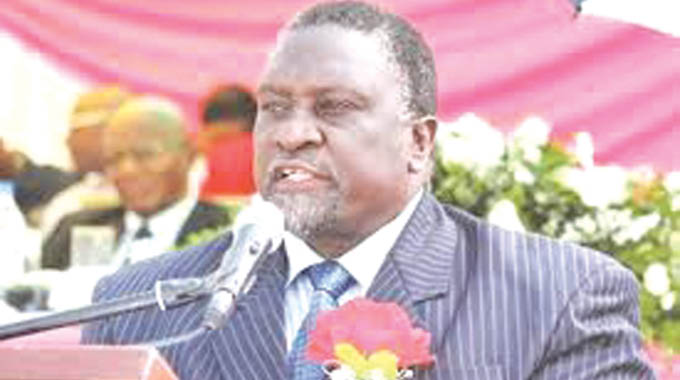
He said the local authority knew at the end of the last rain season that the city had a perennial water problem hence should have started planning from then to help prevent the crisis the city was currently in.
“We are being invited to a water crisis committee meeting now that there is a crisis, honestly someone within the local authority is taking us for granted. Such a committee should be permanent to help manage water resources in the city knowing that the city has a perennial water problem. Our hope now is the Gwayi-Shangani project being spearheaded by President Mnangagwa. This is the only solution to this crisis. It is will bring smiles to the people of Bulawayo. We have gone for too long in this crisis with no hope in sight, hence we thank the efforts that have been made by our President in giving us a solution to this matter,” said Mr Dube.
With the Lake Gwayi-Shangani project fast becoming a reality, this is the only glimmer of hope the city has with the local authority seemingly throwing in the towel in terms of identifying any short-term solution.
The project is among the flagship infrastructure projects being undertaken by the Second Republic led by President Mnangagwa in its drive to foster inclusive economic transformation.
Over 100 years since it was first mooted, the project has only taken off under the Second Republic and it is now more of a reality, than just a plan, with indications that it would be complete by the 2023/24 summer cropping season.
Writing in one of his weekly articles to the nation which are published in this paper, President Mnangagwa also reiterated that the project was progressing well, emphasising on its impact in terms of solving the water situation in Bulawayo.
“With the Gwayi-Shangani Piped Water Project whose construction has now started in earnest, Bulawayo’s water woes should be resolved conclusively before 2023. Along the way, that pipeline will be depositing water, to turn Matabeleland into a sustainable green belt,” said the President.
So as the city continues to ponder on where we are headed in terms of the water situation, as we pray that the Lord blesses us with reliable rains this rainy season one thing for sure is that we need to develop more water sources that will see us solving this pending crisis.
As former USA President, Benjamin Franklin once put it; “When the well’s dry, we know the worth of water”, indeed the people of Bulawayo are feeling the pinch of not having access to water for days and the local authority must make a plan to resolve this crisis.


 Online Reporter