Online Reporter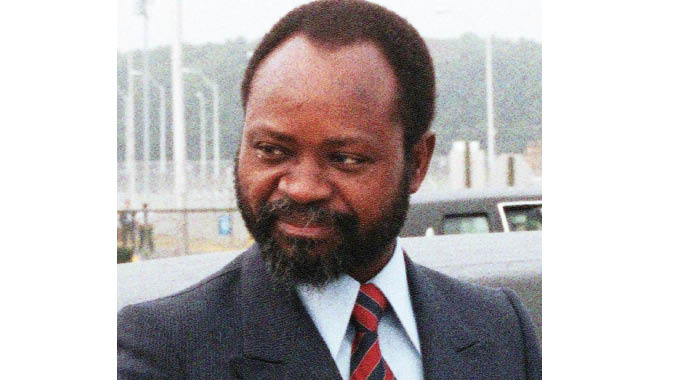
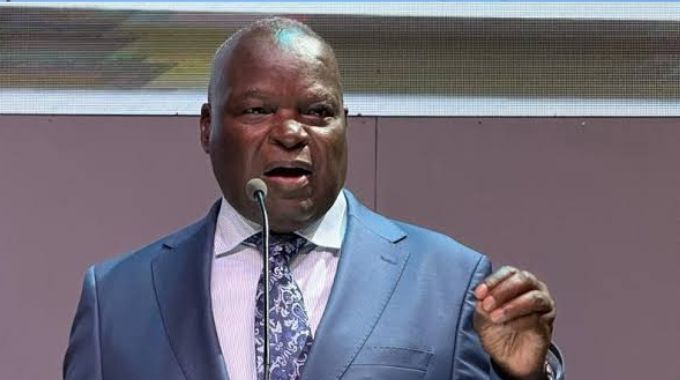
Lieutenant-Colonel (Retd) Humphrey Makuyana
The history of Zimbabwe’s liberation struggle cannot be truthfully told without honouring the people of Mozambique and their Defence Forces.
ON its inaugural Independence Day in 1975, President Samora Moisés Machel delivered words that became a continental creed: “Because Zimbabwe is not yet free, Aluta continua.”
This was not a slogan. It was a declaration of policy, sacrifice and destiny.
Their role was not peripheral, diplomatic or symbolic. It was central, sacrificial and decisive.
Mozambique stood with Zimbabwe at a time when doing so invited destruction, destabilisation and death.
It was a stand rooted not in convenience, but in revolutionary brotherhood, Pan-African solidarity and a shared moral conviction that African freedom is indivisible.
Mozambique’s support for Zimbabwe’s liberation struggle came at an extraordinary cost.
It delayed the consolidation of its own independence, exposed its people to brutal military aggression and subjected its economy, environment and population to systematic destruction by the Rhodesian regime and apartheid South Africa.
But Mozambique never wavered.
Brotherhood before comfort
Fresh from its own liberation struggle from Portuguese colonial rule, Mozambique understood a painful truth: Political independence without regional liberation was fragile and temporary. Surrounded by hostile minority regimes, Mozambique knew that standing idle while Zimbabwe burned would only postpone its own peace.
Therefore, by opening its borders, territory and infrastructure to the Zimbabwe African National Liberation Army (ZANLA), Mozambique transformed itself into a rear base of the revolutionary armed struggle.
Training camps, transit corridors, medical facilities, logistics depots and refugee settlements were established on Mozambican soil.
Entire rural communities became silent partners in the struggle.
This sacrificial solidarity made Mozambique a deliberate military target.
The illegal Rhodesian regime, working in close coordination with apartheid South Africa, adopted a deliberate policy of destabilisation against Mozambique.
This policy was not reactive; it was strategic and sustained.
Its objectives were to punish Mozambique for supporting liberation movements, destroy rear bases of ZANLA, terrorise the Mozambican civilian populations, cripple Mozambique’s economy and infrastructure and force Maputo to abandon supporting Zimbabwe’s cause.
This destabilisation was executed through cross-border raids, aerial bombardments, sabotage, assassinations and, later, the sponsorship of proxy forces.
Nyadzonya: A crime against humanity
On the morning of August 9, 1976, Rhodesian forces carried out one of the most infamous atrocities of the liberation war at the Nyadzonya refugee and transit camp.
Disguised as Mozambican soldiers, the Rhodesian Light Infantry infiltrated the refugee and transit camp housing thousands of Zimbabwean refugees and recruits, many unarmed and newly arrived.
What followed was a massacre of unspeakable proportions.
Hundreds — possibly over a thousand — were killed. The camp was reduced to a killing field. The attack violated every principle of international law and humanitarian conduct.
The Nyadzonya incident was not only an attack on ZANLA; it was an assault on Mozambique’s sovereignty and a warning that no level of brutality was off-limits.
Chimoio (New Farm): Total war
In November 1977, Rhodesian forces escalated the war with the Chimoio (New Farm) attack. This was a full-scale combined operation involving air strikes, paratroopers and ground forces.
Chimoio was not purely a military installation. It housed families, schools, clinics and administrative offices.
Bombs flattened infrastructure; medical facilities were destroyed. Thousands perished.
Surrounding Mozambican communities were also devastated — their farms, roads and homes reduced to rubble. The intended message was unmistakable: Mozambique would be punished collectively for its solidarity.
The attack on Mavhonde (Tembue) in 1978 followed the same brutal pattern. Once again, Rhodesian forces crossed international borders, bombed camps, killed civilians and destroyed infrastructure. These were not isolated incidents. They were part of a systematic doctrine of terror designed to break resistance through fear and exhaustion.
Biological warfare
Beyond bombs and bullets, the Rhodesian forces engaged in a more insidious form of warfare: biological and ecological sabotage.
Evidence and testimonies from the liberation era indicate the deliberate introduction and spread of diseases, pest and vectors during cross-border operations into Mozambique.
These included disease-carrying insects and parasites, jigger fleas (tungiasis vectors) and other pests and pathogens capable of devastating rural communities.
Unlike air raids, biological warfare left no immediate explosion, no visible crater.
Its destruction unfolded slowly — through infected villages, crippled livestock, chronic illness and generational suffering.
Communities that had previously lived with manageable health challenges suddenly faced outbreaks of debilitating conditions.
Rural populations, already strained by war and displacement, were overwhelmed by infestations and diseases that crippled productivity and quality of life.
Crucially, the effects of this biological warfare did not end with the war.
To this day, parts of Mozambique, particularly rural and border regions that bore the brunt of cross-border raids, continue to suffer from persistent parasitic infestations and health conditions whose origins trace back to that period.
The long-term environmental and public health consequences remain under-acknowledged, under-researched and largely uncompensated.
This silent legacy stands as one of the most immoral chapters of the destabilisation campaign: warfare designed not only to kill but to maim generations.
Apartheid South Africa: Architect of regional chaos
Apartheid South Africa was a full partner in Mozambique’s destabilisation.
Pretoria provided intelligence, logistics, military coordination and later escalated its involvement by sponsoring the Mozambican National Resistance (RENAMO), led by Afonso Dhlakama, a proxy force responsible for mass atrocities against Mozambican civilians.
RENAMO’s campaign of terror targeted villages, infrastructure, schools and clinics.
It was an extension of the same strategy: punish Mozambique for standing with liberation movements and make solidarity unbearably costly.
The human cost to Mozambique
Mozambique paid a painful and heavy price for its moral clarity: civilians killed in raids, villagers displaced, infrastructure destroyed, agriculture sabotaged, public health systems overwhelmed and generations traumatised.
Mozambican Defence Forces fought with courage and restraint, defending sovereignty while supporting Zimbabwe’s liberation fighters under relentless attacks.
The people endured hunger, fear and loss, but never withdrew their solidarity.
Despite those massacres, biological warfare and economic strangulation, Mozambique never closed its borders to ZANLA.
It never betrayed the cause. Its resilience shortened Zimbabwe’s war and hastened regional liberation.
Zimbabwe’s independence in 1980 was, in part, Mozambique’s victory — earned through blood, sacrifice and unwavering principle.
Forgetting these sacrifices would be a moral failure.
Nyadzonya, Chimoio and Mavhonde are not merely historical sites; they are shared shrines of Southern African liberation.
The long-term health and environmental scars borne by Mozambican communities are living evidence of the price paid.
This history must be taught, commemorated and honoured — not selectively, not politely, but truthfully.
A debt that time cannot erase
No compensation can fully repay Mozambique.
But remembrance, acknowledgement and institutional gratitude are the minimum owed.
President Machel’s declaration remains timeless: Freedom delayed for oneself so that another may be free is the highest form of solidarity.
Mozambique delayed the peace of its own independence so Zimbabwe could be free.
Its people absorbed bombs, bullets, diseases and destabilisation meant for others.
Its Defence Forces defended a revolution born beyond their borders but embraced as their own.
From Nyadzonya to Chimoio, from Mavhonde to the silent scars of biological warfare, Mozambique stood firm.
Thank you, Mozambique!
Thank you to your people!
Thank you to your Defence Forces!
Aluta continua!
Lest we forget.