


 Online Reporter
Society Reporter
IN a deeply troubling incident, two individuals were caught on video in Harare in August 2024 exploiting young boys by making them beg for money, which they callously kept for themselves.
Shocking footage of the heartless duo and the children they had effectively “hired” from their parents under dubious circumstances soon went viral, showing the boys pleading for spare change or assistance from unsuspecting passers-by.
The pitiful state of the children, reduced to begging, and the despicable nature of the adults’ actions sparked widespread outrage, highlighting the deplorable exploitation of children for monetary gain.
After receiving money or goods, the boys would rush back to their “captors”, who were stationed nearby, watching them like hawks.
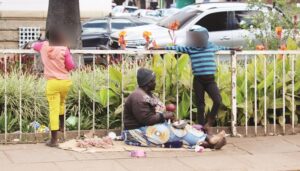
The handlers would then confiscate the earnings, pocketing the money before sending the boys back to continue their miserable task. The most disturbing scene in the video showed one of the boys being brutally beaten after ostensibly failing to meet an arbitrary target.
Disappearance
In the wake of the video’s release, both the minors and their abusers were apprehended by law-enforcement agencies.
For a moment, this type of crime appeared solved.
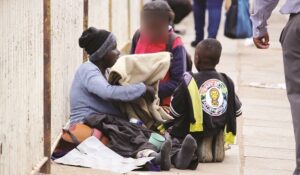
However, with the passage of time, the culprits began to periodically resurface, playing cat and mouse with the authorities.
At present, the young beggars and their handlers have since returned to the streets, particularly in Harare, where they are wreaking havoc.
One can barely stop at any traffic light-controlled intersection in the city without being nagged by children begging for money, food or any form of assistance.
The minors risk being run over by vehicles as they often go about their routine while standing in the middle of the road.
What is disturbing about the practice is that the children are not on the streets out of volition.
Unscrupulous individuals are preying on the vulnerable children from disadvantaged backgrounds, forcing them into a life of begging.
These children, often hailing from neighbourhoods like Hopley and Epworth in Harare, are given daily quotas that they must meet or face severe consequences from their handlers.
Failure to reach the target, it is said, can result in brutal beatings and food deprivation.
While those appearing in the footage in question were arrested, law-enforcement agencies have actively been weeding out such rogue elements and taking affected minors to safe shelters.
Fate of arrested individuals
Harare province police spokesperson Inspector Luckmore Chakanza said child beggars rounded up from the streets are turned over to the Department of Social Welfare.
Adult beggars, on the other hand, are taken into police custody and brought before a court of law.
“As law-enforcement officers, we collaborate with the Department of Social Welfare to apprehend child beggars. Once they are in our custody, we hand them over to the department for further assistance,” Inspector Chakanza explained.
Lawyer Edmore Govere emphasised that individuals who hire or exploit children for begging are in violation of the Children’s Act (Chapter 5:06).
“It is a criminal offence to employ children in such a manner. Those who engage in this practice face the risk of lengthy imprisonment,” he said.
The Children’s Act safeguards minors from “hazardous child labour”, which is defined as work that, due to its nature or the conditions under which it is performed, is likely to endanger the children’s health, safety or moral well-being.
Child custody
The Ministry of Public Service, Labour and Social Welfare, responsible for ensuring the safety and well-being of all children, takes custody of those who are found begging on the streets.
Permanent Secretary of the ministry Mr Simon Masanga explained that children brought in from the streets undergo a thorough profiling process.
This assessment is conducted by designated child protection officers, who gather comprehensive information about each minor.
“The assessment process includes, but is not limited to, the child’s personal history, family background, available support systems and biological indicators such as screening for substance use and communicable diseases,” said Mr Masanga.
This assessment aids in developing an individualised care plan that addresses both the underlying causes and the immediate needs of the child.
Some of the factors that push children onto the streets are abuse, neglect, poverty, orphanhood, substance abuse and truancy.
The assessment also provides vital information for family tracing efforts. Children deemed to be in need of care and protection are then placed in suitable safe environments.
Care and family reunification
Safe places for the young include residential child care facilities. They are also safe under kinship care or foster care.
Regarding the conditions under which a child can be returned to their family, Masanga explained that the initial assessment plays a crucial role in determining the next steps.
“While a child is in a place of safety, family tracing will be conducted, ultimately leading to family reunification,” he said.
“The entire process of identification, documentation, tracing and reunification is carried out in a child-friendly manner and with the child’s best interests in mind.”
After thorough family tracing, a child can be reunited with a suitable family environment that fully supports the minor’s development and well-being.
Follow-up support is provided to ensure successful reintegration and prevent relapse.
To address the socio-economic factors that contribute to children living on the streets, efforts are made to include affected minors and families in social protection programmes such as the Food Deficit Mitigation Strategy, Urban Cash for Cereals transfers, Basic Education Assistance Module (BEAM) and the Sustainable Livelihoods Project.
Positive parenting initiatives have been introduced to enhance parental skills and capacity to provide nurturing and responsive care.
Understanding the children
Interviews with some of the children, apart from those “hired” to beg, revealed that they are forced into begging by circumstances beyond their control.
“I am an orphan living with my uncle,” a 12-year-old boy only identified as Byron said. “My uncle’s wife physically abuses me and denies me food, so I have to come to the city to beg.”
Byron said he can earn as much as US$20 on a good day.
A girl named Emily said she supports her disabled mother by begging.
“My mother is crippled and cannot walk. I used to beg with her, but she can no longer come because her wheelchair is broken,” she said.
The majority of the child beggars do not attend school.
Prevention measures
Regarding measures to prevent offenders from returning to the streets after arrest, Mr Masanga stated that the Government was collaborating with other stakeholders to rehabilitate the children.
“We are working with organisations like the Angel of Hope Foundation to support the comprehensive rehabilitation of children removed from the streets,” explained Mr Masanga.
He mentioned that the Auxillia Mnangagwa Children’s Home in Chiredzi was established specifically for the rehabilitation of children living and working on the streets.
It also aims to facilitate successful reintegration into the community.
According to Mr Masanga, the Government is achieving notable positive results in terms of rehabilitation in drug and substance abuse cases, and skills development.
“The ministry, working closely with local government structures, has established provincial task forces to address the issue of children living on the streets,” he said.
“These committees were formed in hotspot areas such as Harare, Mutare, Bulawayo, Masvingo and Gweru to develop strategies to prevent children from living and working on the streets.”
At the national level, a steering committee composed of officials from various ministries, departments and agencies is involved in providing policy guidance and reviewing intervention strategies.
Further interventions
The Government has also implemented a number of social protection programmes, including BEAM, which provides educational support to orphans and vulnerable children in both primary and secondary schools nationwide.
The Food Deficit Mitigation Strategy provides food assistance to households struggling with food insecurity, while the Harmonised Social Cash Transfers offer cash transfers to households facing food poverty and labour constraints.
Other forms of help include health assistance and travel warrants.



 Bongani Ndlovu