Online Reporter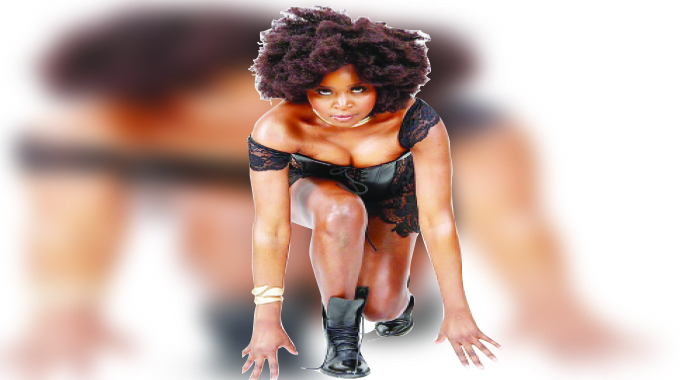
Bruce Ndlovu,Sunday Life Reporter
IN the years following their split, it has become fashionable to think of Afrika Revenge as a duo.
Willis Wataffi and Mehluli “Taz” Moyo — dreadlocks swaying and a sound deeply rooted in African rhythms — became the faces of the group.
Perhaps that is why, nearly two decades after their 2007 breakup, fans still struggle to accept the loss of the double act. It is a separation that, even now, remains difficult to come to terms with.
Yet true Afrika Revenge aficionados will remember that before the band was a duo, it was a trio. Long before Wanga, and before the comebacks that never materialised, Chengetai “Chichi” Razemba stood alongside Taz and Wataffi as the group’s leading lady.
Indeed, for many, the release of the 2002 album Sibe Munye, featuring its smash-hit title track, marked Chichi as the frontwoman of a vibrant troupe of young musicians redefining what it meant to be young, Black and African.
However, just two years after their formation, the trio became a duo — with little explanation from the remaining members about the disappearance of the slender, vivacious beauty who had given the group its feminine vocal edge.
“I was young and I wanted to explore,” said Chichi, now based in France, in a recent interview with Sunday Life.
“I also left because I was not making any money. I was not making ends meet.”
After the success of Sibe Munye, Chichi felt an itch she could not ignore. Raised in Bulawayo in the 1990s, she had always possessed a rebellious streak.
Expelled from John Tallach High School in Ntabazinduna for a youthful misadventure with marijuana, she craved bigger stages. South Africa — the land of her idols Lebo Mathosa, Brenda Fassie and Miriam Makeba — called out to her.
“My influences were always people like Lebo Mathosa and Brenda Fassie — artistes who were popular in Bulawayo. Later on, I discovered Miriam Makeba.
I went to South Africa once and after that, I loved everything South African.
“I love the language; I love the culture.
I met Selaelo Selota, the guy who produced Judith Sephuma and we toured the United States together. We had a wonderful time.
My dream had always been to see the world through a South African lens. Like many Zimbabweans,
I was influenced by South African music. I left Afrika Revenge and Zimbabwe because of money — but also because I wanted to explore the world.”
Years after leaving Mzansi, Chichi describes South Africa as “that boyfriend you loved but who does not love you back.”
It was there that she began to truly break away from Afrika Revenge, recording and releasing her album “Zimblue.”
“When I left Afrika Revenge, I recorded an album called Zimblue while I was in South Africa.
In that album, I felt like I was talking to God — trying to understand who I was.
I wrote my prayers and released my dreams. “I wanted to be guided by something divine. I called it Zimblue because I really had the blues.
I did not know what was going to happen with my life or the album. I feel like that album was the rebirth of a young Black woman.”
Though she loved South Africa, Chichi admitted that deep down, she knew she had to listen to the inner “naughty girl” urging her to seek new pastures.
“While I left because I wanted a better life, I am naturally an adventurer. I love touring, being in different places.
Sometimes, even just being in a hotel room in a new country and ordering different food feels amazing. Wherever I go, I carry my Zimbabwean identity with me.”
Still restless, she befriended Congolese musicians in Johannesburg who later connected her to the French community.
That path eventually led her to France,
where she has now lived for more than two decades.
“I lived in New York for a while, but I decided I really wanted to see the world through the eyes of an African artiste.
In Johannesburg, I got close to Congolese musicians and through them, I was exposed to the French community — something I had already been involved with in Bulawayo through Alliance Française.
“I was immersed in French-Congolese culture and realised we are all African. Eventually, I met a friend — a Frenchman — who became my husband.
That is how I ended up in France. If you listen to my album Nightingale, I recorded it with my Congolese friends.”
In many ways, it feels as though Chichi missed the most dramatic chapters of the Afrika Revenge story.
She was there for the rise but missed the dizzying fame, the heartbreaking split and the hot-and-cold relationship her former band mates have shared since.
“I am more in touch with Willis than Taz, because Taz does not talk much. At one point, I went on YouTube to see if I could find any trace of our time together and I could not find anything. I remember visiting Bulawayo once and hearing their song Wanga, which everyone loved.
“It was amazing to see how their sound had evolved. I check out our old material when I can — our old producer sends it if you ask. I try to stay in touch, but sometimes we just bump into each other. The world is small.”
In hindsight, perhaps it was inevitable that Chichi would be the first to leave Afrika Revenge. Taz and Wataffi had always seemed like two peas in a pod.
“I started working with Willis and Taz as Afrika Revenge around 2001, after I was a finalist in a competition called Supermodel. Honestly, I was nervous because I was the only girl. To me, they were two guys who already had their own thing going and I was always trying to prove that I existed too.”
Now married and living in France, Chichi has become a thespian, starring in productions such as Prisoner 46664, as Winnie Mandela.
She has also portrayed American civil rights icon Rosa Parks and continues to sing under the alias La Voice.
“I am happily married. I am an actress now and I have played historical figures like Rosa Parks and Winnie Mandela. I am still a musician and collaborate with artistes from around the world under the alias La Voice. I am happy — but I miss Africa. I miss the people, the food and the sense of community you find across the continent.”
Though well settled in France, Chichi still describes Bulawayo as her one true love. She believes the city, as a cultural melting pot, prepared her for life abroad.
“I was born in Harare, but my parents moved to Bulawayo when I was little, for work. My name is Chengetai, but I have always felt more Ndebele than Shona.
Because of my upbringing, I can speak many languages — ChiShona, IsiNdebele, IsiXhosa, Zulu, Swahili and others.
“I believe that if you love who you are, you have to show people your true self. I have been lucky to learn many African languages and after being richly cultivated by my own people, learning French was not the most complicated thing to do.”