Online Reporter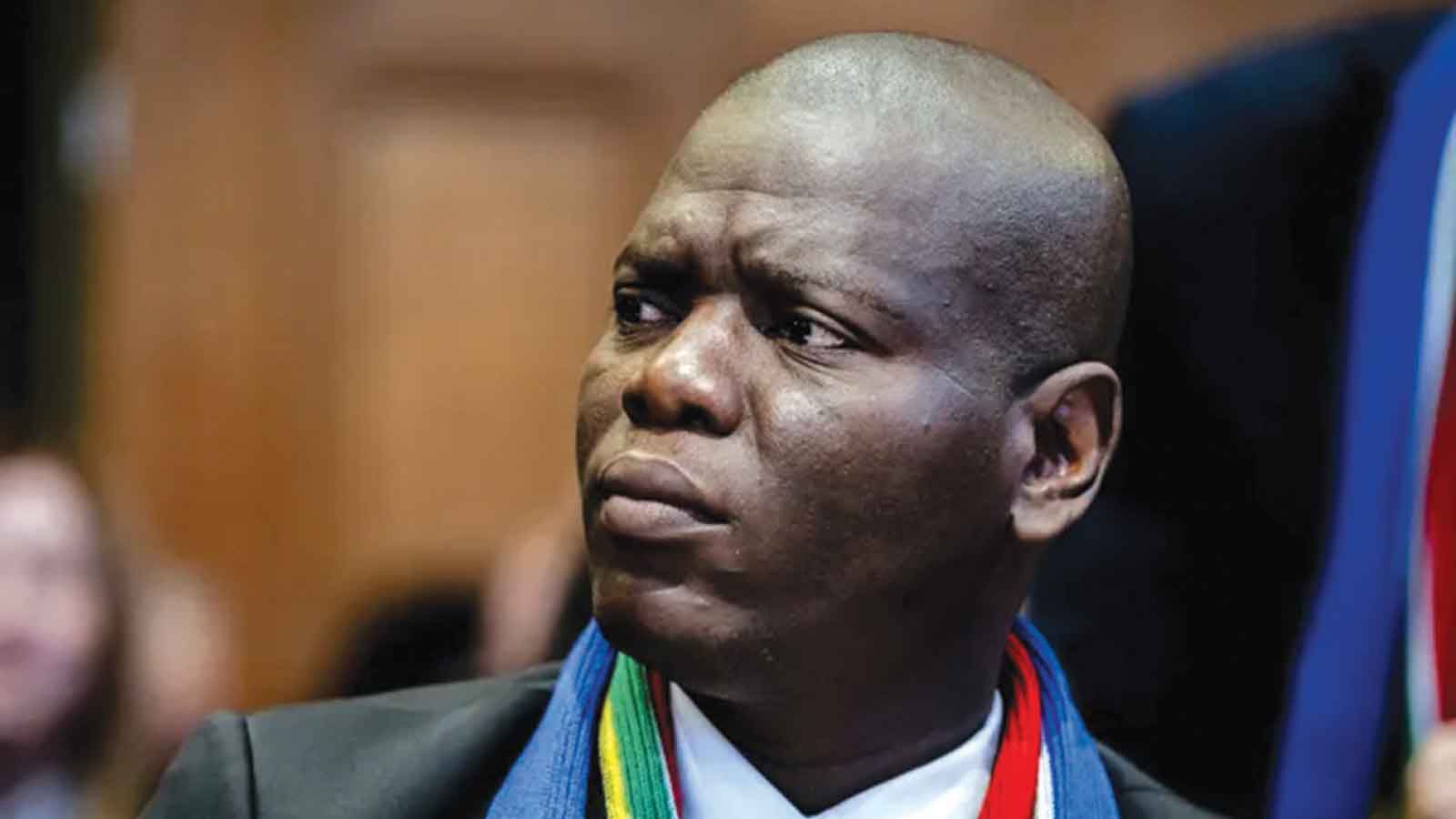
Gibson Nyikadzino
Zimpapers Politics Hub
IN the field of international relations, diplomacy, negotiation and/or foreign policy interactions, one standout aspect when parties engage is interest harmonisation.
This is an intricate outcome that is arrived at when parties balance their interests — national, regional and/or international — as rooted in interest-based bargaining.
When it comes to states, they negotiate every day, either politically, socially, economically or culturally.
These negotiations happen because states deploy officially recognised people with a mandate to do so.
Anyone who attempts to speak on behalf of the State without a mandate, or attempts to execute a plan outside Government parameters, ranks as either an outlaw or mere prankster.
In the face of danger, when a State’s interests or citizens abroad face a threat, lines of communication are opened or kept open to make consultations and negotiate for an appropriate outcome that satisfies both parties, does not put their interests in danger, and protects their citizens in a regional or other global jurisdiction.
Zimbabwe has always been committed to having a standout interest in its citizens outside its borders when they face possible danger, and negotiating their safety has always been a priority towards interest harmonisation, in consideration of the other party.
When Russia initiated its Special Military Operation (SMO) in Ukraine in February 2022, Zimbabwe activated protocols with a mandate to ensure the safety of its citizens in that region was upheld.
Similarly, when war broke out between Sudan’s Armed Forces and the paramilitary terrorist Rapid Support Forces (RSF) group in April 2023, Zimbabwe safely brought all its citizens from that country home.
When the United States and Israel attacked Iran on February 28 this year, Zimbabwe was also seized with the same and immediately urged all its citizens in the Middle East to register their presence at the nearest country’s embassy or consulate to enable the facilitation of adequate assistance following that war.
Diplomacy is a pragmatic art, not a sensational adventure.
It requires a guided patience whose footprints also espouse the constitutional obligations of states and practical outcomes arrived at on the balance of interests to reflect the values that the State stands for.
Under Section 12(2) of Zimbabwe’s Constitution, the country seeks to promote regional and Pan-African cultural, economic and political co-operation and integration, while advocating peace and the well-being of humanity in the region and on the continent.
These foreign policy goals converge with the strategic culture of the Southern African Development Community (SADC) region. So, on the foreign policy front, Zimbabwe does nothing ultra vires its constitutional scope and regional commitments.
Its national commitments and interests are synchronised to depict and reflect the congruency of its national policies with regional mandates. One of the issues is regional harmony.
No to thoughtlessness
South Africa is currently grappling with a sad issue — an issue that has seen some South Africans without a mandate orchestrating negativity towards foreign (African) nationals they target and issuing a deadline on when these foreign nationals should leave the country.
This should not be interpreted as an official position.
Its International Relations Minister, Ronald Lamola, recently admitted that xenophobic attacks had strained the relationship between his country and the rest of the continent.
What remains a practical diplomatic fact is that South Africa has not and did not issue any deadline for citizens of other foreign (African) states to leave its borders.
It did not write a Note Verbale in that regard.
While there may be diplomatic strains caused by these unfortunate incidences, lines of communication remain open to discuss how such challenges can be addressed.
It is not only a South African issue; it is also a regional concern that needs a collective approach to advance national interests with regional cohesion.
Likewise, the media should, in such times, not ventilate ideas that distort and disrupt regional unity or harm a nation’s interests, even when that is to happen “in the name of democracy”.
For State or public media, giving voices to people who have no mandate to run the country, contribute to regional harmony and interest synchronisation risks inciting instability along ethnic or nationality lines.
The role of public media in times like these, and always, is to advance and protect the national interest.
The national interest cannot be protected by exposing citizens abroad to danger.
It is without doubt that the SADC region is the most stable region in Africa, and fertilising ideas of hate and extremism towards foreigners using local media poses a great danger to how people on the same continent view each other.
Responsible media and responsible journalists are thoughtful arteries pushing for regional cohesion against instability.
The Balotelli or Postman Philosophy
Italian footballer Mario Balotelli once remarked that as a striker he does not celebrate when he scores a goal, since scoring is simply fulfilling his responsibility on the pitch.
He compared his role to that of a postman, noting that a mail carrier does not celebrate delivering mail because that is his job.
Diplomacy requires the Balotelli or Postman philosophy.
One cannot throw a party for fulfilling the terms of reference for their job. Even the bread maker has to deliver the bread.
Under Section 35(3)(a) of Zimbabwe’s Constitution, every citizen is entitled to be protected by the State and have their security guaranteed wherever they are.
Zimbabwe, through its practical diplomatic engagements, brought home citizens who had encountered war in Ukraine; those who were in Sudan between a terrorist RSF organisation and Government; and those in Iran when it was attacked by two nuclear-armed powers.
This pragmatic operational approach has also seen Zimbabwe bring home its citizens who were trafficked to places including Myanmar, Cambodia, Oman, Saudi Arabia, and the United Arab Emirates (UAE). Others have been brought from Botswana, Mozambique and South Africa.
Likewise, Zimbabwe will not abandon its citizens in any country, including those in South Africa who want to come home, because, just like the bread maker, the State is doing its job.
Government can therefore not throw a party for fulfilling its mandate and responsibility to protect citizens.
What is important are the results, and the people have seen them coming.
These are the many useful things being undertaken by Zimbabwe.