tawandamusarurwa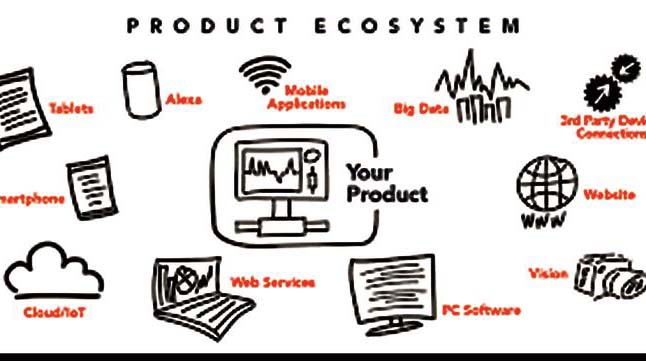
4IR Simplified
John Tseriwa
THE number of internet of things (IoT) devices worldwide is forecast to be more than 29 billion in 2030, according to statista.com.
There is much talk about the IoT and how it affects our daily lives, from how we travel and shop to how industries track their inventory and machinery.
But what is IoT? How does it work?
Most of us interact with IoT devices daily, even if we do not realise it.
It is fascinating how communication has evolved.
Writing letters was a common way to communicate with friends and relatives before the advent of technology. Nowadays, we have smartphones and other devices that allow us to communicate with people worldwide instantly.
The Fourth Industrial Revolution (4IR) has even advanced communication further by enabling communication between “things” in real-time.
Computer scientist Kevin Ashton coined the term internet of things in 1999.
IoT is an interconnected network of physical objects that “speak” to one another using sensors and software.
These devices connect over the internet and can transmit data, perform data analysis and control one another remotely. No wonder IoT has been called the cornerstone of the 4IR.
We live in an age where billions of devices are connected to the internet, collecting and sharing information.
Here is how IoT works: Devices and objects with built-in sensors are connected to an IoT platform.
This platform then integrates data from different devices and applies analytics to share the most valuable information with applications built to address specific needs.
These powerful IoT platforms can pinpoint precisely what information is useful and what can safely be ignored. This information can detect patterns, make recommendations and detect possible problems before they occur.
Let us examine the common types of IoT applications.
Consumer IoT
These are devices that most of us already have, like smartphones, smart watches, connected television sets and the increasing number of intelligent home devices.
As you read this article, you probably have an IoT device such as wearable technology, including smartwatches and fitness trackers.
As you jog in the morning, you could wear your smartwatch or fitness tracker that monitors blood pressure or the heart rate.
An IoT device employs built-in sensors and internet connectivity in your smartphones and other devices to capture accurate time and location.
Industrial internet of
things (IIoT)
IIoT is an ecosystem of connected smart devices in industrial applications for automation, remote monitoring and predictive maintenance.
In IIoT, smart devices may be deployed in construction vehicles, supply chain robotics, solar and wind power, agricultural sensor systems, smart irrigation and more.
As much as IIoT may occupy its niche, the IoT subset is part of a more significant move, the 4IR.
4IR prioritises the interconnectedness of devices by combining areas like machine learning, big data and data analytics.
As a result, companies can speed up physical production with digital technology.
IIoT has the potential and capabilities to support industries in reducing operating costs, assuring worker safety and increasing throughput.
Commercial IoT
Commercial IoT refers to the tools and systems used outside of the home.
For example, businesses and healthcare organisations leverage on commercial IoT for auditable data trails and consumer management. We usually encounter commercial IoT in commercial office buildings, supermarkets, stores, hotels, healthcare facilities or entertainment venues.
For instance, the access card you use to enter your workplace or hotel room. You can only use the elevator in some hotels with an access card.
Commercial IoT applications provide a premium experience to guests in places like hotels and restaurants through more efficient monitoring in smart buildings and smart offices.
While IoT devices have brought so much convenience and improved customer experience, they, however, come with two major security concerns — IoT device security and network security.
An IoT device that is not secured can lead to severe data breaches.
It is, therefore, crucial to ensure the security of IoT devices and connections.
Cyberthreats are constantly evolving, and today, we are witnessing a new wave of advanced attacks explicitly targeting IoT devices.
For IoT to reach its full potential, devices must be more secure.
The good news is that cybersecurity is a thriving industry.
Organisations and individuals can adopt security policies and procedures that protect infrastructure, harden IoT configurations and make networks defensible and intelligent.
Always remember that whatever you can access and control remotely, someone else can do that at your peril.
Stay connected and stay safe!
John Tseriwa is a tech entrepreneur and a digital transformation advocate focusing on delivering business solutions powered by 4IR technologies. He can be contacted at: [email protected] or +263773289802.



 Online Reporter