Online Reporter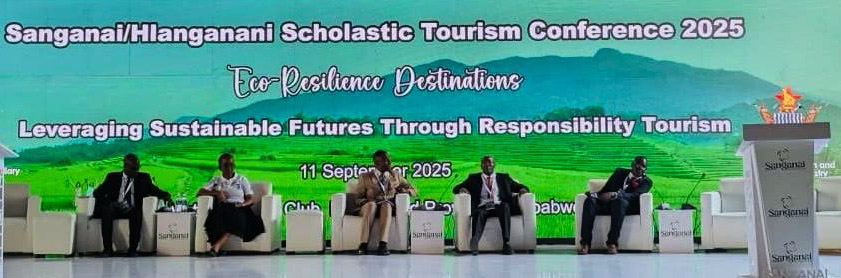
Lloyd Makonya
Correspondent
THE second edition of the Scholastica Conference, held alongside the Sanganai/Hlanganani/Kumbanayi World Tourism Expo held recently in Mutare, has once again demonstrated the importance of bridging the gap between academia and industry in shaping the future of Zimbabwe’s tourism sector.
Organised by the Ministry of Higher and Tertiary Education, Innovation, Science and Technology Development in partnership with the Ministry of Tourism and Hospitality, the conference ran under the theme:
“Rhetoric vs Reality: Sustainable Tourism Implementation in Zimbabwe where Heritage-Based Education 5.0 Meets Reality.”
The discussions centred on aligning academic training with industry needs to ensure that Zimbabwe’s growing tourism and hospitality sector remains competitive and innovative.
The conference drew candid contributions from key industry players.
Immediate Hospitality Association of Zimbabwe (HAZ) past president, Mr Brian Nyakutombwa, observed: “Currently, it is more rhetoric than reality, as there exists a gap between the needs of industry and the products being produced by academia.”
Tourism researcher and academic, Dr Cleopas Njerekai stressed the transformative value of Education 5.0, noting that, “Education 5.0 emphasises innovation and heritage-based problem-solving, and it is informed by data.”
Incoming HAZ president, Mrs Emma Kativhu, urged closer collaboration: “As key tourism players, there is a need to remove silos; industry and academia must come together if we are to deliver real value to the sector.”
University of Zimbabwe lecturer, Mr Livingstone Mhonda, added that businesses should play a more active role in supporting innovations emerging from universities, many of which directly address tourism’s operational challenges.
Higher and Tertiary Education, Innovation, Science and Technology Development Deputy Minister, Honourable Simelisizwe Sibanda, representing the Guest of Honour, Minister Ambassador Dr Frederick Shava, called for stronger industry commitment to nurture young professionals.
“There should be a collective effort to upskill students who will eventually work in the industry. Industry should not take students on work-related learning as slaves, but as future professionals who deserve mentorship,” he said.
In her closing remarks, Tourism and Hospitality Industry Minister, Honourable Barbra Rwodzi, underscored Government’s leadership in fostering dialogue platforms.
“Government should lead in fostering a platform where industry and academia meet to continue improving the sector.”
Delegates also previewed the 2025 Scholastica theme: “Eco-Resilient Destinations – Leveraging Sustainable Futures through Responsible Tourism,” which is aligned with the UN Tourism 2025 agenda.
This focus highlights ecological resilience, cultural preservation, community-driven planning and green infrastructure as the cornerstones of sustainable tourism.
The approach envisions destinations that empower local communities, enrich visitor experiences and safeguard ecosystems, ensuring that tourism growth delivers lasting value both today and for future generations.
Since its inception in 2024, the Scholastica Conference has gained recognition as a critical forum for policy dialogue, innovation sharing and inclusive participation.
Its objectives remain clear aimed at developing home-grown models for sustainable tourism, identifying innovative practices and engaging diverse stakeholders from academics to entrepreneurs and community representatives. Importantly, the initiative has also ensured representation of differently-abled students within the tourism innovation ecosystem.
Tourism is a cornerstone of Zimbabwe’s economic recovery and community development strategy.
For the sector to thrive, stakeholders must invest in skills, research and innovation.
The Scholastica Conference has the potential to become more than an academic forum but an economic strategy table where the next phase of Zimbabwe’s tourism growth is being shaped.
By strengthening partnerships between universities and the private sector, Zimbabwe positions itself not only to meet the demands of today’s competitive tourism market but also to secure a resilient and inclusive future for one of its most promising industries.