

 Chronicle Editor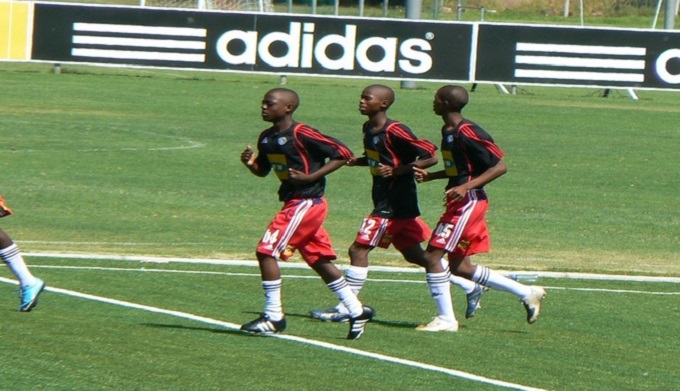
Dingilizwe Ntuli
LAST week BBC Sport reported that Dutch top tier Eredivisie side Ajax paid about US$10 million to Danish Superliga club FC Nordsjaelland for 19-year-old Ghanaian Mohammed Kudus.
Although this relatively represents a modest transfer figure taking into account the megabucks involved in the European football transfer market, its significance far outweighs the monetary value involved.
Despite being a Danish club, FC Nordsjaelland is actually wholly owned by Right to Dream Academy from Ghana. This represents a unique feat because previously one would expect a European club to have a controlling influence over an African-based academy, but not in this case.
The Ghanaian academy owns FC Nordsjaelland 100 percent and it’s home to nine Ghanaians mixed with Danish youngsters.
The academy, based in Asuogyaman in Ghana’s eastern region on the banks of the Volta River, took 17 years to build it into what it has become and today boasts of what is regarded as the best academy training facility in sub-Saharan Africa, with eight training pitches and a school fully accredited to the Cambridge International Examinations Syndicate.
Right to Dream Academy offers a simpler route to the European leagues for highly talented Ghanaian youngsters and doesn’t depend on highly connected agents or scouts to organise trials for them.
This represents a major departure from the past, as a youngster’s dream can now be fostered from the age of 10 with a clear career path forged, as long as one remains disciplined and focused on their life goals.
According to Englishman and former Manchester United scout Tom Vernon, who founded the academy at a house in Accra 20 years ago, once a youngster is accepted at the age of 10, they are guaranteed a six-year scholarship and only the best join FC Nordsjaelland, while about half of their graduates go to the United States of America and others start their careers at Second Division clubs that form part of Right to Dream’s network across Scandinavia.
Right to Dream Academy is today regarded as the model for a successful and sustainable programme for African youngsters seeking to pursue professional football in Europe.
Unlike most African academies that merely have links with or some form of arrangement with certain European clubs and agents, this academy defines its own destiny.
Its candidates also have a clearly defined path unlike other ‘academies’ in sub-Saharan Africa that largely serve as money making schemes for their owners or are run by unscrupulous agents, most of who ask parents to pay for their kids’ enrolment and entire programme with fake promises of taking them to big European leagues.
Right to Dream has no doubt proved that football academies, not only play an important role in player development and training programmes but can also transform young lives.
Talent from a young age has always been key to the success of every country in any sport and it is the ability to provide them with the right tools that marks the key starting point.
Zimbabwe has a number of football academies, visible and obscure, whose fortunes have varied depending on their links, owners, sponsors or objectives.
Among them are Galaxy Academy, Aces Youth Soccer Academy, Friendly Academy, Legends Football Academy, Manicaland Juniors of Excellence Soccer Academy, Total Football Academy and Zimbabwe Football Development Academy-Centre.
Bulawayo also has its fair share of academies such as Biya and Friends Academy, Young Flying Stars Soccer Academy (Byo), Inline Girls Soccer Academy, Skies Las Palmas Academy, New Lobengula Rovers and Bantu Academy, now known as Bantu Leopards following its merger with Zim Leopards and is affiliated to the Bulawayo Metropolitan Province Division Two league.
While there is no doubt that these academies have played an important role in helping keep some youngsters off the streets and realise their dreams, more still needs to be done for them to effectively achieve objectives of a fully fledged academy.
Aces Academy and Bantu have done well in helping churn out some of the country’s top footballers.
Although stars such as Marvelous Nakamba, Teenage Hadebe, Tendai Ndoro, Kuda Mahachi and Danny Phiri may have started their junior football elsewhere, it was at Bantu that they got the big break after being thrust into the first team as teenagers.
Nakamba was the first in this batch to get the big European break and is currently on the payroll of English side Aston Villa. Hadebe played for Chicken Inn and Highlanders locally before moving to South Africa glamour side Kaizer Chiefs and eventually landing a contract with recently relegated Turkish topflight side Yeni Malatyaspor in 2019.
Mahachi, Ndoro and Phiri have all done well in the South African Premiership where they have made a mark.
It must be noted that although those that made the breakthrough to Europe and South Africa were exceptionally talented individuals, local academies provided a platform for them to further sharpen their skills, albeit not under ideal conditions.
There seems to be an eagerness by some former players and other individuals to start academies but do these academies offer their candidates the full package that Right to Dream from Ghana affords its students?
Do our local academies even have the proper infrastructure to start with? The right infrastructure is needed for the correct development of players they enrol, from the pitch and quality of turf to maximise development of individual technical skills and all aspects needed to achieve maximum results.
Right to Dream has eight standard training pitches and a school fully accredited to the Cambridge International Examinations Syndicate, and the question then is — what model are our academies following?
Are youngsters enrolled at the different academies dotted around the country exposed to the correct facilities and equipment for them to excel in football and academically as this Ghanaian model?
It’s sad that most of our academies at best resemble organised neighbourhood teams that meet for training at rented fields after school and the emphasis seems to be only in playing football, neglecting a holistic development approach that also includes character building and academic learning.
Right to Dream has put STEM subjects at the heart of its curriculum and recruits focus on science, technology, engineering and maths to equip them with skills needed for the workplace, in addition to honing their football skills.
They learn vital new technology skills such as coding and computer programming, giving them an option in career choice should they fail to break into the professional ranks of the European leagues.
At its peak, Bantu tried to pursue a holistic approach by helping a number of their talented youngsters get scholarships to American secondary schools and colleges through partnerships they had formed when
Methembe Ndlovu was still involved with that project before leaving to pursue other things.
Instead of more academies mushrooming, is it not logical for existing ones to consider merging and using their combined resources to adopt the Right to Dream model and see if they won’t attract local corporate or international sponsorship?
It’s not enough just to focus on trying to produce the next Peter Ndlovu while neglecting other aspects like education and character building. The objective must also include providing a better life for the recruits by producing a well rounded useful citizen and not just a mere footballer that can easily be stranded should they suffer a career ending injury before their career really takes off.
After all, not all recruits at our local academies will even make it into the domestic Premier Soccer League, so our academies should do more by revising their single objective approach and give youngsters they recruit multiple shots at their life’s goals.


 Bongani Ndlovu
 Online Reporter