

 Online Reporter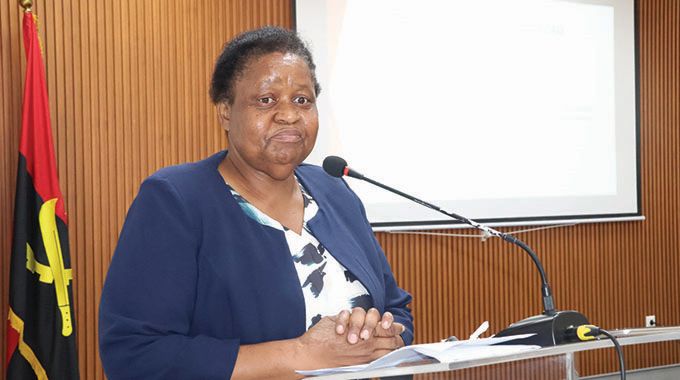
Admire Masuku, [email protected]
ZIMBABWE and Angola are strengthening co-operation in higher education, with universities from the two countries moving to establish partnerships in research, innovation, student and staff exchanges, language training and skills development as bilateral relations expand beyond politics and trade.
The latest engagement follows the signing of a Memorandum of Agreement during the 2024 Zimbabwe-Angola Joint Permanent Commission on Co-operation (JPCC), which provides a framework for collaboration in higher education, science, technology and innovation.
As part of implementing the agreement, a Zimbabwean delegation led by the acting Permanent Secretary for Higher and Tertiary Education, Innovation, Science and Technology Development, Mrs Memory Mukondomi, visited the University of Luanda and other higher education institutions in Angola to identify priority areas for collaboration.
The delegation included officials from the Zimbabwean Embassy in Angola, the Ministry of Foreign Affairs and International Trade, the Ministry of Higher and Tertiary Education, Innovation, Science and Technology Development, the Ministry of Agriculture, Mechanisation and Water Resources Development, the Ministry of Industry and Commerce, as well as representatives from Zimbabwean universities and polytechnics.
Addressing university officials in Angola, Mrs Mukondomi said the visit was aimed at promoting Zimbabwe as a preferred study destination while showcasing the country’s Heritage-Based Education 5.0 model.
“This initiative is to showcase Zimbabwe’s Heritage-Based Education 5.0 model, which integrates teaching, research, community service, innovation and industrialisation to address national development priorities,” she said.
Mrs Mukondomi said the long-standing relationship between Zimbabwe and Angola, forged during the liberation struggle, was entering a new phase driven by education, innovation and human capital development.
“The relationship between Zimbabwe and Angola, forged during the liberation struggle, is entering a new phase centred on education, innovation and skills development,” she said.
University of Luanda Vice-Chancellor Professor Alfredo Gabriel Buza said the institution would send a delegation to Zimbabwe in September to formalise partnerships with local universities.
“We want to build stronger relationships, sign more partnerships with institutions in Zimbabwe, break language barriers between our institutions and ensure that staff and students can learn from each other,” he said.
Prof Buza said enhanced academic mobility would create new opportunities for students and lecturers while strengthening institutional cooperation between the two countries.
President of the Instituto Superior de Administração e Finanças (ISAF), Dr Carla Queirós, said her institution was seeking partnerships that would facilitate the exchange of students and academic staff.
She said ISAF was introducing an English-taught degree programme in accountancy and finance to attract students and academics from Southern Africa and other English-speaking countries on the continent.
“We want to open our doors to the region and strengthen our links with English-speaking countries through academic cooperation,” Dr Queirós said.
President of the Instituto Superior Politécnico Alvorecer da Juventude (ISPAJ), Professor Albertino Candimba, called on African universities to strengthen South-South cooperation by building partnerships within the continent.
“We have common challenges and should work together to solve them through joint research, staff and student exchanges, innovation and technology,” he said.
Zimbabwean universities also identified several areas for immediate collaboration.
Marondera University of Agricultural Sciences and Technology Pro-Vice Chancellor for Academic Affairs, Research and Administration, Prof Nomalanga Mpofu Hamadziripi, said discussions had revealed strong common interests between institutions in the two countries.
“There are practical areas where our institutions can begin building meaningful partnerships, such as agriculture, collaborative research, postgraduate studies and programmes focusing on English and Portuguese language development,” she said.
Chinhoyi University of Technology also expressed interest in collaborating on online language programmes, postgraduate training, curriculum development in agriculture and hospitality, and creating pathways for Angolan diploma holders to pursue degree studies in Zimbabwe.
The expanding cooperation is expected to support the implementation of the Heritage-Based Education 5.0 philosophy while strengthening regional integration through knowledge exchange, innovation, research and skills development.
Zimbabwe and Angola are expected to convene another session of the Joint Permanent Commission on Cooperation in Harare later this year to review progress and identify additional areas of bilateral collaboration.


 Bongani Ndlovu