Online Reporter
Judith Phiri [email protected]
GOVERNMENT has been urged to accelerate policy and regulatory reforms that will create a secure framework for transforming billions of dollars in diaspora remittances into long-term savings and productive capital to finance housing development, infrastructure and other national development projects.
Diaspora remittances reached $2,45 billion in 2025, serving as a critical lifeline for Zimbabwe’s economy and household survival.

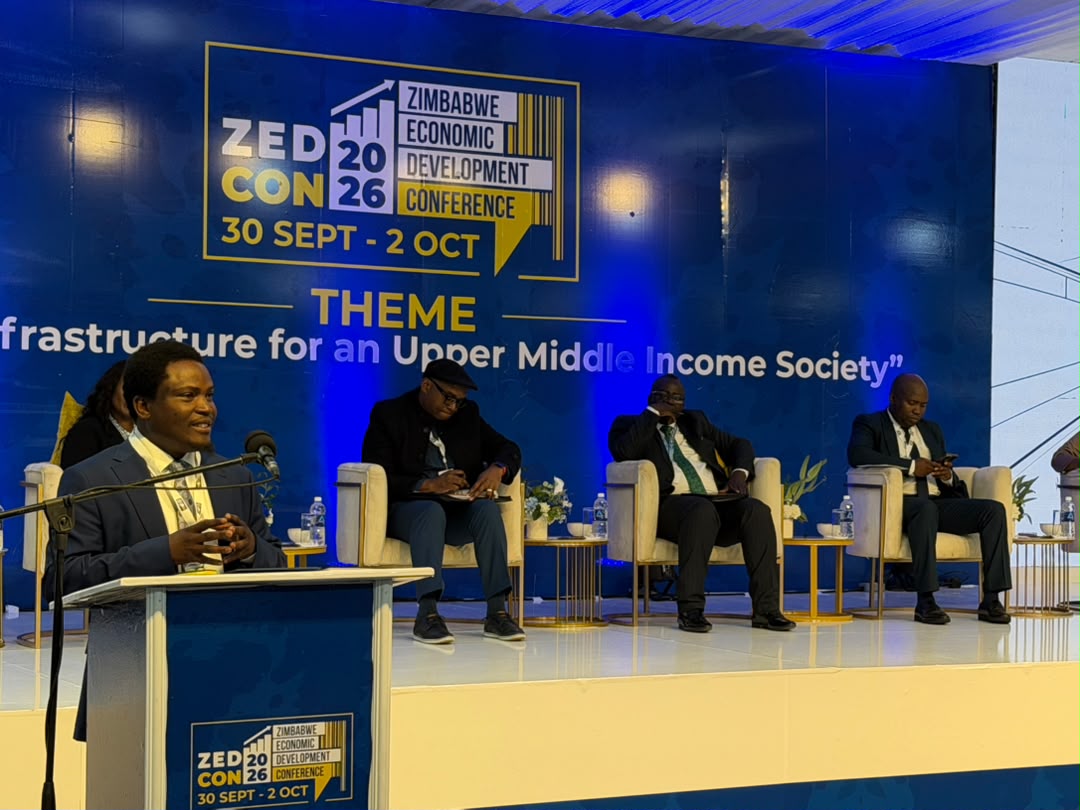
Presenting a paper titled “Mobilising Diaspora Remittances for Long-Term Savings: Policy Reforms to Advance National Development Strategy 2 (NDS2)” at the ZEDCON 2026 in Bulawayo yesterday,
Mr Terrence Kamoto from the Insurance and Pensions Commission (IPEC) said the major obstacle was no longer a lack of diaspora interest, but policy gaps that constrain the conversion of remittances into institutional investment.
“The question is no longer whether Zimbabwe’s diaspora remittances can be converted into long-term capital.
“The question is whether our policy architecture will create the conditions for that conversion to occur,” he said.
Mr Kamoto said inadequate currency protection, the absence of mechanisms to address loss of value, limited cross-border savings channels and legislative gaps were among the barriers requiring policy attention.
He noted that reforms should be implemented in phases between 2027 and 2030, beginning with measures aimed at establishing an enabling regulatory environment and building confidence among Zimbabweans living abroad.
“Under the proposed roadmap, the first phase, covering the first half of 2027, would include enactment of a Value Preservation Compact, establishment of the Commercial Court, piloting diaspora-focused investment instruments with two licensed insurers and opening diaspora-focused units in five embassies,” said Mr Kamoto.
“The initial embassy units are proposed for the United Kingdom, South Africa, United States, Botswana and Australia, before the initiative is expanded to all Zimbabwean embassies during the final phase.”
Mr Kamoto said building confidence was central to mobilising diaspora resources into formal long-term investments as trust comes before scale.
He said sequencing, not just product design, decides success and the roadmap envisages moving from launching the reforms in 2027 to building trust through 2028 and eventually scaling up the framework nationally between the third quarter of 2028 and 2030.
“Demand for diaspora-linked investment products already exists, with remittances helping to drive insurance uptake. IPEC would also conduct quarterly monitoring of insurance and NDS2-related indicators under the proposed framework,” said Mr Kamoto.
He said money sent home by Zimbabweans living abroad plays a critical role in meeting immediate household needs, including utilities, healthcare, school fees and funeral expenses and as such the prevailing consumption pattern limits the amount available for savings and investment.
“While these are legitimate needs, every dollar that is consumed is a dollar that is not available for savings, pension contributions or insurance premiums, is what creates investable capital,” said Mr Kamoto.
He said there was already considerable interest among Zimbabweans in the diaspora to invest back home, particularly in housing, but much of the investment was taking place through informal arrangements.
“We’ve noticed that from the diaspora there is interest in investments, but what is happening is that they are investing in housing.
“The reason we see a lot of housing across the country is because of this investment, but it is happening informally,” said Mr Kamoto.
He said informal property investment could expose diaspora investors to risks that include fraud, title disputes and demolitions, while limiting the ability to transform such assets into institutional capital.
“It’s exposing these people to fraud, title disputes and even demolitions. These assets can also not be mortgaged or put into institutional capital,” said Mr Kamot.
He said there was, therefore, a need to create formal mechanisms that could convert diaspora investment appetite into long-term savings, pension contributions, insurance products and properly structured housing investments.
Such measures could help deepen Zimbabwe’s pool of patient capital while directing part of the country’s diaspora inflows towards productive investments capable of supporting the development priorities outlined under NDS2.
ZEDCON 2026 is running under the theme: “Smart Infrastructure for an Upper middle-Income Society.”