Online Reporter
Trust Freddy Zimpapers Correspondent
THE Zimbabwe Anti-Corruption Commission (ZACC) has recovered suspected tainted assets worth over US$9,4 million and achieved a 58 percent court conviction rate, as it steps up the fight against graft in line with the Second Republic’s zero-tolerance stance on corruption.
The figures are contained in ZACC’s 2025 Annual Report, launched in Harare yesterday.
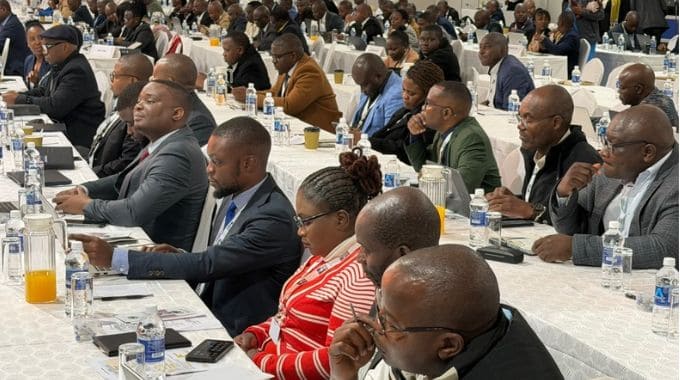
The launch was attended by ZACC Commissioners, Commissioners from other Chapter 12 institutions, and Ministry of Justice, Legal and Parliamentary Affairs senior legal officer Mr Lloyd
Kabara, who was representing Justice Minister Ziyambi Ziyambi. Also present were Deputy Minister of Information, Publicity and Broadcasting Services, Dr Omphile Marupi, Chairperson of the Parliamentary Portfolio Committee on Justice, Cde Eddison Zvobgo (Jnr), civil society organisations, religious leaders and members of the ZACC Secretariat.
ZACC arrested 364 people and secured 96 convictions, with Harare accounting for 72 percent of all corruption reports.
Detailing operational figures, ZACC Executive Secretary Advocate Shepherd Manhivi said the agency received 797 corruption reports during the year ended December 31 last year.
Of the cases reported, 624 (78 percent) were allocated for formal investigation, while 37 were assigned to the Asset Forfeiture and Recovery Unit for parallel financial tracing.
“The Commission completed investigations into 386 cases and referred 314 dockets to the National Prosecuting Authority (NPA), achieving 99,6 percent of our annual target,” Adv Manhivi said.
He added that 364 suspects—comprising 276 males, 77 females, and 11 corporate entities — were arrested.
Courts finalised 172 dockets during the year, resulting in 96 convictions.
Depriving criminals of illicit gains remained central to ZACC’s operations.
“The Commission prioritised the recovery of proceeds of corruption,” Adv Manhivi said.
“A total of 32 case files were referred to the NPA for confiscation and unexplained wealth orders, involving 99 motor vehicles valued at US$5,68 million and 38 immovable properties valued at US$3,79 million.”
On prevention, ZACC conducted six systems reviews and 19 compliance checks across local authorities and schools, recording an average institutional compliance rate of 65,5 percent.
“The Commission trained 51 Integrity Committees, and over 10 641 integrity pledges were signed across the country,” Adv Manhivi said.
Public outreach drives reached over 60 000 learners, 4 000 rural community members and 3 500 urban citizens.
ZACC’s public awareness now stands at 52 percent, with 80 percent of respondents understanding what constitutes corruption.
In the foreword of the report, ZACC Chairperson Mr Michael Reza said the Commission became fully constituted in April 2025 following the appointment of eight Commissioners by President Mnangagwa.
“The appointment of the Commissioners resulted in the establishment of nine functional Board Committees,” Mr Reza said, adding that the new bodies strengthened governance and oversight across key operational areas.
“In 2025, the Commission focused on strengthening the policy framework that guides its operations. The Board approved the Strategic Plan for 2026 to 2030, Communications Policy,
Branding Policy, information, communication and technology policy and reviewed the human resources policy and procedures manual to align with the Constitution, the Labour Act and contemporary best practices,” he said.
At national policy level, ZACC coordinated formulation of the Second National Anti-Corruption Strategy (NACS2), supported by the African Development Bank (AfDB).
Following nationwide consultations across all eight provinces and two metropolitan provinces, the draft has been submitted to the Cabinet Committee on Legislation.
“Once adopted, NACS2 will guide our collective efforts from the date of approval to 2030, aligning fully with the National Development Strategy 2 (NDS2) and our national vision of a prosperous Zimbabwe by 2030,” said Mr Reza.
However, Mr Reza said although the Commission arrested hundreds of people and recovered assets worth millions in 2025, it is battling low staff morale and limited public awareness.
He disclosed that employee satisfaction stood at 38 percent during the year under review, while citizen awareness of ZACC was 52 percent, with 80 percent saying they understand what corruption is.
“We note that the employee satisfaction level stood at 38 percent during the year under review and undertake to address the concerns raised,” Mr Reza said.
He said despite operating with limited resources, the Secretariat executed its mandate, including extensive systems reviews and compliance checks at local authorities and schools, training of 51
Integrity Committees, and getting over 10 600 individuals to sign Integrity Pledges.
On legal reforms, Mr Reza said ZACC is pushing for amendments to the Anti-Corruption Commission Act [Chapter 9:22], with the draft Bill now with the Ministry of Justice, pending Cabinet approval.
He added that the Whistleblowers and Witness Protection Bill has been approved by the Cabinet Committee on Legislation and is awaiting gazetting.
Delivering a statement on behalf of Minister Ziyambi, Mr Kabara stressed the need for thorough investigations to eliminate the perception of “catch and release”.
“The presentation of up-to-date, positive financial statements is an important indicator of institutional discipline, and the Minister expects you to maintain such a standard, as this significantly inspires public confidence,” Mr Kabara said.
“The Minister expects the fight against corruption not only to be measured against reports received and arrests made, but we expect the quality of investigations to be thorough and top-notch, prevention of corruption to be of high priority, and asset recovery to be boosted. Working in silos can be the number one enemy that fights the anti-corruption drive.
“Witnesses are there to see the trial through. They need to be protected. And the commitment of Government is that a lot of money is needed to protect a witness.”
Financially, ZACC managed ZWG178,9 million in 2025, primarily funded through Government grant allocations for salaries, operational costs and capital assets.
The agency also received non-cash corporate support from partners including POTRAZ, TelOne, Inter Africa, ZINWA, the Zimbabwe Tourism Authority and Caleb Mucheche Law Chambers.
During the period under review, ZACC fully migrated its accounting systems to the International Public Sector Accounting Standards (IPSAS) framework and upgraded its operational fleet with 14 vehicles, a 36-seater bus, a mobile roadshow truck and updated ICT equipment.