admin
admin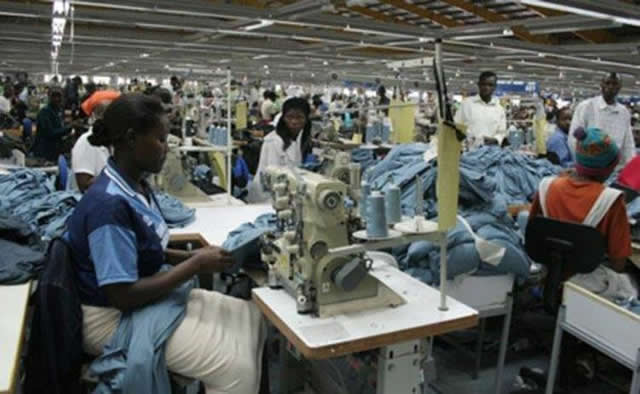
Lovemore Chikova Development Dialogue
Many developing countries, especially in Asia, have adopted special economic zones as a new model of development in an effort to enhance their progress.
In recent times, African countries also started implementing the same concept of development, albeit with not as much success as is anticipated.
Zimbabwe has not been left out in this race to implement special economic zones and has already declared certain areas as reserved for this programme.
Those who follow local developmental issues will testify that although much is being done to ensure these reserved zones become fruitful, progress has been a little bit slow.
An interrogation of this case will reveal that there is need for a robust campaign to ensure that the special economic zones are popularised with investors.
Special economic zones operate in such a way that those with capital can establish their factories there, in most cases after being attracted by the special treatment they get from the State.
The investors, both local and foreign, get tax breaks, low duty tariffs, low labour costs and many other benefits that accrue to them.
They can also easily repatriate certain portions of their profits back to their countries if they are foreign.
All these concessions are at the forefront of ensuring that investors are attracted to do business in the country.
In Zimbabwe, the Zimbabwe Investment and Development Agency (ZIDA) is empowered with the management of special economic zones.
ZIDA has to publicise the special economic zones to would-be investors through vigorous media campaigns and conferences where it can easily state its position to those with capital.
It is important to deliberately target areas with potential investors and then design publicity programmes that appeal to them.
Special economic zones have worked wonders in countries that have successfully implemented them — creating employment, increasing foreign direct investment and creating a private sector led and import-oriented economy.
China is a good example of this success.
Today, many industrial parks in China have foreign investors who bring billions of dollars each year to boost the Chinese economy.
The technological advancement that China is enjoying can easily be attributed to the reform and opening up policy adopted in the late 1970s.
This policy resulted in the establishment of the first special economic zones in that country, resulting in new technologies finding their way into the Asian country.
Zimbabwe has so far declared six public sector special economic zones.
There are two sites in Bulawayo — the Belmont-Kelvin-Donnington Corridor and the Umvumila area close to the Joshua Nkomo International Airport for manufacturing and logistics.
The country’s second largest city is a traditional manufacturing hub.
Victoria Falls, anchored on tourism and a financial hub established through the Victoria Falls Stock Exchange, is another special economic zone.
In Harare, Sunway City has already been declared a special economic zone designated as a high-tech and manufacturing area.
There is also another special economic zone in Mutare.
Cabinet has since approved the Conceptual Development Framework for the Victoria Falls-Binga Special Economic Zone and the related nodes following presentation by the Minister of Local Government and Public Works.
The following 10 nodes, most of them being tourist resorts, were identified within the Special Economic Zone namely: Victoria Falls Municipality Area; Jafuta (Masuwe) Stateland; Batoka Town; Mlibizi Resort; Binga Centre; Sijarira Resort; Binga hinterland; Gwayi-Shangani Dam Resort; Hwange Town; and the Hwange Aerodrome Centre.
In line with devolution, it will be important that ZIDA works on establishing other special economic zones in the remaining provinces — Mashonaland Central, Mashonaland West, Mashonaland East, the Midlands and Masvingo.
Developments that have been taking place in road and dam construction augur well with the establishment of special economic zones.
Opportunities have risen in areas with huge water bodies like Tokwe Mukosi Dam, where special economic zones specialising in agriculture can be established.
But these special economic zones must have dedicated power, water and data for efficiency in production.
This is why infrastructure development being undertaken in various parts of the country is good for the establishment of special economic zones.
There are two types of infrastructure that can help special economic zones flourish — external and internal.
External infrastructure includes support systems like air, road and rail transport outside the trading zones, while internal infrastructure involves the systems within the trading zones.
Investors in special economic zones may eventually need to export their products, and they cannot efficiently do that without a better air, road and railway network.
That is why work being undertaken on major roads like Beitbridge-Harare and Harare-Chirundu highways should be complimented as an incentive that will play a major role in the attraction of investors.
The expansion of Robert Gabriel Mugabe International Airport also fits well into the special economic zones matrix, as it will enable efficient movement of both humans and goods.
The magnificently re-done Victoria Falls International Airport will not only make it easy for tourists, but also for investors, especially after the swathe of land around Victoria Falls up to Binga was declared a special economic zone.
Other projects that support special economic zones, include the on-going expansion of Hwange Thermal Power Station and the Kariba South Power Station Extension Project which was switched on by President Mnangagwa in 2018.
The special economic zones will also need internal infrastructure within the designated areas, especially where industrial shells are set up.
In some countries that effectively established special economic zones, investors are attracted by presence of such infrastructure, including the factory shells.
There are also private sector special economic zones that need to be empowered, and these are individual companies that are operating with special economic zones licences.
Firms in Zimbabwe with such status so far include Surewin, Trade Kings, Nkonyeni, Varun, VSLink, Chingases, Colmin, Shepco, Lentsloane, Ecosoft, Afrochine and Prospect Lithium.
And these are strictly individual investors, and are most likely to be successful because they are driven by profits.
Investors who run small-to-medium enterprises should also not be left out when it comes to the granting of special economic zones lines.
In fact, the success of a number of special economic zones in many Asian countries has been driven by these small businesses.
Writing a paper for the Investing in Africa Forum recently, Chinese expert Mr Douglas Zhihua Zeng said the definition of special economic zones varied and covers a broad range of areas.
Mr Douglas’ paper was aptly titled: “Global Experiences with SEZ — With a focus on China and Africa”.
“The term ‘SEZ’ here covers a broad range of zones such as free trade zones, export processing zones, industrial parks, economic and technology development zones, high-tech zones, science and innovation parks, enterprises zones and others,” he wrote.
“The basic concept of SEZs includes several specific characteristics: (a) it is a geographically delimited area, usually physically secured, (b) it has a single management or administration; (c) it offers benefits for investors physically within the zone; and (d) it has a separate customs area (duty-free benefits) and streamlined procedures.”
In other words, special economic zones “are set up when a country delimits a special area where, through exemption of customs duty, it formulates various preferential conditions and provides public facilities so as to attract foreign investors set up factories whose products are mainly for export”.
What needs to be observed in implementing the special economic zones is to offer a package of attractive incentives that will entice the investors.
The investors bring not only foreign currency into the country, but also high-tech equipment, new technologies and create employment for the host nation.
What should make the special economic zones a viable model of economic development is that they are implemented on a win-win basis, with both sides — the country and the investor — benefiting.
For Zimbabwe, what is important is that Government has already demonstrated political will from the top to vigorously push for establishment of special economic zones.
What is now needed is for ZIDA to come up with a thorough programme aimed at ensuring that Zimbabwe becomes famous for what it offers in attracting investors to these zones.


 Online Reporter