admin
admin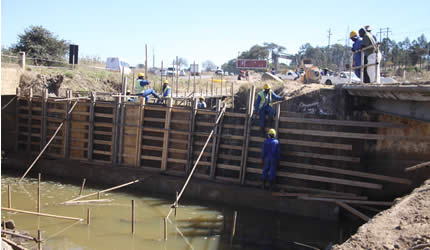
bridge.
Most of the passengers in the kombi let out an audible sigh of relief save for Sylvia Mandedza who looked very terrified and clung to the seat in front of her. For some time she remained glued to the seat as people continued to shout at the young kombi driver who seemed unfazed over the people’s complaints.
To Sylvia, the famous “11 Months Bridge” is a reminder of the horror crash that she had been involved in at the same bridge in July 2000.
Unfortunately, the accident had claimed the life of her fiancé and her two friends and had left her partially disabled, heavily scarred and traumatised.
Every time Sylvia passes by the bridge memories of that horrific day flash through her mind. The memory has remained so vivid in her mind, it was as if it had happened yesterday. She remembers the day that changed her life for the worst.
“The accident took away from me a part of my life. My boyfriend and I had gone for a meeting with my family to plan for our wedding which was scheduled for September that same year. We had a very good time drinking and partying after the meeting.
“We left my uncle’s house in Msasa around 9pm to drop our two friends in Mabvuku but the journey was never to be completed,” said a sobbing Sylvia.
“On approaching the bridge, there was an oncoming haulage truck which was also approaching the bridge. As we got to the bridge, the truck encroached onto our lane. My fiancé tried to avoid the truck but our car hit the rails at the bridge and it overturned.
“I remember my friend screaming as the car plunged into the cold water and the next thing I remember is waking up in hospital several hours later with injuries on my left leg and face only to be told later that Dennis, my fiancé, and my two friends had died,” she said.
The Msasa bridge which was named “11 Months” in the mid-1990s after an accident which claimed the life of three family members whose bodies were only discovered 11 months later still holds a lot of tales some of which have just been shot down as myths.
The bridge is especially dangerous as the road steeply descends on a curve and it is very difficult to see oncoming traffic in either direction. The stretch of the highway from the Jaggers roundabout to the Mabvuku turn-off was scheduled for dualisation, which would have see the bridge widened of duplicated and traffic on that sharp descent and bend into the Ruwa River valley separated into east and west bound by a central plinth. But City of Harare ran out of money when the highway reached the Msasa exit.
Many people who used and some who still use the Harare-Mutare Road tell a similar story to that of Sylvia as the bridge is a black spot. Many people have lost their loved ones at this spot while some have lost limbs.
Some, like Sylvia, have been left with trauma that is so hard to deal with.
Some even claim to have seen ghosts at the bridge while other actually claimed to have given a lift to women who would later disappear while the car is moving. A host of others have attributed the happenings at the bridge to evil spirits while some claim that the bridge is too narrow to accommodate the heavy flow of traffic on the road.
Thanks to Government, the bridge is now being expanded as part of the Plumtree- Mutare dualisation project. While dualising the entrie east-west highway from Mutare to Harare to Bulawayo and to Plumtree could take years, the stretch from Msasa in Harare to Ruwa is one of the first segments being worked on.
The Ministry of Transport, Communication and Infrastructural Development working with Group Five of South Africa is conducting the dualisation of the Plumtree-Mutare highway has now embarked on the expansion of the “haunted” bridge, a development which has come as a relief to many people.
But will this solve the problems?
Mr Dzingisai Nyahungwe said that something has to be done about the bridge because expansion only might not solve the problem because if the place is not cleansed drivers will still miss the bridge and people will continue to lose lives.
“The most important thing is that the bridge is haunted. It needs a spiritual cleaning. While it is noble that the bridge is being widened there is also need to perform rituals to cleanse the site which has claimed several people,” he said.
However, Ms Anna Kamukwamba, applauded the Ministry of Transport, Communication and Infrastructural Development through the Zimbabwe National Roads Administration for finally heeding the people’s call to expand the bridge saying the size of the bridge was the sole reason for the accidents and not evil spirits as some people were claiming.
Ms Kamukwamba said: “The bridge was too narrow and that could have contributed to the number of accidents at the river. Once it has been widened I am sure we will reduce the number of accidents at the notorious “11 Months Bridge”.
Traditionalist, Sekuru Morrison Mafuta said in the past, when one passed on in an accident or when a life is cut short in unclear circumstances, elders would go to the place where the person died to perform rituals to appease the spirit of the dead person.
“In cases were one has lost their life or committed suicide traditionalists would often go to that particular place make sacrifices to appease the dead so that they rest in peace. Unfortunately, this country has been so modernised such that we no longer go to scenes of accident to cleanse the place and we end up losing more lives,” Sekuru Mafuta said.
“We have cases such as ‘ngozi’ and it does not only refer to avenging spirits of murdered individuals but to the spirit of a life that has been cut short thus the spirit needs to be appeased.
“Take, for example, the story of the ghost named Peggy which was a common story in this country and the ghost did not rest until the killer came forward and paid compensation to appease her avenging spirit. My suggestion is that traditionalists go the bridge and cleanse the place and make a sacrifice of a sheep and the bridge will be cleansed,” he said
Madzimai Navis Mutare of Modern Apostolic Church echoed the same statements and appealed to the relevant authorities to organise prayer sessions to cleanse black spot which has seen the Grim Reaper” wreaking havoc in family.
“Accidents are killings our youths who are tomorrow’s leaders and the Government needs to do more than just expand roads because even churches are no longer going to pray at such places to cast out the evil that has take centre stage in our day-to-day living,” she said.
The bridge expansion is part of the project involving the rehabilitation of the road from Plumtree to Bulawayo to Harare to Mutare, making a total of 820km.
The project involves the rehabilitation of some sections of the road and also resealing, road marking while putting road furniture.
The dualisation includes putting up state-of-the-art toll plazas to replace the shelters that have been erected.
Feedback: [email protected]


 Online Reporter