

 admin
admin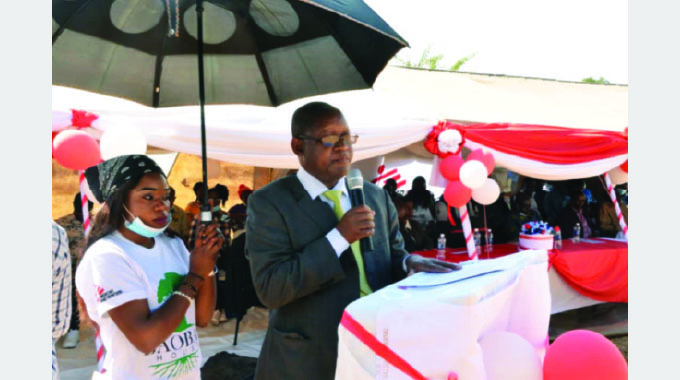
Freedom Mutanda-Correspondent
Trudging all night long from conflict areas and stopping briefly intermittently is stressful. What people of concern have endured from their diverse travails can never be fully fathomed by anyone until one empathises.
It is against this background, that Medecins Sans Frontieres (MSF) launched a Mental Health Programme at Tongogara Refugee Camp this past week in an effort to combat the mental health challenges that impact upon refugees and those of the host communities.
Medecins Sans Frontieres (Doctors without Borders) has been working in Zimbabwe since 2000.
At a time when mental health challenges are endemic in Zimbabwe with substance abuse at the apex of the pile, MSF has taken upon itself to be involved in mental wellness among the inhabitants of Tongogara Refugee Camp and its environs who qualify to be part of the process by virtue of being host communities. The organisation is doing it in collaboration with development partners such as TDH and UNHCR.
MSF built a mental health wellness centre at Tongogara Refugee Camp. Last Thursday, Medecins Sans Frontieres, had a colourful ceremony punctuated by song, dance and drama at the refugee camp as different speakers took to the podium and spoke about the urgent need to harness the community’s human resources to bring about the mental change which would ultimately result in “The Tongogara We Want.”
An analogy of the baobab tree crystalised the way mental wellness is going to be tackled at the Baobab Wellness House at Tongogara and that was aptly shared by the MSF Mental Health Activity Manager, Ms Janet Mukurumbira, who noted that baobab trees are indigenous trees that thrive in harsh climates and that resilience is the aspect that mental health has to be seen from that perspective.
“A baobab is a massive indigenous tree with leaves that go high up, roots that are strong and big as well as its strength of growing bigger despite the dry conditions. It speaks of strength, life and resilience; it speaks of the resilience that the persons of concern have,’’ she said.
She went on: “people of concern carry with them what we call baobab resistance. The main objective of this programme is to strengthen people’s resilience and coping mechanisms, reduce the risk of developing mental health challenges.’’
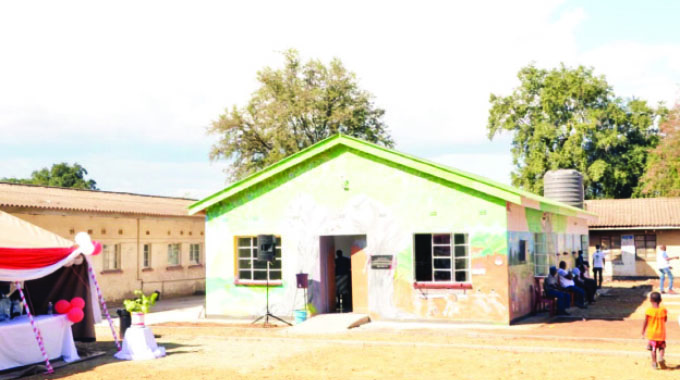
Any person who is willing to be helped can get it. The Baobab House has a mural which is a product of community collaboration. There are two chat rooms, an office and an open space where people of concern and the host community who want to relax by playing games can do so. A waiting room is also available for any activity which may be deemed good to be involved in.
Ms Mukurumbira added: “In terms of staff, there is a psychologist, mental help assistant and a health promotion officer.’’
Within the context of a baobab tree where birds of the air, animals on the ground and snakes find shelter, so is the wellness centre at Tongogara Refugee Centre aptly named.
Everything that the people who live in the valley want is found within the confines of the baobab tree whose resilience knows no bounds.
“Here, we use the bark of the baobab to make various artworks and rugs which come in handy during the cold season. Baobab fruits make a delicacy called “ice lolo” which has proved to be a hit with young children and some adults go gaga when they nibble the delicacy,’’ Zaccheous Phiri said. He is one of the builders who constructed the Baobab House.
Acting country representative for MSF, Ms Kuziwa Kuwenyi, stated that migration journeys have a lot of negative influence on the overall well-being of individuals and often society is faced with a dilemma of how to proceed with life following such traumatic experiences.
She added: “Mental health intervention is one of Medecins San Frontieres” operational mandate. Thus, taking care of one’s mental health starts with the individual and proceeds to the family and goes into the community before it can become a societal strengthened fabric.’’
A member of the UNHCR staff, Tinashe Chitate, who gave a speech in solidarity with Medecin Sans Frontieres noted that one in three asylum seekers is affected by mental health problems and she said early mental health interventions are very important.
“Mental health is not a destination but a process. With that in mind, it is crucial that this Baobab House concept came into fruition. We are indeed happy that the people of concern and the host community will benefit from this wellness centre,’’ said Mr Wilfred Mapiko, the Terre Des Homes programmes manager.
Mr Totamirepi Tirivavi, the Commissioner for refugees, noted that “The Tongogara We Want” is a one stop centre that will provide comprehensive services not only to refugees but also to the host communities.
He further said: “People of concern are particularly vulnerable to developing mental health problems and are, therefore, in need of counselling and psycho-social support interventions and services.’’
The Swahili catch phrase “#Inawezekana’’ is apt as it literally means, “Together we can’’ and indeed, together it is possible.



 Online Reporter