Online Reporter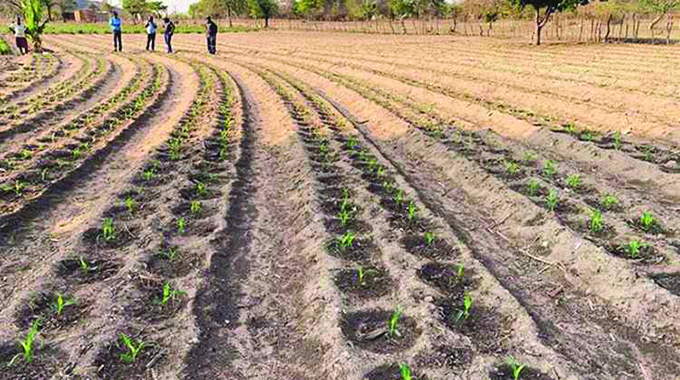
THE warning signs are already on the horizon.
Meteorological forecasts pointing to a possible super El Niño-induced season of below-normal rainfall during the 2026/27 summer cropping season should not be treated as mere weather predictions. They are a clarion call for urgent action.
For a province like Manicaland, whose economy and livelihoods are heavily anchored on agriculture, failure to prepare adequately could result in widespread crop failure, livestock losses, food insecurity and increased vulnerability among rural communities.
The bitter lessons from previous El Niño episodes remain fresh in the minds of many farmers. Seasons characterised by prolonged dry spells, late onset of rains and poor rainfall distribution have often left fields barren and families dependent on food aid. It is therefore encouraging that the Government and agricultural stakeholders are already mobilising communities to embrace climate-proof agricultural interventions designed to withstand increasingly erratic weather patterns.
Among these interventions, Pfumvudza/Intwasa has emerged as one of the most effective tools in building resilience against climate change. The conservation agriculture programme has consistently demonstrated its ability to improve crop yields even under difficult climatic conditions by promoting minimum soil disturbance, mulching, moisture conservation and efficient utilisation of small plots.
The decision by authorities to increase Manicaland’s target from 84 000 Pfumvudza plots last season to 174 000 plots for the forthcoming agricultural season is both timely and commendable.
This significant expansion reflects growing confidence in the programme’s effectiveness and the urgent need to reach more households before the anticipated drought conditions set in.
However, setting ambitious targets alone will not be enough. The success of the programme will depend on the level of preparedness at household and community levels.
Farmers must begin land preparation early, gather adequate mulch, establish planting stations and ensure that inputs are utilised according to recommended practices.
One of the major strengths of Pfumvudza lies in early preparation, which allows farmers to take full advantage of whatever rainfall they receive.
The anticipated low rainfall season also reinforces the need for farmers to rethink traditional cropping patterns.
For too long, many communities, particularly those in naturally dry districts such as Buhera, Chipinge’s lowveld areas and parts of Makoni, Mutasa and Mutare districts, have continued to prioritise maize even in regions where rainfall is increasingly unreliable. While maize remains the staple food crop, climate realities are demanding a shift towards more drought-tolerant alternatives.
Small grains such as sorghum, pearl millet and finger millet offer a practical solution. These crops require less water, are more resilient to dry spells and can produce meaningful yields where maize often fails. Beyond their drought tolerance, small grains are highly nutritious and can contribute significantly to household food security and income generation.
Government efforts to promote small grains production deserve greater support from farmers, traditional leaders, extension officers and development partners. The challenge is, not merely about growing these crops, but changing long-held perceptions that associate small grains with food insecurity. In fact, under current climatic conditions, they represent climate-smart agriculture at its best. Communities that embrace small grains today are likely to be better positioned to withstand future weather shocks.
Livestock farmers must also take heed of the lessons from previous drought seasons. One of the most devastating consequences of prolonged dry conditions is the loss of cattle due to inadequate grazing and water shortages. Every drought cycle has produced heart-breaking scenes of weakened cattle collapsing from starvation and diseases associated with poor nutrition.
The reality is that many communal areas often carry livestock numbers beyond the capacity of available grazing resources. When drought strikes, both animals and farmers suffer immense losses. This makes destocking an important but often unpopular discussion.
Farmers should be encouraged to make informed business decisions by selling excess livestock while animals are still in good condition and marketable. Waiting until grazing resources are depleted often results in massive financial losses as animal values plummet. Strategic destocking, not only provides farmers with income that can be invested in alternative livelihood activities, but also reduces pressure on already strained grazing areas.
At the same time, communities should strengthen fodder production initiatives and preserve crop residues to supplement feed supplies during the dry months. Water harvesting projects for both crop and livestock production must also become a central part of local adaptation strategies.
Climate change is no longer a distant threat. It is a present reality reshaping agricultural production systems across Zimbabwe and beyond. The increasing frequency of El Niño-induced droughts demands that farmers adapt accordingly. Reliance on conventional farming methods that worked decades ago may no longer guarantee success under changing weather conditions.
Fortunately, Manicaland is not without options. The province possesses a growing network of extension services, climate information systems, conservation agriculture programmes and resilient crop technologies that can help communities navigate the challenges ahead. What is required now is collective action, discipline and commitment from all stakeholders.
The 2026/27 summer season could prove difficult, but it does not have to become a disaster.
Through widespread adoption of Pfumvudza, expansion of small grains production, strategic livestock destocking and prudent management of available resources, farmers can significantly reduce their vulnerability to drought.