Chronicle Editor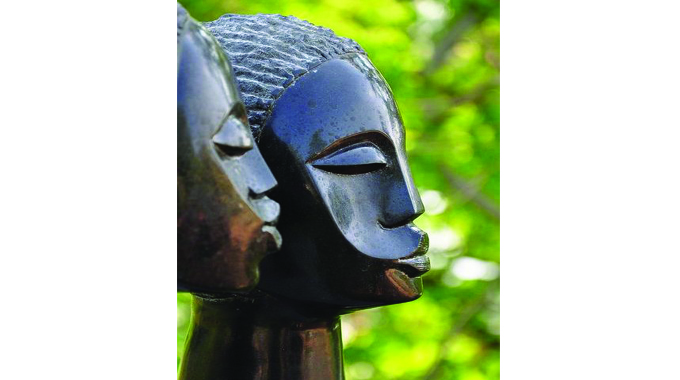
Pathisa Nyathi
READING an article in the Chronicle of March 8, 2022, I came across a statement by the Minister of Information, Media and Publicity, Monica Mutsvangwa where she announced a new policy thrust that Government is pursuing going forward.
Government is incorporating the Zimbabwe International Trade Fair (ZITF) into the National Development Strategy (NDS1) communication strategy, in a bid to promote Brand Zimbabwe.
Under the NDS1 communication strategy, public spaces, buildings in Zimbabwe, the country’s embassies and ports of entry will be adorned with the national arts, culture and heritage products.
Long, long overdue! I immediately thought of the late Minister of Local Government Enos Chikowore who ordered the removal of Adam Madebe’s scrap metal sculpture dubbed, “Looking to the Future.” It graced the grounds outside the city council’s Tower Block in Bulawayo.
From there the ill-fated statue residing in a public space was taken down only to be re-erected in a less public space within the Gallery grounds. The minister who did not appreciate the role of the arts once again haunted and hounded the statue until it was taken down and deposited into some dingy room where it still lies to this day — forgotten and muted.
I reflected on the numerous statues, sculptures that I had seen and sampled in Norway, the United Kingdom, Italy, Canada, the United States of America, and even in neighbouring South Africa. Statues and other objects of culture, heritage and the arts stood out there communicating the image of a country.
Not only were these images creating and communicating objects placed in public spaces, but also within public buildings especially government ones. I really lamented the fact that we were denying our arts, culture and heritage the grand opportunity to pronounce, express and communicate the national image to both our citizens and visitors alike.
The key word in expressing a country’s image is communication and there are media that do this both effortlessly and effectively.
Expressive culture is another term for the arts. The arts are able to effortlessly express a society’s culture and heritage. Creativity is at the core of the arts and captures the imaginations of the artists and fellow citizens. Artists are the creators of the arts and breathe life into the otherwise uninspiring, mundane and apathetic culture.
Artists are a unique brand of people who are able to capture in a creative manner the essence of a society’s heritage and culture.
It has to be acknowledged that Zimbabwe is extremely weak in this regard. What probably were missing were policy measures and guidelines by Government to stimulate the latent gifts endowed through the various genres of arts. Arts products are not for concealment in the dingiest of spaces. A nation that fears and hates its arts is a nation without a positive image of self, one that covers its face with black facemasks.
It is understood that the image of a nation has to be created and communicated in the various embassies of that nation. Getting to the embassy in a foreign country should, at the very first sight, project the image of the nation through the arts and heritage objects that grace the embassy grounds.
The objects speak a persuasive language that gets to the heart of one sampling the array of cultural; heritage and artistic objects. Those objects create an artistic ambience that immediately influences a visitor’s mental perception. A positive image of the country and nation are immediately expressed and are set to endure.
In a few words, the arts have the power to succinctly express a nation’s culture, worldview, critical values, ideals and ideas relating to the aesthetics and the underpinning inspiration behind these.
It takes several arts genres to put up combined efforts that project a holistic image of a nation. Visual arts, in the form of sculptures created out of various materials such as wood, stone, fibreglass, metal, inter alia go a long way in creating a national image.
A sculpture expresses, through materiality, the values and ideas inherent in a concrete object.
Paintings and drawings are some of the artistic objects that may be displayed on the walls of spaces within embassies. The positive images of Zimbabwe’s history, cultural heritage, liberation heritage and natural heritage ought to be incorporated into the overall imaging of the nation, to embrace both the tangible and intangible aspects.
Within the embassies and indeed in the receptions of public buildings back home there should be take home flyers, leaflets, handouts, brochures, video films, mementos and souvenirs that will leave a lasting impression in the minds of visitors, both local and international.
The items that have been creatively and artistically produced ought be well thought-out and aesthetically designed to appeal to individuals’ senses of beauty.
Zimbabwe’s heritage has several symbols and icons that are representations and expressions of aesthetics and beyond. Sadly, not much has been done to identify and interpret these icons. It is one thing to embellish, for example, house walls with a broad variety of icons and quite another to interpret same.
Largely, we are poor at interpreting symbols or it might be we fail to excavate the hidden meanings expressed through materiality — the intangible expressions in tangible objects.
Sometimes we take wholesale images from the Great Zimbabwe monument without an accompanying spirited effort to interpret these within the context of broader African thought.
For example, most of these icons were lifted wholesale and replicated at the National Heroes Acre in Harare without much by way of seeking to interpret the symbols and the inherent messages and meanings that they carry.
What messages lie behind the Conical Tower, the chevron icon and pattern, herringbone, dentelle and many more? This is a monumental injustice to our culture and heritage. Symbols without interpretation thus fail to communicate what we intended them to do.
As the ministry forges ahead with the new thrust these are some of the ideas that they need to consider and take seriously. Our culture and heritage are our communicated identity and source of pride. If we do not take appropriate steps, we risk ending up with a muted hotchpotch of curious concrete objects.
The focus should, at all times, be beyond the material objects and deal more exhaustively and definitively with the materiality beyond the bounds of the tangible and tangibility. This is another way of saying we should have interpreted objects, statues, sculptures, monuments and any other material objects meant to communicate the image of our nation.
In my view, it is impossible to interpret the African arts without reference to the cosmos, which inform our arts, culture and heritage. It has to take a conscious and spirited effort to relate the arts to the cosmos.
The beauty of our arts rests on this link with the cosmos as underpinning and informing our arts. Just how can one interpret a traditional dance outside of the knowledge of astronomy? A basis grounding in astronomy is of the essence.
When this angle is taken all artistic, renditions will become meaningful. Performances, visual arts, fashion and graphic design, and other arts genres, which, singly or in combination, go a long way in imaging a nation.
The bottom line is that there has to be interpretation of artistic designs at all times, interpretations that are rendered in such a manner that they will make cognitive sense to the young, the middle-aged and the elderly.
The task is an onerous one. However, one should not be avoided if the noble thrust being adopted is to succeed in effectively projecting a positive image of Zimbabwe. Apparently, this approach ought to have been followed when the national fabric was being designed. Dress design would have followed after that to take care of the diversity in tastes and preferences.



 Online Reporter