


 admin
admin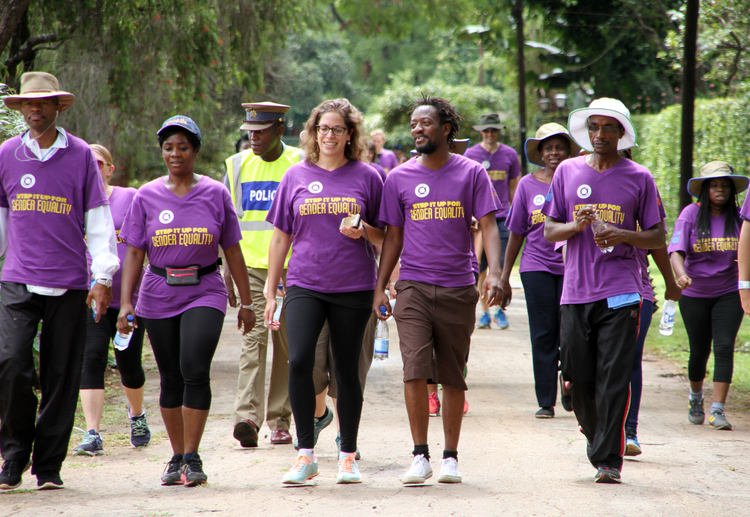
Linda Mzapi
The establishment of a Ministry of Women’s Affairs after Independence can be seen as a victory for women, representing a clear acknowledgement of the legitimacy of their demands for gender equality.
Zimbabwean women have not been passive by-standers in the country’s political, economic and social transition but have significantly participated in the evolution process.
Women have come a long way in Zimbabwe, they participated in the liberation struggle as freedom fighters with some undertaking auxiliary functions such as cooking, fetching firewood and transporting arms into operational areas within the country.
Women’s contributions to the liberation struggle were significant enough for Zanu-PF to establish a women’s detachment within its armed wing, the Zimbabwe African National Liberation Army, with its own female commander, cde Sheba Tavagwisa, who was a member of the High Command.
Zimbabwe has consistently sought to ensure gender equality.
March 8 marked International Women’s Day, an event where women, and even men, from around the world gather to celebrate and commemorate the achievements by women in attaining gender equality in all spheres of life.
Zimbabwe, Australia, Sweden, Denmark and United Nations Women celebrated International Women’s day together at the Australian Embassy which was running under the theme: “Planet 50-50 by 2030: Step it up for Gender Equality”, with 2030 being the deadline of achieving total equality between men and women.
Australia’s Ambassador to Zimbabwe Suzanne McCourt applauded women for coming together as one in fighting gender-based violence and working together to achieve total gender equality.
“The embassies of Denmark, Sweden and Australia together with European Union and UN Women and the women here in Zimbabwe have come together to tackle issues concerning women and to also celebrate our achievements as well.”
She bemoaned the rate at which gender-based violence prevailed in Zimbabwe and called for both men and women to fight it.
The day which was marked by a “power walk” mirrored the corporate effort which was being done globally to raise awareness and tell all women to step up and achieve total parity by 2030.
EU representative from Sweden Lars Ronnois, on behalf of EU Ambassador to Zimbabwe Phillippe van Damme, drew attention to a very remarkable observation that can be achieved if 50-50 is attained by 2030.
“US$28 trillion could be added to the global gross domestic product by 2025 if women were given the same opportunities, positions and roles as those of men on the labour market.
“Women’s access to productive resources could reduce the number of people living in hunger by up to 150 million,” he said.
“Countries which have closed the gender gap on the labour market have all experienced better growth and improved competitiveness than countries with stagnant gender disparity.
“In my own country, Sweden, a huge shift took place some decades ago when the proportion of women in the labour market increased from 59 percent to 84 percent – resulting in a tremendous impact on gender roles, society and economy at large.”
Violence against women and girls is both an extreme manifestation of gender inequality and discrimination, and a deadly tool used to maintain women’s subordinate status — a barrier to economic growth which needs to be dealt with.
Denmark’s representative also echoed out that it is time for men to join in the changing and transforming dynamics. He also drew attention to statistics of gender-based violence.
“The statistics make you want to move: 1-in-3 women and girls worldwide will experience physical or sexual abuse in their lifetime.
“As men, women have the right to movement: to move beyond social barriers, to move past limiting gender roles, to move up in society and fulfil their potential.”
Denmark is one of Zimbabwe’s major partners in efforts to eradicate GBV and has pledged support to assisting initiatives aimed at promoting gender equality in Zimbabwe.
UN Women representative Ms Delphine Serumaga joined the “power walk” and applauded the Zimbabwe Government for working towards achieving gender equality.
She drew attention to the strategic programme framework to support national development priorities as informed by the 2013-2018 Zimbabwe Agenda for Sustainable Socio-Economic Transformation.
“The 2016-2020 Zimbabwe United Nations Development Assistance Framework is the UN’s strategic programme aimed in advancing the achievements of the Sustainable Development Goals in Zimbabwe.
“Zimbabwe has improved mainly due to the inclusive nature of the 2013 Constitution and the banning of child marriages although implementation need to be prompt,” she said.
Zundaf 2016-2020 will support national efforts to empower specific groups, including survivors of gender-based violence, people with disabilities, young women, and women workers with knowledge and information in order to create a conducive environment for them to benefit equally from opportunities.
In addressing the empowerment of women and girls in the social, economic and political spheres the main focus will be on increasing the qualitative and quantitative participation of women and girls in decision-making positions.
Strengthening the position of women and girls will include designing and implementing programmes that address gender based violence through coordinated and integrated efforts.
Further support will be provided to increase girl’s participation and achievements in science subjects and ICTs in schools, as well as in skills development through targeted programmes.


 Online Reporter