admin
admin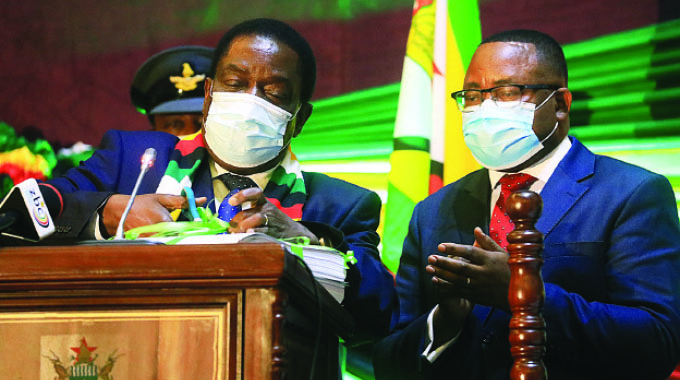
Herald Reporter
Under the stewardship of President Mnangagwa, the Second Republic has made great strides towards the creation of an inclusive society that recognises the rights of people with disabilities, among them being the opening up of opportunities for them in empowerment programmes.
National Disability Policy
Conscious of the need to take everyone on board, in June 2021, President Mnangagwa launched the National Disability Policy. This was followed by the setting up of the Technical National Coordination Committee in 2022 to provide guidance on the implementation of the policy.
The launching of the committee was also aimed at addressing the preconditions necessary for the effective implementation of the United Nations Convention of the rights of persons with disabilities in 2013.
The National Disability Policy came at a time when Zimbabweans are collectively moving towards achieving the national vision of an empowered and prosperous upper-middle income society by 2030.
In his address at the launch of the policy, the President called for an end to harmful practices and marginalisation of people with disabilities.

Conscious of the need to take everyone on board, in June 2021, President Mnangagwa launched the National Disability Policy. This was followed by the setting up of the Technical National Coordination Committee in 2022 to provide guidance on the implementation of the policy.
The formation of the committee was facilitated by the Ministry of Public Service, Labour and Social Welfare, in collaboration with the United Nations Resident Coordinator’s Office, and the United Nations Partnership on the Rights of Persons with Disabilities (UNPRD) team, which is led by the UNESCO Regional Office for Southern Africa.
The Technical National Coordination Committee was launched by Public Service, Labour and Social Welfare Minister, Professor Paul Mavima, who highlighted that the Government was committed to fulfilling, promoting, protecting and respecting the rights of persons with disabilities.
Since the ratification of the convention, Zimbabwe has adopted a raft of measures to advance the rights of people with disabilities.
This approach, Prof Mavima said at the launch, allows the Government to create an enabling environment under which the needs and concerns of persons with disabilities are addressed in every sector, and across all thematic working programmes of the National Development Strategy 1 (NDS1, 2021-2025).
Hailed milestone
Other speakers, who included the then Minister of State for Provincial Affairs and Devolution for Harare Metropolitan Province, the late Oliver Chidawu, United Nations Resident Coordinator, Mr Edward Kallon, and Special Advisor to the President and Cabinet on Disability Issues, Dr Joshua Malinga, hailed the milestone marked by the technical committee in view of the broader objectives of the National Disability Policy.
“This launch calls to empower people with disabilities advocating for their rights in line with international standards at best practices,” said Dr Malinga, in a speech read on his behalf.
“It is important to note that the President has launched the national disability policy in 2021 which seeks to domesticate the United Nations conventions on the rights of persons with disabilities and fully empower them, this shows the political will the Government has towards the empowerment and inclusion of people with disabilities.”
“I am pleased to note that Zimbabwe has prioritised disability inclusion. The UN corporation framework provides specific disability rights interventions necessary for advancing the conventions on the rights of persons with disabilities,” said Mr Kallon.
The launching of the National Disability Policy excited individuals and organisations that advocate for the rights of people with disabilities as the nation gears up for an upper-middle income society by 2030.
The executive director of the Federation of Organisations of Disabled People of Zimbabwe, Mr Leonard Marange, welcomed the launch of the National Disability Policy, saying it showed the Government’s commitment to disability inclusive development.
Deaf Zimbabwe Trust executive director, Ms Barbra Nyangairi, said the launch of the policy would address the diverse and different needs of people living with disabilities.
Marginalisation
“Persons with disability in Zimbabwe face disproportionate levels of poverty and marginalisation and they lack access to education, employment and life opportunities owing to disability.
“The parents face expenses that other parents do not have associated with medical and assistive technology. These are issues that will be addressed by the NDP. Mainstreaming disability, as the country did with gender, will go a long way towards equality,” she said.
She called the alignment of the Disabled Persons Act of 1992 to the Constitution saying it had become outdated and irrelevant to the current realities of persons with disabilities.
The key standards of the policy were drawn from the country’s Constitution and international and continental frameworks, like the UN Convention on the Rights of People living with Disabilities and the Protocol to the African Charter on Human and People’s Rights on the Rights of Persons with Disabilities.
The policy calls on Government and other stakeholders to ensure access to employment for persons with disabilities and strive to ensure that 15 percent of their workforce in all sectors comprise people with disabilities.
Employers should also observe the principle of equal pay for equal work and provide them with vocational and professional rehabilitation.
Persons with disabilities should also freely choose places they want to live and not be forced to live in particular arrangements or institutions.
The policy urges stakeholders to integrate persons with disabilities into communities in conditions which do not leave them destitute.
Inspiring young people with disabilities
The National Disability Policy launched by President Mnangagwa in 2021 has inspired young people with disabilities to stand up for their rights and those of others.
One of such youths is Elisha Gumbo from Gokwe in the Midlands Province, a Law student at the University of Zimbabwe, who started his own movement, the Students with Disabilities Association of Zimbabwe, at 24.
The association aims to implement the terms of the policy on behalf of students with disabilities. It seeks to engage persons with disabilities in rural areas, since they are the most disadvantaged and marginalised as a result of lack of proper support.
“Most people with disabilities have inferior complexes, and are less confident. So, our organisation aims to boost self-confidence and offer them career guidance,” said Gumbo.
The organisation, started at the University of Zimbabwe, and aims to spread beyond the institution and Harare. Although this comes with a loss of hard work and financial expenses, Gumbo and his team are prepared to take up the load.
“Financial support can be difficult to find, but we hope to engage well-wishers, and try to empower students with disabilities economically, so they become self-reliant and contribute to the nation’s economy,” the young man said.
The University of Zimbabwe has a Vice Chancellor’s Scholarship that guarantees payment of all tuition and accommodation fees until one graduates from the college.
Gumbo hopes that, through the organisation, he will be able to engage other schools and colleges to offer the same support for students with disabilities to have the opportunity to go to other institutions they may prefer besides the UZ.
National Disability Expo 2023
This year’s addition of National Disability Expo is set to run from June 28-30 at the Pelandaba Stadium in Gwanda, Matabeleland South Province, under the theme, “Holistic Empowerment of Youth and Children with Disabilities Towards the Attainment of Vision 2030: A better and brighter future for everyone.”
The key focus of the expo is to enlighten people with disabilities on existing technologies, equipment, aids, services, and products that can allow them to live a fuller life.
The expo will give a platform to stakeholders and organisations representing people with disabilities to exhibit their products, technologies, talents, rafts and other services.
Special Advisor on National Disability Issues in the Office of the President and Cabinet, Dr Joshua Malinga, recently told our Bulawayo Bureau that all organisations are welcome at the expo.
“Given the clarion call by His Excellency President Mnangagwa to mainstream and include disability in national development, I humbly invite all organisations to come and showcase the programmes and services they are implementing for the empowerment of persons with disabilities,” he said.
Dr Malinga implored all Zimbabweans to continue safeguarding and promoting the gains of an empowered society as 2030 beckons.


 Online Reporter