Online Reporter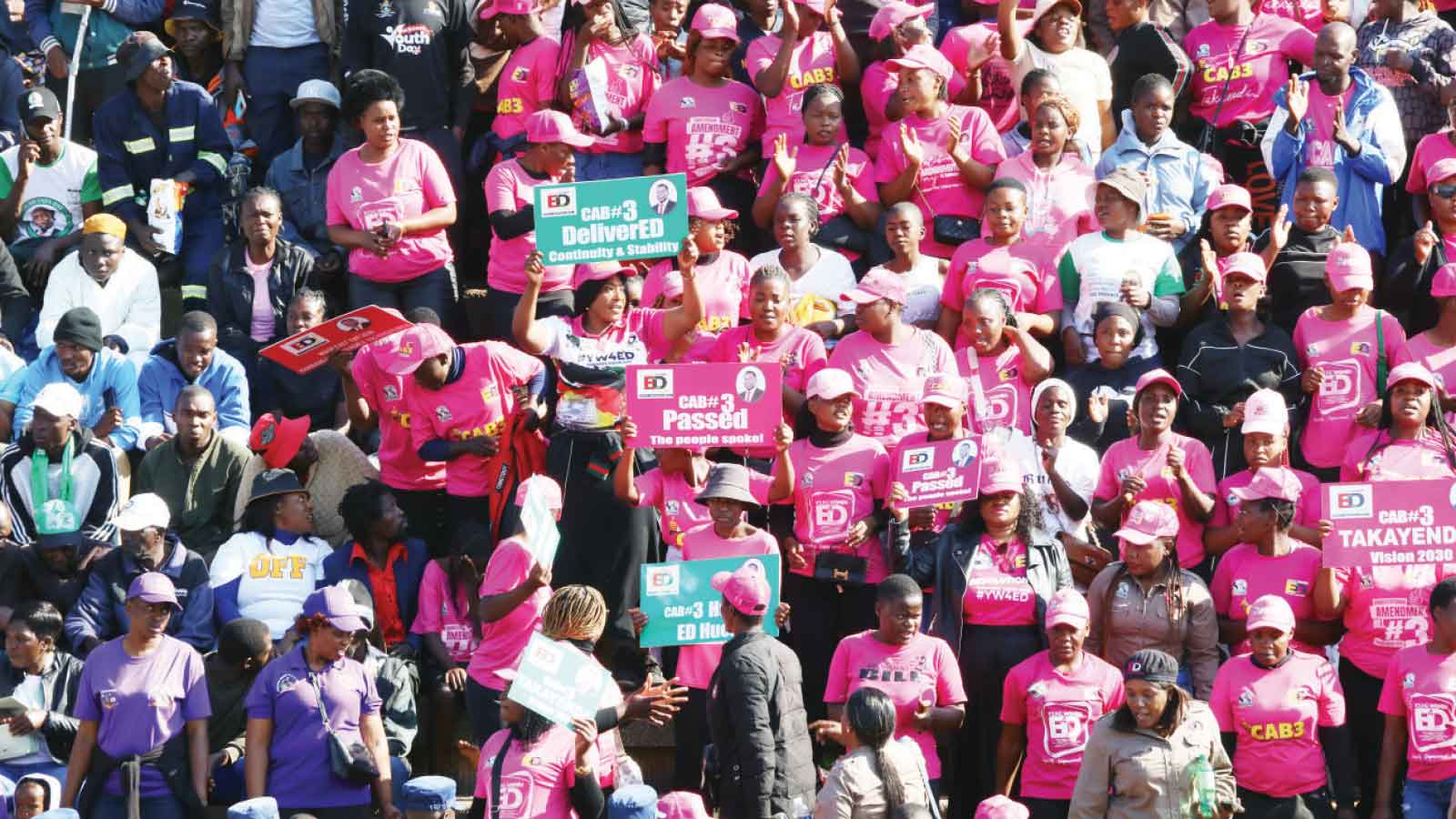
Richard Muponde
Zimpapers Politics Hub
ZANU PF never stops developing. Before the ink on Constitutional Amendment Act 3 dries up, affiliates are yearning for the party to fully implement last year’s resolution on the registration and empowerment of affiliates.
This resolution aims to formally bring these organisations into the party architecture, ahead of the 23rd National People’s Conference in Chinhoyi in October.
Resolution Number 2 of the 22nd National People’s Conference in Mutare on the State of the Party directed ZANU PF to expedite dissemination and enforcement of the Framework on Registration of New Affiliates and their functions, ensuring harmonious synergy with mainstream structures. As Chinhoyi prepares for the 23rd National People’s Conference in October, affiliates yearn for full registration, recognition, empowerment and a defined mandate.
The proposal was mooted by the experience of mobilisation and the need to end ambiguity around affiliates. It gained conference support because delegates had seen their contribution during and after the 2023 Harmonised Elections that were won by President Mnangagwa, and the need for disciplined integration. Its adoption in Mutare in October 2025 transformed an operational concern into a formal party directive.
From mobilisation vehicles to party structures
The resolution followed the emergence of new societal formations around the Second Republic, from 2021 and 2022, which became increasingly visible during mobilisation for the 2023 elections. ZANU PF’s 2022 Central Committee report recorded targeted mobilisation groups, including the Young Women for ED, Men BelievED, Teachers for ED, Media Affiliates and religious formations, while warning against self-interest and conduct that could bring the party into disrepute.
The affiliates emerged to reach constituencies that conventional structures might not penetrate effectively. Teachers, miners, vendors, pastors, lawyers, traders, young women, journalists, and other professionals could mobilise through their networks while advancing support for ZANU PF.
Their contribution became visible before the August 2023 Harmonised Elections. Affiliates campaigned for President Mnangagwa, recruited supporters, disseminated the developmental message and reached communities through churches, workplaces, markets and professional networks. Affiliates also publicly backed Constitutional Amendment Bill No 3 (CAB3), now CAA3, framing constitutional continuity as necessary for Vision 2030, economic emancipation and sustained development and policy continuity.
Mutare’s resolution represented a transition from loosely coordinated campaign vehicles to a framework governing registration and functions. It requires harmony with mainstream structures, meaning affiliation cannot amount to political autonomy from ZANU PF. Affiliates can retain their identities and expertise while accepting party direction and constitutional procedures.
Mandate, recognition and empowerment
Full implementation should clarify both duties and legitimate expectations. Their mandate includes mobilisation, recruitment, political education, popularisation of party programmes, community engagement and development. In 2025, National Political Commissar, Cde Munyaradzi Machacha, said affiliates should be aligned with relevant party departments, with some religious organisations falling directly under Commissariat.
Recognition must be matched by accountability. Affiliates need constitutions, office bearers, membership records, programmes and demonstrable value. They also need guidance, communication channels, empowerment opportunities and appropriate party platforms. In 2022, the then National Political Commissar, Cde Mike Bimha, warned that affiliates should not join merely to obtain loans; their primary purpose must remain support for the party.
The Presidential Empowerment dimension
Presidential Empowerment Revolving Funds have supported affiliates in different provinces, financing income-generating projects for vendors, pastors, cross-border traders, hairdressers, health workers, miners, and others, while other remaining Affiliates, which registered later, await their turn for empowerment. The programme is presented as revolving support designed to benefit successive beneficiaries, fitting President Mnangagwa’s philosophy of Nyika inovakwa nevene vayo/ Ilizwe lakhiwa ngabanikazi balo, and the mantra “leaving no one and no place behind”.
Yet empowerment creates an obligation for transparency. Resources must be invested, accounted for and recycled. Reports of misuse demonstrate why formal registration and party oversight are necessary. The Mutare resolution can, therefore, provide the bridge between political mobilisation and sustainable economic empowerment.
Vetting before integration
The Commissariat Department’s vetting and interview exercise held in February this year, under National Political Commissar, Cde Munyaradzi Machacha, popularly known as Tete weMusangano, has been decisive. The exercise scrutinised affiliate leadership, organisational legitimacy, membership and understanding of party guidelines. It involved chairpersons and secretary-generals, with the purpose of bringing order and establishing which organisations could properly operate within the party framework. The information will be forwarded to the party’s Secretary General Cde Jacob Mudenda whose holds the mandate of final registration of Affiliates.
Public reports referred to 181 aspiring affiliates in the February 2026 schedule, while political discussions have also referred to 179 listed organisations. The essential point is that a large-scale verification exercise has taken place. Affiliates activities were subsequently suspended pending greater clarity, while they await confirmation letters of registration. The waiting period has created frustration, but it should be understood as an opportunity to complete formalisation rather than abandon the project.
Why Affiliates matter
International experience shows that movements can strengthen themselves through broad alliances and structured affiliates. South Africa’s African National Congress has worked through the Tripartite Alliance with the South African Communist Party and Congress of South African Trade Unions, contributing mobilisation, policy engagement and community organisation. Britain’s Labour Party recognises affiliated organisations, including trade unions and socialist societies, through defined participation channels. Such affiliates extend social reach and specialised knowledge.
For ZANU PF, the lesson is to institutionalise what has emerged organically. Teachers can communicate education concerns; miners can mobilise around production; entrepreneurs can promote investment; churches can encourage social responsibility; journalists can amplify developmental information. Properly coordinated, affiliates become bridges between party policy and society.
President Mnangagwa’s direction
President Mnangagwa has placed affiliates within the wider project of strengthening ZANU PF. At the Mutare Conference, he made their mobilisation a daily responsibility and called for recruiting new members from all walks of life.
“Political mobilisation by the Party with its affiliates, is our daily responsibility. ZANU PF leaves no one and no place behind,” President Mnangagwa said.
These remarks provide the rationale for completing registration, affiliates are instruments for reaching citizens and harnessing diverse skills.