daniel chigunwe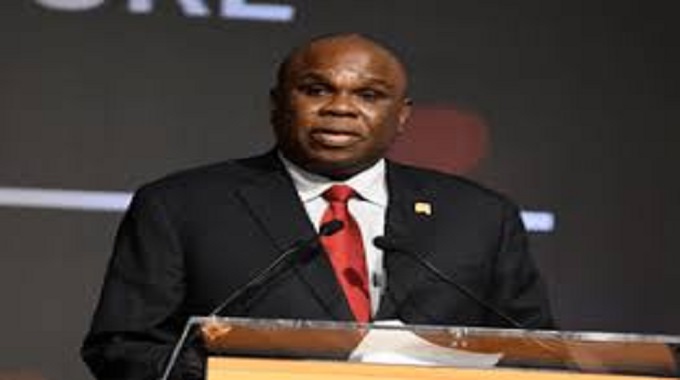
Business Writer
The African Export-Import Bank (Afreximbank) is taking a multi-pronged approach to address bottlenecks hindering the full implementation of the African Continental Free Trade Area (AfCFTA), according to Prof. Benedict Oramah, President and Chairman of the Board of Afreximbank.
In his paper titled ‘The Trade Route to Poverty Reduction in Africa in a De-globalising World’, delivered as part of the Afreximbank Distinguished Lecture Series, Prof. Oramah emphasized the importance of free movement of people alongside free movement of goods. He highlighted that while 32 countries have signed the AfCFTA treaty, only four have ratified the Free Movement Protocol, falling short of the requirement for its activation. Afreximbank is urging countries to expedite ratification.
Recognizing the critical role of information access, Afreximbank offers Tradar Intelligence, an AI-powered platform to bridge the trade information gap.
The Bank’s collaboration with the African Union and AfCFTA Secretariat on the biennial Intra-African Trade Fair exemplifies this commitment. The three fairs held since 2018 have attracted over 70,000 visitors and facilitated US$120 billion in deals.
To tackle the challenge of fragmented payment systems, Afreximbank partnered with the African Union and AfCFTA Secretariat to launch the Pan-African Payment and Settlement System (PAPSS).
This system, supported by a US$3 billion settlement fund from Afreximbank, aims to streamline intra-African payments. An African Currency Trading Platform is also set to launch under PAPSS by May 2024, potentially allowing seamless cross-border transactions within Africa.
Afreximbank is actively addressing the trade financing gap estimated at US$50 billion annually. The Bank’s Intra-African Trade Financing Division has disbursed over US$40 billion since 2016, with US$11 billion currently outstanding.
Recognizing the challenges faced by landlocked countries, Afreximbank’s African Collaborative Transit Guarantee Scheme facilitates trade by enabling the use of a single bond across multiple borders.
Furthermore, Afreximbank is supporting the harmonization of trade standards through grant financing to the African Regional Standards Organisation. Over 155 standards have been harmonized in priority areas like pharmaceuticals and automotive products. The Bank’s subsidiary, the Africa Quality Assurance Centre, is establishing testing facilities across Africa to bridge the gap between standard setting and implementation.
To empower small and medium enterprises (SMEs) to participate more effectively in regional and global trade, Afreximbank is supporting the establishment of Export Trading Companies (ETCs) across Africa. ETCs aggregate products from SMEs, creating a larger volume that attracts better deals and withstands competition. Afreximbank is the leading financier of ETCs in Africa and is working with governments to develop supportive regulatory frameworks.
Prof. Oramah’s remarks and Afreximbank’s initiatives highlight the Bank’s commitment to unlocking the full potential of the AfCFTA and fostering a more prosperous Africa.



 Online Reporter