admin
adminAmerican interest in the African continent had waned considerably after the end of the Cold War.
Until the early 1990s, the United States and its Western allies tried their best to derail the liberation movements that had come to power in countries such as Angola and Mozambique.
The West propped up authoritarian, corrupt and racist regimes during this period.
Until the very end, the Ronald Reagan administration supported the apartheid regime in South Africa and its occupation of Namibia.
Mobutu Sese Seko, the kleptomaniac who controlled the vast riches of the Congo, was a long-standing ally of the West.
In the past decade, as countries such as China, Brazil and India turned their diplomatic and trade focus on the continent, which is blessed with a great variety of mineral resources, the US decided to make its mark forcefully.
Since 2007, Washington has used the “war on terror” to extend its military reach.
Initially, its military moves were restricted to the Horn of Africa, where Islamist militants have emerged as the main fighting force in the long-running civil war in Somalia.
Today, however, American forces operate covertly and sometimes overtly in sub-Saharan Africa.
There were overt operations in Somalia and Libya, where US Special Forces helped tilt the balance in favour of puppet regimes.
The emergence of South Sudan as an independent “client” state of the US has come as a boost for policy planners at the Pentagon. The creation of the new state was virtually the handiwork of the Bush administration, which forced the central government in Sudan to agree to the dismemberment of the country in 2005.
Kenya, Uganda, Djibouti and Ethiopia are now firmly aligned with the US and are facilitating the American build-up in the region. The regime change in Libya has been a feather in the cap for US military planners.
Slain Libyan leader Muammar Qaddafi had played an important role in convincing the African Union to protest strongly against the presence of Africom on the continent. “Operation Odyssey Dawn”, the military operation that led to his overthrow, was led by Africom.
The new Libyan regime is indebted to the West for its existence. The strategic location of the country will be of vital importance for the US military as it expands its footprints on the continent. Speaking at a conference in 2008, US Vice Admiral Robert Moeller declared that the setting up of Africom was to preserve “the free flow of oil and natural resources from Africa to the global market”.
Two years later, in an article in Foreign Policy magazine, he was even more explicit: “Let there be no mistake. Africom’s job is to protect American lives and promote American interests.”
As of now, the US only admits to having one formal base on the continent — Camp Lemonnier in the small Republic of Djibouti located in the Horn of Africa.
But it is common knowledge that US soldiers operate from other countries in the region, helping the troops of client states in their ongoing battles with various rebel groups. Ethiopia launched a full-scale invasion of Somalia at the behest of the US to dislodge a moderately Islamist government that had briefly brought an end to the civil conflict.
Last year, it was the turn of the Kenyan army to invade Somalia, again at the US’ instigation, to liberate towns and areas that were under the control of Al Shabab, the Islamist militant group that has emerged as a powerful resistance force.
American drones and planes are being used freely to target the leaders of Al Shabab. Military drones take off on assignments in Somalia from the US base in the island nation of Seychelles. There are reports that the Americans are now getting ready to help Ethiopia launch another war of aggression against neighbouring Eritrea.
The US describes the country as a “destabilising” force in the region. Eritrea is among the few countries on the African continent to have refused to kowtow to the diktats of Washington. In 2009, US Secretary of State Hillary Clinton threatened to “take action” against Eritrea for allegedly helping Al Shabab.
The United Nations’ monitors dispatched to Eritrea, however, found no evidence of this. The US then persuaded the UN Security Council to impose sanctions on the impoverished country. Despite the absence of any evidence to back the American claims, the sanctions on Eritrea have not been lifted.
The US claims that the punitive sanctions have forced the Eritrean government to stop aiding the Somali resistance, and, therefore, they should remain. The Americans admit to having “lily pads” on the African continent.
Though not formal bases, these are small facilities with a limited number of troops and pre-positioned weapons.
One such is on the island nation of Sao Tome and Principe, just off the West African coast.
US officials compare this base to the Diego Garcia military base in the Indian Ocean.
Diego Garcia has played an important role in ensuring American military domination in the Persian Gulf region.
There has been pressure on India too from the US to secure “lily pad” facilities.
Washington also conducts counter-terrorism training in many African countries and arms their armies. They include the armies of Burkina Faso, Tunisia, Chad, Mauritania and Niger.
Africom is scheduled to complete 14 important training exercises in 2012 with countries such as Morocco, Cameroon, Botswana, South Africa, Lesotho, Senegal and Nigeria. — libya360.


Online Reporter
- Herald
- August 1, 2026
- 21 views
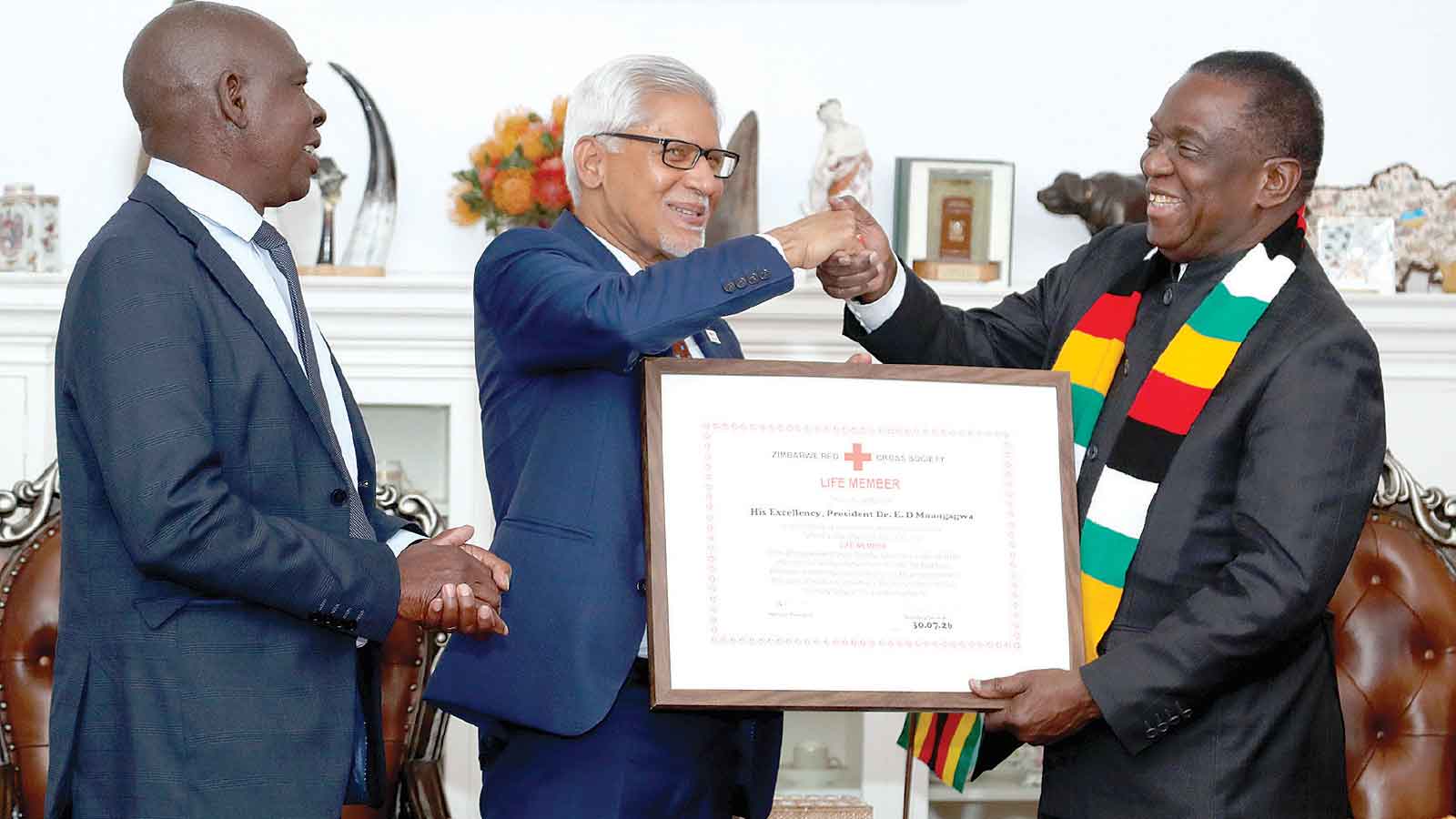
President honoured . . . Recognised as Outstanding Humanitarian by Red Cross
Wallace Ruzvidzo Herald Reporter President Mnangagwa has been recognised as an outstanding humanitarian by the Red Cross and has since successfully fulfilled all requirements to qualify as a Life Member…