daniel chigunwe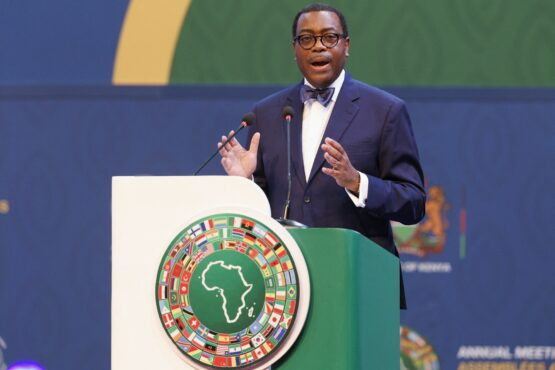
Bloomberg
African nations will spend $75 billion on debt interest payments this year, money they desperately need for pressing issues such as social spending and public investments, according to the African Development Bank.
In addition, the countries will require $10 billion annually for the next five years to refinance loans, AfDB President Akinwumi Adesina said at the lender’s annual meetings in the Kenyan capital, Nairobi.
“There’s something fundamentally wrong for a continent that still needs 600 million people to be connected to electricity, in a continent that still needs money to have 1.2 billion people access clean cooking energy” to pay so much in debt interest, he told the bank’s shareholders on Thursday.
African leaders have been calling for debt relief and more climate finance to help the world’s most vulnerable countries develop their economies. Ethiopia and Ghana are seeking a reorganisation of their debt to free up resources, while Zimbabwean Finance Minister Mthuli Ncube told Bloomberg this week his nation wants “deep haircuts” on debt and the removal of some penalties on arrears.
Africa’s debt problems are compounded by the risk assessments that precede disbursements, which often result in overpriced loans, according to Admassu Tadesse, chief executive officer of the Trade and Development Bank, another pan-African multilateral lender.
“That practice is loaded with so much bias that we end up with very unfair return levels being expected and then you just have hoops you have to jump through that become very, very onerous,” he said.
Funding gaps
The International Monetary Fund estimates about $500 billion is required in the five years following Covid-19 to return Africa to its pre-pandemic pathway to converge with advanced economies.
Financing gaps have pushed African governments toward high-interest debt options, which has resulted in the continent’s debt-to-GDP ratio almost doubling over the past decade to 66%, according to the AfDB.
The Abidjan-based AfDB says its financing capacity over the next decade is about $73 billion, which it will focus on electricity access, food security, industrialization, economic integration, women and youth. The African Development Fund, the lender’s concessional arm, has an additional $26 billion.
“Only a fraction of Africa’s investment requirements will come from international development finance,” the AfDB said in a statement. “Africa needs to mobilise revenue on several levels.”



 Online Reporter