admin
admin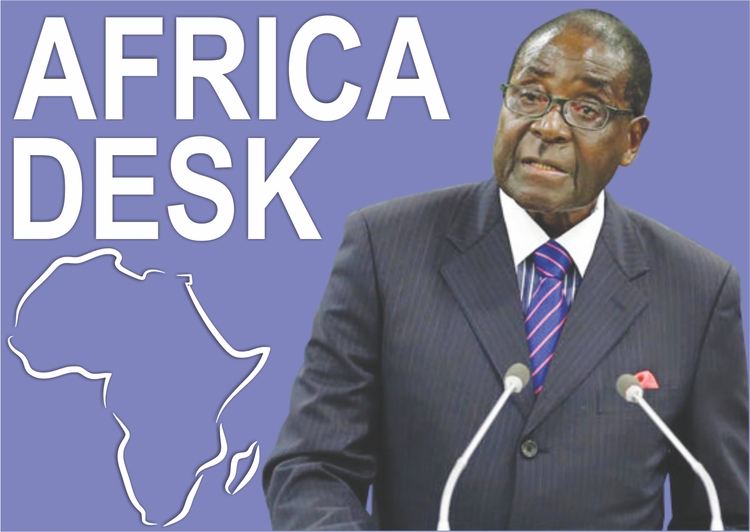
 Zimbabwe’s tenure as Sadc Chair ends next week, with Botswana assuming the post. Our Senior Reporter Lincoln Towindo spoke to the DRC’s Chief Diplomat in Zimbabwe and Dean of African Diplomats, Ambassador Mawampanga Mwana Nanga on President Mugabe’s leadership of the regional grouping.
Below are Ambassador Mwana Nanga’s views.
President Mugabe is an icon of our continent.
The man has a lot of wisdom and there aren’t too many who are still alive to whom our generation can look up to.
He has lived up to the expectations of the region over the year.
And obviously, the biggest achievement Sadc attained during his tenure was, no doubt, the Industrialisation Strategy and Roadmap.
There was a special Summit here, where we had to discuss how the region can grow – industrially.
In his wisdom, he came up with this idea that we need to industrialise as a region and as a continent.
When the Americans had their revolution, they revolted because the British were literally taking them for granted.
They would take their raw materials to Britain, manufacture goods and send them back to America for sale.
Then they said, “No, this cannot go on like this. We have to do something about it.”
They then took their independence and did exactly what President Mugabe is now telling the region and the African continent to do.
He is telling us to add value to what we have and stop sending raw materials to the very same people who not only colonised us, but keep exploiting us up to today and distracting us with these human rights issues – things they didn’t even care about when they were here.
Powder kegs
What he has done as Sadc Chair, is something he has been doing all along.
Remember back in 1998 when Rwanda and Uganda – after being coaxed by the West to destabilise the DRC – tried to split the country into smaller states just like they have now succeeded in doing to Sudan and Libya of Gaddafi.
At that time, President Mugabe was not Sadc Chair, but Chair of the Organ (on Politics, Defence and Security Co-operation) and President Mandela chaired Sadc.
He then called an Organ meeting in Harare to discuss the situation in the DRC.
They sent a team to eastern DRC, which established that it was really an invasion by Rwanda and Uganda, supported by our former colonisers.
They decided that the region needed to help the DRC and that those who were willing to go and assist did not require Summit approval because the situation demanded urgency.
So, Angola, Namibia and Zimbabwe elected to stop the destabilisation.
That situation was much more dangerous than what we witnessed in Lesotho during President Mugabe’s tenure.
Then, if the DRC had been split, the region would not be what it is today.
Now, when xenophobia broke out (in South Africa), President Mugabe stood above board.
I was in that Summit when President Jacob Zuma of South Africa reported what was happening and how, as a region, we could support his government.
President Mugabe then took a position, “Look, this is our problem. We cannot afford to point fingers at one another. We have to deal with this issue in the best possible way to reduce the negative that may come from this problem.”
You could see the wisdom in the man in the way he handled this issue.
Some Zimbabweans were killed while others were maimed in South Africa, but he refused to make a personal issue out of it.
Even President Khama of Botswana – whom the private media here try to portray as being an adversary to President Mugabe – was totally in support.
Because those who were behind this destabilisation and xenophobia only want African leaders to be at each others’ throats.
And in his wisdom, President Mugabe knows that, and he will not give them the opportunity to divide and rule us.
President Mugabe’s legacy
President Mugabe’s legacy does not start with his chairing the African Union or Sadc; it’s a culmination of his lifelong work; what he has been doing all along.
Everything he has done in his life; this is the culmination.
His legacy is not only about chairing Sadc and the AU, but his struggle for the betterment of the lives of the African people – those who were crushed by slavery, colonialism and neo-colonialism.
This has always been his fight and he is carrying on with it.
He breathes these issues everyday.
Wherever he speaks, he wants the African man to empower himself.
It’s a passion for him. And if there is anything that those who will come after him can take from him, is sticking to principle. He has always had his eye on the prize, and the prize is the emancipation, the empowerment of the people who were under the yoke of the coloniser.
Look at the land reform.
Today, there are hundreds of thousands of black Zimbabweans who are planting tobacco and maize, making money on their own.
And now he wants us to take the next step, which is to not just export raw materials, but transform our resources into finished products. Look at a country like Switzerland; what do they have?
But the Swiss citizens are empowered and have a high quality of life because they go outside, get raw materials, make things of high quality and export them all over the world. That is what President Mugabe wants for every African country.
Zimbabwe, for example, produces tobacco, but needs to be producing cigars like the Cubans do and cigarettes of high quality. If you manufacture cigarettes, you multiply your output 10 times.
So, that way, we can have high incomes and the best standards of life.


 Online Reporter