admin
admin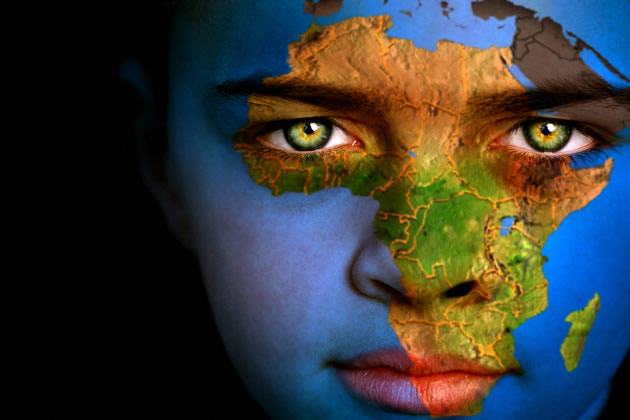
 Joram Nyathi Group Political Editor
NO man is an island, the saying goes; we live in a global village. In both their metaphorical sense, these trite phrases pay tribute to human scientific advancement and the way technology has collapsed both spatial distances and national borders, almost bringing the two hemispherical poles together.
For most regions, this has meant easier interaction between nations, quicker connections and faster trade deals. The iPad and cellphone Internet capabilities mean that we all have ready information at our fingertips and we communicate with trade partners and relatives across the globe in real time.
For Africa, however, these otherwise innocuous phrases have had far reaching policy implications. Relations which obtained in colonial rule have only deepened and exploitation of the former colonies worsened. Africans are not an island, but they are not in the global village either. The global village is a location somewhere out of the continent and we have to work and plan our lives with our eyes firmly set on getting to the village.
Self-censorship
Africa relates to the western world under a heavy burden of self-censorship. We must at all times try to anticipate the reaction of the “global village” to our major policies, rather than stick to what we conceive to be their impact on the lives of our people.
These lopsided, skewed and unequal relations in this global village go way beyond foreign policy. It is our lot to ingratiate ourselves to the whims of those who rule the global village.
As if under a spell, African countries design and formulate their national policies largely to meet the desires and expectations of this global village in which they have minimal influence. Political decisions are made in order to be acceptable to the international community. Whether it be a constitution or a national election, it must be validated by the international community, not those whom it is meant to serve, hence the frequent reference to international best practice. (Never mind that complaints raised by voters or candidates in France are not the same as those raised in Australia, Britain, the US or Germany.)
An election in Africa is only free and fair, legitimate or otherwise, valid or not depending on who wins and the attitude or relations of the international community towards the victor or loser, not those who vote and are immediately affected by the electoral outcome. This has made it a must that the EU and US are invited to observe our elections, otherwise they have the power to declare them a nullity without even observing them.
NGOs
In this global village, the voice of a supranational institution called the NGO carries more authority than the voice of a sitting government, even if that government were democratically elected in a popular vote. These NGOs appear to gain more clout the further afield they venture from their countries of origin, often the United States and the United Kingdom.
The same entities play a commendable role in their country of origin, caring for the poor or mobilising resources in an emergency. They still do in a few cases even in third world countries.
However, there has been a slow but dramatic shift in their focus since the fall of the Soviet Union. NGOs have become very political and assumed a supervisory role in the political affairs of the host nations. It is they who define the quality of democracy, they report human rights violations, and they decide which country deserves aid and which should be put under sanctions. They identify and name for their governments which people should be placed under sanctions, and recommend those who should be taken to face trial at The Hague.
They identify the good and the bad guys.
For Southern Africa, every political formation which challenges a former liberation movement automatically—qualifies for the tag of democratic or good guy. These NGOs are often well funded for their new mission. They are able to recruit into their ranks locally the best intellectuals, scholars, teachers, lawyers and other professionals, in short, the most articulate in society, those who view themselves as the global citizen, the cosmopolitan, for whom, says Obama, virtues like patriotism elicit only contempt. Their voice carries authority, is heard far and wide.
The official voice of government features only in denial, not as expressed views. The net effect of all this is that the government is constantly under the watchful eye of Big Brother, even if that is only an NGO.
Whose economy?
The situation is worse when it comes to economics. It is no exaggeration to say economic policy in Africa is primarily designed to please the global village, to cater for the needs of aliens, not the owners and producers of wealth. Policy should always be outward-focused to attract investors, to be investor-friendly, to be competitive globally.
Thus exports and foreign currency receipts become almost an end in themselves, more important than national food security which has to be supplemented through surplus, subsidised GMO food from Europe and the US.
In this shared global village, it is an economic crime to try and protect your nascent industries if you are a poor third world country. And Africa doesn’t seem to have enough people articulate enough to explain that we are not ready yet for an all-out free market. It doesn’t have politicians with spine to say “no, these nostrums you prescribe have not worked in the past 60 years. Why should we keep taking the same useless drugs like we are morons”? Instead of which we do our best to prove we in fact are.
Zimbabwe has tried to be radical. It is paying a heavy price, condemned at home and in the global village for daring to question orthodoxy. This is a game of numbers.
How Esap hit us
In this context, Professor Tony Hawkins, our own doyen of economics, in the past week made interesting observations. In one, carried in the Zimbabwe Independent, he acknowledges the role of the IMF in the collapse of Zimbabwe’s industry in the early 1990s. In another, presented at a British Council event, titled “Coping with the Future”, Professor Hawkins prescribes for Zimbabwe’s recovery the same poisonous pill he blamed for its decline in the other article.
In “New development models required” Hawkins states that Zimbabwe’s economy experienced a “sanctions boom” through protectionism in the mid-1970s when manufacturing accounted for 22 percent of GDP. The ratio then hit a peak of 27 percent of GDP in the early 1990s. Today, observes Hawkins, manufacturing accounts for a mere 13 percent, employing 97,000 workers from 200,000 at its peak.
What happened?: “There is no single explanation for the decline which began after President Robert Mugabe was persuaded to implement an IMF and World Bank structural adjustment programme in 1991 as a result of which trade was liberalised and manufacturers lost their blanket protection against foreign competition.”
In “Coping with the future”, he tells his British Council audience: Zimbabwe’s “. . . policymakers are locked into the past. They believe Zimbabwe can be rescued from long-run stagnation by an unwieldy combination of State interventionism and direction, and wholesale, growing reliance on foreign capital.”
He explains: “State interventionism includes import curbs, protectionism, State-selected ‘strategic’ sectors, clusters and free zones are favoured, invariably without considering the global and domestic new normal reality. Repeated calls to reduce imports ignore the necessity of penetrating regional and global value chains.”
Is this unintended contradiction or deliberate dissembling?
Going forward
That aside, Hawkins makes important observations. He is one of the few to openly acknowledge that Esap was bad for Zimbabwe as it triggered industrial decline, not the myth of gratuity payouts to war veterans, military intervention in the DRC or the land reform, all of which came when manufacturing was already down to 13 percent of GDP from 27 percent at the launch of Esap in 1991.
He is also critical of the media and “analysts” for their “short-termism” and treating Zimbabwe’s predicament as if it were “unique”, thus causing unnecessary alarm. Global economic growth has slowed post-2009. So what is the “new development model”? He trashes beneficiation in favour of leaping to the service sector, Asian tiger-style.
How does Zimbabwe “cope with the future?” There will be need for “agglomeration” in the farming sector to attract meaningful investment. More sobering, he counsels: “Zimbabwe will – eventually – adapt to the fast-changing world economy by rebalancing and restructuring. The country cannot go on living outside its means – over-consuming, under-saving and under-investing.”
Zimbabwe’s economic development demands a revolution, fresh modes of thinking. Currently our policies are formulated to meet the requirements of an unpredictable fairy, are based on an illusion that if we do this and that, the fairy, the elusive suitor, the investor, will come to our rescue.


 Online Reporter