Chronicle Editor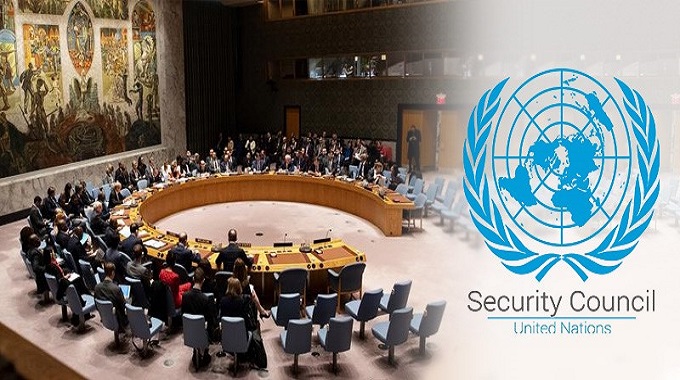
Gibson Nyikadzino, Zimpapers Politics Hub
IS the US and other permanent members of the UN Security Council (UNSC) proposal to give Africa two permanent seats, without veto power, doing so on the idea of genuine institutional reforms?
Before fully welcoming this idea, which can be a good start, its totality should be seen on the basis of having African countries that will serve in the UNSC as sovereign members, with an equal status and veto power. Overall, this is an opportunity that Africa cannot miss, only when done on the premise of sovereign equality.
With five permanent members (P5) and 10 rotating temporary members, the UNSC is the world’s most powerful security body. Britain, China, France, Russia and the US are the permanent members.
The council grants the P5 members the desired veto power and ensures that they always have a voice on world security matters. Three of the six populous continents have permanent members, whereas Africa, the second-largest continent in the world, lacks one. The US is from North America, China is from Asia, the UK and France are from Europe, and Russia is in both Europe and Asia.

This structural makeup that the UNSC has today, since 1945, by applying African intellectualism, is a bygone of the colonial era. Back then, many African countries were under colonialism by 1945, and the colonisers officially represented the African people at the UNSC.
It is terrible that Africa is still conspicuously under-represented in the Security Council, as this goes against the ideals of inclusion and equity.
While this signals reform, the invitation or proposal at hand is not only meant for Africa. The US is also backing India, Japan and Germany to come in as new permanent members in these Security Council reforms.
Without granting the new members veto power, this can be fully interpreted as a geopolitical game where the US wants to look good, mainly in the eyes of Africa.
It is imperative to note that this initiative is being announced by the US a fortnight after the Forum on China-Africa Cooperation (FOCAC) was held in Beijing, where more than 50 African leaders attended and China pledged to provide over US$50 billion in funding over the next three years.
Another FOCAC commitment was that China would continue to be Africa’s unwavering and reliable security ally.
Africans must not be naïve. It would be good for them to read between the faulty geopolitical lines — the competition of confrontation involving Washington, Beijing, Moscow, and other states as the foundation to evaluate this US proposition. It is fact that this push is a promise or a commitment that US President Joe Biden is trying to fulfil before the end of his term.

For this reason, the US is currently pursuing a number of initiatives in Africa related to transportation and logistics as well as investments in vital minerals, among other things. All of this is therefore a part of the US’ current courtship with Africa.
Pertaining the proposals to Africa, there are a few combinations to anticipate on which two countries can have the permanent seats: South Africa and Nigeria and Egypt and South Africa. These are the continent’s three biggest economies.
However, the absence of veto power will likely discourage these nations from agreeing to take a seat as permanent Security Council members, as that will resemble an unjust global distribution or redistribution of power.
Africa is disproportionately represented in the problems that global governance organisations like the UN are meant to solve, and it is under-represented in these structures, from the Security Council to international financial institutions.
For example, the agenda of the Security Council illustrates how conflicts, crises, and geopolitical divisions significantly affect the African continent. Many of its disputes on its agenda, whether national or regional, almost all involve Africa. And this is now time for positive change.
What cannot therefore be disputed is that Africa’s significance for many decades to come and its relevance to global governance is being noticed by the US and other permanent members of the Security Council.
There are demographic facts that emphasise this significance which is being felt from now into the coming years, even up to the end of this century.
In terms of area and population, Africa is the second largest continent in the world, ranked second only to Asia on these metrics. It is also the youngest continent in the world with an average age of 19, while every other continent is becoming older.
Asia, Ocenia and South America have median ages of 31, while Europe has 45 and North America has 39.
On that logic, Africa is a young continent that is expanding, and it is projected that approximately 40 percent of all people on earth will be residing in the continent by the end of the century.
It is unacceptable that a continent with a population of well over 1,4 billion people, a population that is young and expanding quickly and accounts for 28 percent of the UN membership, does not have a permanent voice in the world’s leading peace and security body.
So, why does the US and the P5 members want Africa to have two permanent seats on the Security Council, but without veto power?
In most cases, US proposals in the Security Council usually get the backing of other members. This proposal is however not peculiar in any way.
The European Union (EU) in May this year passed a resolution supporting two African seats in the Security Council, so has Britain, China, France and Russia. So, what is being pushed is neither odd nor is it out of step with what is being pushed generally.

It does not however mean it ends there, and that it will not fail as a result. Just because P5 members want the proposals to work does not mean they will succeed. To make this happen, there is need for compromise and deals between Russia and China, and France and Britain.
What is of concern is that the US is not explaining how the present setup will function. This failure to explain the working modalities and frameworks of both the current and new setup including two African countries, Japan, India and Germany, for a start, represents a clear lack of political will.
The current proposals, because of a lack of clear frameworks, should not be rushed and accepted by African leaders.
Rather than being the mastermind behind the creation of a new international system that reduces global dysfunction and welcomes the new rising powers, the US and the P5 members are clinging to the structure established about 80 years ago.
This outdated kind of power is the stumbling block into the future in certain ways. A future in which the significance of the P5 members to the real dynamics of power in the globe is becoming clearer.
While this is a crucial start to what Africa has been calling for, the explanation of making the UN a more representative body is one-dimensional and cannot be the absolute truth.
These reforms, with the inclusion of Germany, India and Japan, should also be looked at in the context of the restructuring of geopolitical competition among great powers and the race to expand spheres of influence in many contexts.



 Online Reporter