

 Chronicle Editor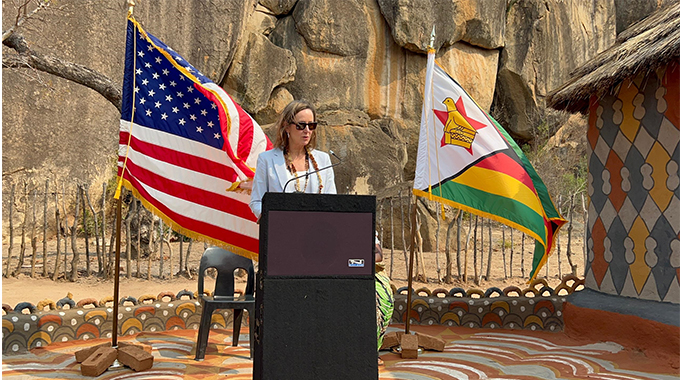
Mbulelo Mpofu, recently in Nathisa, Matobo District
ON Friday, US Ambassador to Zimbabwe, Pamela Tremont, announced an initiative to preserve the San rock art in and around the Matobo Hills World Heritage Site.
Through the Ambassador’s Fund for Cultural Preservation (AFCP), the project has received US$125 000 from the Bureau of Educational and Cultural Affairs (ECA) of the US Department of State, marking a significant investment in the rehabilitation of San rock art at Pomongwe Cave and fostering community appreciation and protection of these cultural treasures.
During the launch event, Ambassador Tremont welcomed local and traditional leaders, government representatives and community participants to commemorate the vital conservation effort.
“This project will complement the work done by numerous Zimbabwean institutions responsible for the preservation and documentation of cultural heritage,” she stated.

The ECA aims to foster mutual understanding between the US and countries around the world through academic, cultural and professional exchanges. The AFCP supports projects that preserve a wide range of cultural heritage in less developed countries, including historic buildings, archaeological sites and traditional cultural expressions.
The initiative focuses on safeguarding the rich heritage represented by the rock paintings within and around Matobo National Park, a Unesco World Heritage Site. Pomongwe Cave, one of the park’s most visited sites, exemplifies both the challenges and opportunities for rock art preservation.
Ongoing threats, such as environmental damage from dust and animal interference, will be addressed through enhanced documentation and conservation efforts, as well as fostering a sense of heritage awareness within local communities.
The preservation project will be implemented in partnership with organisations such as the Friends of the Museum of Human Sciences, Amagugu International Heritage Centre and the University of Zimbabwe’s History, Heritage and Knowledge Systems Department.
The National Museums and Monuments of Zimbabwe and Unesco have also provided invaluable support to ensure the project’s success.
“This project will benefit from local expertise, as Matobo residents will lead in the documentation and interpretation of the sites. Your voices and perspectives will shape the project’s direction and build long-term sustainability in rock art preservation,” said Ambassador Tremont.
The AFCP initiative is part of a broader effort that has seen eight projects supported since its inception in 2007. Leading the charge is popular muralist Leeroy “Sphinx Bow” Brittain, who has been teaching locals how to paint and preserve the art while providing an overview of the community project.

Sphinx Bow gave the Ambassador a chance to draw something on a mural set to be presented to her at the US Embassy in Harare.
Professor Seke Katsamudanga, Senior Lecturer in Archaeology at the University of Zimbabwe, provided insights into the historical and cultural significance of the rock art.
“The rock art of Zimbabwe is an important resource that has historical, cultural and scientific value. These artworks date back over 10,000 years and reflect early human communication through visual art, conveying social lessons and spiritual beliefs,” he said.

As part of her itinerary in Matabeleland, Ambassador Tremont also hosted an event in Bulawayo titled “Energising the Investment Climate,” where she discussed strategies to boost investment and support Zimbabwe’s growth.
At a reception in Bulawayo, Ambassador Tremont reaffirmed her commitment to strengthening ties between the US and Zimbabwe, emphasising the importance of cultural preservation as a means of fostering mutual respect and understanding between nations. — Follow on X @MbuleloMpofu



 Blessing Chizhande
 Online Reporter