admin
admin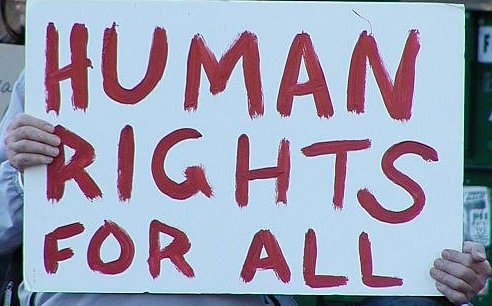
 Gibson Mhaka
OCTOBER 21 was African Human Rights Day — a day whose roots go back to the African Charter on Human and Peoples’ Rights which came into affect on 21 October 1986 with the aim of promoting and protecting human rights and basic freedoms on the continent.
The African Charter on Human and People’s Rights (also known as the Banjul Charter) which emerged under the aegis of the then Organisation of African Unity, now African Union is an international human rights instrument which recognises most of what are regarded as universally accepted civil, political, economic, social and cultural rights.
It states that all human beings have the same fundamental rights, irrespective of race, colour, sex, language, religion, political or other opinion, national or social origin, property, birth or other status.
There is no doubt that in Zimbabwe the day went unnoticed although some sections of the media, civil, political organisations and some entrenched opportunists hijacked it claiming to be mindful of the crucial role the rest of the continent has to play to observe and respect human rights. They marched on the streets with the words “democracy and rule of law” being their favourite songs.
At an event to mark the day, a local Western-funded and pro-MDC-T human rights organisation, Zimbabwe Lawyers for Human Rights (ZLHR) fingered the Zimbabwe Republic Police accusing them of acting with impunity by beating people and banning trade union activities.
However, ZLHR has to be reminded that the police are there to maintain law and order and it does not matter who, if one threatens them with force they would answer back with minimum force and there is no regret for that since they would be doing their work.
Indeed and according to the United Nations and some non-governmental observers the state of human rights in Africa is generally reported to be poor and therefore is seen as an area of grave concern and for that reason they blamed “continental overseers” of the African Charter on Human and Peoples’ Rights.
This is so, it is alleged, because African leaders are refusing to abide by the dictates of the African Charter on Human and People’s Rights saying they are not premised on ridding the continent of the remaining vestiges of colonialism and apartheid, promote unity and solidarity among African states, coordinate and intensify co-operation for development, safeguard the sovereignty and territorial integrity of member states as well as promoting continental cooperation within the framework of the African Union.
Given the foregoing, it is prudent for African leaders to come up with a reasonable and independent set of rights which are not Western-modelled but in tune with African norms and values.
This recognition is very important because the concept of human rights as it stands today is generally and historically understood as Western. The concept of human rights is seen in a Euro-American prism which, it goes without saying, is inherently not in tune with what are regarded as human rights from an African perspective.
There are many examples to demonstrate this. It is a matter of “human rights” in Europe or America for a man to marry a man or a woman to marry a woman, but in Africa, it is an unspeakable abomination.
In American or European children as young as 10 years can refuse chastisement from his or her parents in the name of child rights, but in Africa, a person is his or her parents’ child for as long as they live.
The dominant human rights discourse does not recognise these fundamental differences as it is the Western view that dominates.
Africans are forced to interpret, respect and reflect “human rights” through Western spectacles because the so-called African Human Rights are enshrined and modelled along the Western style “democracy” which is undoubtedly eroding African values.
In a paper titled: “Human rights in Africa: opportunities and challenges”, to Rhodes House Scholars at Oxford University on 14 February this year, UN Human Rights chief Ms Navi Pillay praised the so-called human rights defenders in Africa, claiming that without them many democratic societies on the continent and elsewhere “would lose a vital pressure point and resource.”
Describing the so-called human rights defenders in Africa Ms Pillay said: “They uphold the right to education and equality, to freedom of speech and of opinion. They campaign against the exploitation of natural resources by exploitative multinationals and overlords who seek to dispose of the nation’s property as though it were their own. The human rights defenders of Africa are standing firm and staring down monsters”.
She added: “No one should be excluded from decision-making because they are African, or female, or belong to a minority, or worship a certain religion, because they are gay, have a disability or particular beliefs. We all should have a voice that counts in our societies”.
There are no prizes for guessing that the so-called human rights defenders are devious non-governmental organisations (NGOs) which are being used by Western countries to front their imperial interests, foment political instability, pursuing illegal regime change agendas in Africa as well as bribing the masses through aid in a bid to have them mortgage their sovereignty.
These human rights “defenders” which are a bastion of Western “civilisation” working in cahoots with anti-African opposition parties are also a security threat as they take advantage of the challenges facing the continent to satisfy Western political and economic goals.
They are contaminating African values through the so-called Western civilisation and culture under the guise that they are advancing African human rights. They strongly condemn African ways of doing things as primitive, archaic and unacceptable in public domain.
Faced with this onslaught on the African value systems by the Western values, Africa should respond by working hard to salvage its pristine values that can morally, economically, politically and religiously shape the continent.
We know that the Western and Western-funded human rights guardians would always be quick to disregard any efforts by an African government to resist European domination and subjugation as a violation of human rights.
One African scholar puts it: “It is now suffering from level of mental enslavement, cultural imperialism, the need for decolonisation of the mind. The trend of Western civilisation in Africa is pathetic; the strength of Western civilisation wave is such that Africa is hardly capable of resisting it. The wave is so strong that it has become irresistible”.
The odds pitted against us are huge, but that must not deter us from seeking values that are African. African nations should stand firmly behind each other in the face of barrage of criticism and baseless accusations of human rights violations from their erstwhile colonial masters by telling them that fallen angels have no right to preach human rights to us.
Yes, we appreciate that in some cases human rights have been violated by African governments, just as much as America and Europe have done the same throughout history but, any understanding of those violations must be based on African values, not Anglo-American ones.
The slave trade, colonialism and ongoing proxy wars in Libya, Democratic Republic of Congo and Egypt constitute some of the gravest human rights violations by Westerners on the continent of Africa. Because the overriding perspective defining what human rights violations are is Western, these examples are seldom regarded as such.


 Online Reporter