admin
admin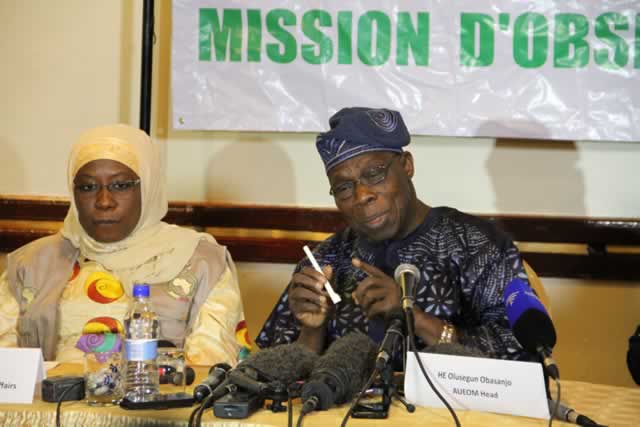

Tichaona Zindoga
The word expediency means doing what is convenient rather than what is morally right. In politics, this is one word that is often pouted by those with, or with pretensions of, standing who usually take upon themselves to condemn actions that would have been done “for political expediency”.
After pronouncements by Sadc and the African Union and particularly so the former, on elections — declaring them free, peaceful, “and generally credible”, the murmurs accusing the bodies of being “politically expedient” have been heard.
From those who have been inconvenienced by the same, of course! So have gone the accusations: Africa wanted to see the back of Zimbabwe as an agenda item, having so pre-occupied the continent, especially its subaltern, Sadc, for the better part of the past five years.
Africa had to move on!
And President Jacob Zuma of South Africa was, in his prompt nod of July 31 and offering his “profound congratulations” to the winner, President Mugabe and Zanu-PF, fingered out for washing his hands off Zimbabwe — rather too quickly.
In light of the above, it would be instructive to establish whether Africa was simply being expedient in nodding to July 31. (The other accusations being that Africa could not be seen to condemn Zimbabwe while it risked real crises elsewhere, past, present and future, especially in places like West Africa where processes such as elections, where known, are real catastrophes.)
In establishing whether Africa was simply being expedient or not one has to look at two fundamental things.
First, Africa had boots on the ground, with hundreds of observers who came and saw and were impressed.
Or rather, in the words of former Nigerian president Olusegun Obasanjo, in the absence of a perfect election anywhere in the world July 31 had a lot of decency.
Secondly, what was at stake on Zimbabwe?
In addressing this, one realises that as a matter of fact, expediency is what Africa rejected on Zimbabwe.
With Britain, US and the EU as well as their sidekicks such as Australia, all supposed big brothers and big brothers with a grudge with Zimbabwe, every step of the way was being watched.
Besides, these countries had been excluded from observing elections. They were watching. They waited.
They could were ready to pounce on, or embrace Africa; the latter for the one obvious reason namely that Africa had to concord with their prejudices.
The risk in the former, for Africa, being that the big brother holds the purse.
Big brother Barack Obama had been here too.
He had visited South Africa, Zimbabwe’s supposedly most influential neighbour, only a couple of months before the crucial election. He also visited Tanzania. Both countries were influential, South Africa being the Sadc-appointed facilitator to the intra-party dialogue and Tanzania being the chair of the Sadc Organ on Defence and Security.
Yet Africa was very brave.
Olusegun Obasanjo, for his recent pedigree which saw Zimbabwe being lynched by the same white countries at the Commonwealth in 2003, was very brave.
He even challenged the gods to fairness of the games of elections. Such cheek! Such obduracy!
Then comes one Bernard Membe.
He is the Tanzanian foreign minister we hear might even succeed incumbent Jakaya Kikwete.
Both men rang endorsement of July 31. But Membe went further to encourage the losing candidate, Morgan Tsvangirai — the protégé of the West — to concede defeat. Consider this; what he said after the elections:
“I will be meeting the Prime Minister to talk to him because as I said, the pure democratic dispensation and maturity in the world is not about campaigning, it is not about voting, it is about conceding defeat even if it is so painful.
“I think that is our task to convince politicians that to complete this process of democratic requirement is to make a concession, to concede defeat, it builds you, it builds the country, that is the catch of politics and that is what we are trying to go and convince him.”
As if that was not enough, last week, while delivering Sadc’s final statement on the outcome of the July 31 harmonised elections, he shut all doubt and certified the election “generally credible” the apparent withholding of which stamp earlier had left some quarters with some equivocation.
Now knives are out for Membe and for Sadc.
MDC-T says Sadc should trash and withdraw the “Membe report”. The party’s secretary general Tendai Biti, whose party’s reversal on July 31 has awakened in him some extraordinary public rantings and mournful monologues, is a bitter man.
He was quoted as saying: The report concludes that the election was ‘generally credible’. With all due respect, the people of Zimbabwe need a free, fair and credible election that allows them to move forward not an election that is ‘generally’ credible. An election that is “generally” credible is new lexicon in the field of election monitoring”.
Needless to point out, in the field of MDC-T politics, a result that does not favour the party renders the contest a farce. Africa didn’t think so this time around.
Africa passed the African test and expediency in the face of Western big brothers is what they rejected.



 Online Reporter