Online Reporter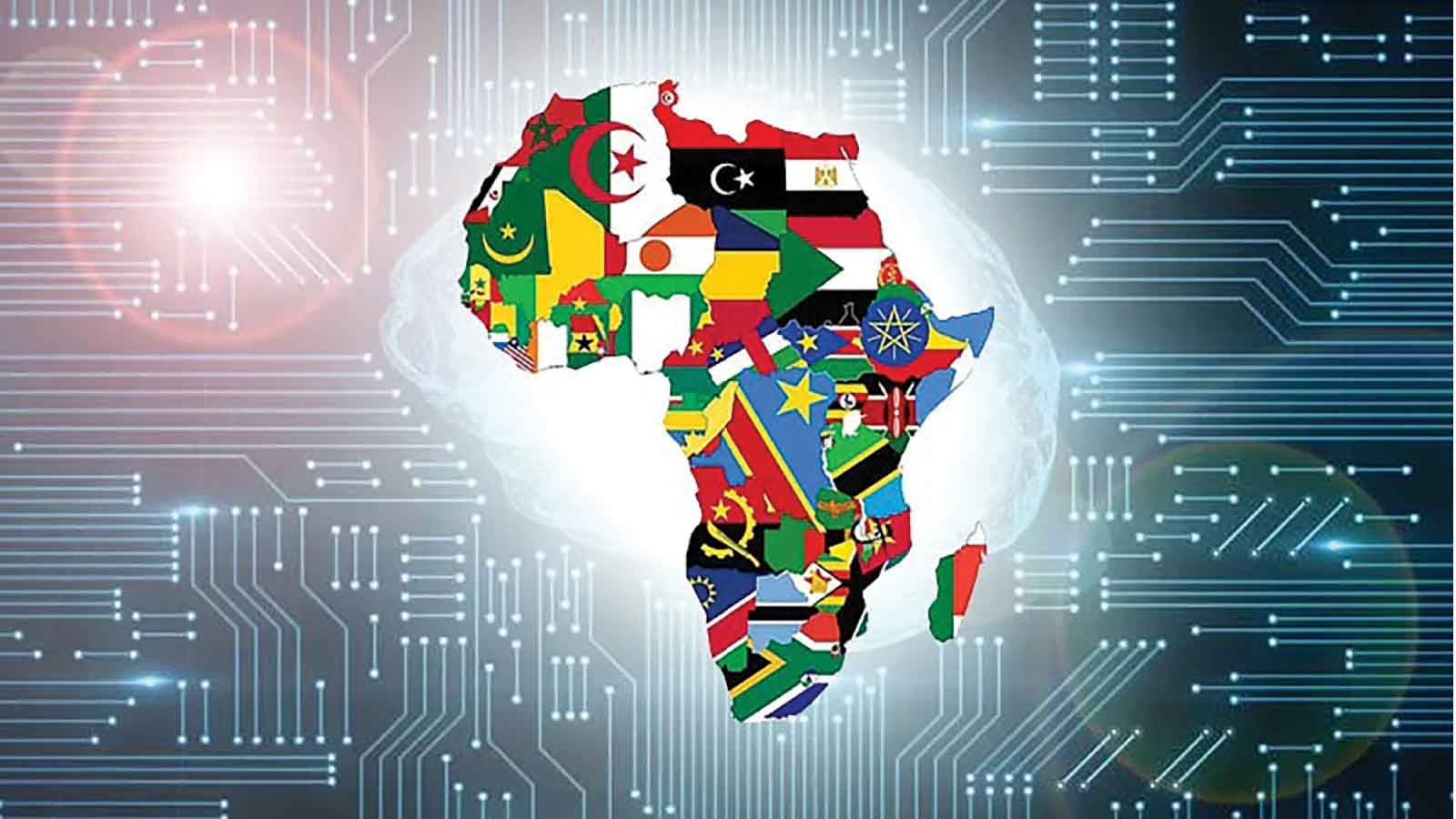
Victoria Ruzvidzo
Editor’s Brief
Today, Africa reverberates to its rhythmic sounds as joy, pride, exuberance and energy punctuate celebrations across our beautiful continent.
It’s Africa Day, which marks a commemoration of the continent’s fortitude, resilience, diversity, culture and so much more that we are endowed with.
Concerts, cultural festivals, road shows and displays are part of these celebrations.
They indeed signal triumph over a tortured and tortuous past where colonialism and white minority rule rendered Africans second grade citizens in their homeland.
Land seized, resources plundered and racial discrimination were the order of the day. In the process mental anguish of unimaginable proportion was inflicted.
Add to that, the inferiority complex it spawned, with some even yet to recover to this day. But Africa is rising and many of its challenges have been overcome, or are still work in progress overall. The continent can no longer be referred to as the dark continent, whatever that meant.
There is quite some light in the continent both literally and metaphorically.
Africa is becoming a force to reckon with on many fronts. Its competitiveness as an investment destination, a sporting hub, tourist attraction, a player on global trade platforms and many others has improved significantly.
Indeed, Africa Day marks the founding of the Organisation of African Unity (OAU) in 1963, which later morphed into the African Union (AU) in 2002.
The day celebrates the continent’s unique culture, unity and progress so far. It is an opportunity to discuss and debate our current circumstances and reflect on the challenges we presently face and pre-empt those that lie ahead. So much has been accomplished over the past few decades and much more is still to be realised. This is a continent full of possibilities in all spheres of its existence.
The AU’s “Agenda 2063 – The Africa We Want” is a 50-year blueprint subsisting from 2013 to 2063 whose seven aspirations are:
- A prosperous Africa based on inclusive growth. This is marked by high living standards, ending poverty, reducing inequality, creation of jobs, especially for the youth, improve housing, water, sanitation and social protection.
- An integrated continent-roads, rail, air and digital connectivity.
- An Africa of good governance, democracy, respect for human rights, justice, and rule of law.
- A peaceful and secure Africa without wars, conflicts and violence.
- Africa with a strong cultural identity, common heritage, values and ethics.
- A continent whose development is people-driven, relying on the potential of its people.
- Africa as a strong, united global player and partner. One that speaks with one voice in global affairs and shapes international rules.
The collective is an abiding refrain on the continent, consistent with the spirit of ‘Ubuntu” – I am because we are. It says one cannot be fully human by themselves. Community, reciprocity make you who you are.
There is even Ubuntu in business which speaks to participatory leadership and stakeholder welfare. A cursory look at modern and responsive leadership reveals this element.
Nkosazana Dlamini-Zuma served as chairperson of the AU from 2012 to 2017 and she is credited for pushing Agenda 2063. It is a long-term plan with clear goals on infrastructure, youth and climate change, amongst other facets that pertain to the continent.
It is a continental vision as opposed to fragmented national plans. Each year, it identifies a running theme beckoning action. This year, the focus is on water and sanitation. The AU was crucial in Africa’s response to Covid-19 and averted the Armageddon predicted by some in the West.
Its predecessor, the OAU, served very useful purposes, primarily decolonisation. Between 1963 and 1994, 21 countries were liberated, Zimbabwe included.
The OAU also set up the Liberation Committee to fund and support liberation movements. It aimed to enhance sovereignty and territorial integrity.
As is easily understandable, newly independent states were delicate and somewhat apprehensive about external threats. Furthermore, economic co-operation and development was under the spotlight as was peaceful conflict resolution through diplomatic channels and not war.
As one commentator noted, the OAU succeeded at decolonisation, but did not win much in terms of economic development and that is where the AU took off.
In this regard, Zimbabwe has played an active role in the African narrative. Southern Africa’s decolonisation narrative would be incomplete without noting the country’s defining role. It became a base for supporting liberation movements in Namibia, South Africa, while It has unflinchingly pushed for regional integration.
It has boldly driven the anti-sanctions agenda and prudently advocates African solutions to African challenges. Furthermore, it is applauded for its role in spreading the beneficiation drive. Zimbabwe banned raw lithium exports, insisting that processing is done internally. Some of the big mining firms are building in-country refineries, and this is in tandem with Agenda 2063.
In education, the high literacy rates created a skilled diaspora which is active in areas such as technology transfer, health and finance, across the continent and globally.
In addition, universities such as National University of Science and Technology, the University of Zimbabwe and the Zimbabwe Open University train students from the SADC region and beyond.
Zimbabwe recently shined the light on the continent when it was awarded the 2025 best tourism destination. On the sporting and cultural front, Zimbabwe’s achievements in rugby and cricket gave the region visibility.
Of course, we have musicians such as Jan Prayzah, the late Oliver Mtukudzi and Thomas Mapfumo who have made a name for this country and the continent at large.
The Africa Continental Free Trade Area is probably the greatest initiative this century set to boost intra-Africa trade, while transforming the continent into an international trade behemoth. It is working with the International Trade Centre (ITC), which is the UNTO trade support division for small businesses. It has been working with AU to assist African exporters translate AfCFTA into tangible results.
ITC helps with training, market analysis and in connecting exporters to buyers. It estimates that intra-African trade could rise by US$22 billion annually by 2029 through tariff cuts and regional value chains.
Bigger exports are anticipated with the World Bank and AfCFTA projecting intra-African exports to increase 109 percent and global exports up 32 percent by 2035 with full implementation. The same model shows 50 million people lifted out of poverty by 2035.
Women and skilled workers see the biggest wage gains, at 11,2 percent for women and 9,8 percent for men.
There is great emphasis on industrialisation and diversification, with manufacturing, agro-processing, mining beneficiation, automotive and Fast Moving Consumer Goods (FMCG) having been identified as the main drivers. Events such as the Manufacturing Indaba 2026 are framing AfCFTA as the route to a US$3 trillion market for Made in Africa products.
SMEs are seen as pivotal in job creation, innovation and cross-border trade contingent on the provision of finance and requisite infrastructure.
AfCFTA is seized with bankable projects in green industrialisation to attract funding.
There are also clear challenges and risks on the continent with regards AfCFTA which the continent needs to work on.
For instance, only 37 countries out of 55 have submitted tariff schedules and free movement is still under negotiation. Non-tariff barriers are a stumbling block. At least 50 percent of cases filed through AfCFTA were not resolved as of last year.
It is easy to discern that success depends on members aligning national trade, investment and regulatory policies with AfCFTA goals and having the technical and financial capacity to do so.
Issues such as uneven benefits are a real concern where countries with strong manufacturing bases like South Africa, Nigeria and Egypt could gain more, while smaller economies risk fiscal losses and threats to infant industries.
However, there is more to gain under AfCFTA and identified challenges can be ameliorated or eliminated completely if all the parties concerned apply themselves fully.
On another note, the African demographic dividend presents tremendous opportunities. According to the United Nations, Africa’s population is the youngest in the world with an average age of about 19.2 years in 2026.
At least 6o percent of the population is under 25 years in most countries. The overall population is about 1,58 billion in 2026 and is projected to hit around 2,4 billion by 2050.
Fertility rates are still above replacement level in most Sub-Saharan Africa so the youth numbers keep expanding.
There are huge potential economic benefits to this. For example, the working age population is growing faster than dependants.
If jobs and skills are synchronised, this can drive growth, akin to East Asia’s boom in the1980s and 90s. Furthermore, this presents a young and growing consumer base, while innovation is bound with young Africans leading in mobile-first technology, fintech and digital trade under AfCFTA.
If this demographic dividend can be utilised, then it means more manufacturing, tech adoption and intra-African trade. The continent’s average age will not rise significantly until after 2050.
So, there is a 20-30 years window period. The youth are the decisive factor, in the main, whether the next 25 or so years are about growth or otherwise. Africa can rapidly shrug off the dark continent tag as the young rise to the occasion to develop the continent.
Disease and poverty are an existential challenge that needs tackling. As of 2024, 45 percent in the African region lived below a dollar a day, classified as extreme poverty and the World Bank’s 2025 Macro Poverty Outlook projects negligible reduction due to slow growth and debt pressure.
On the other hand, the World Health Organisation and UN Data give insight into the prevalence of diseases on the continent, with 90 percent of all global malaria deaths occurring in Africa. Neglected Tropical Diseases (NTD) inordinately affect impoverished families with poor water and sanitation.
But it’s all not doom and gloom. Progress is being made on both fronts and the potential, is there for disease prevalence and poverty to be ameliorated sooner rather than later. It can be done. The solution lies in investments in the health system and poverty reduction as is evident from the foregoing.
Targeted nutrition programmes, vaccinations, cleaner and safe water provision, empowerment in terms of knowledge and resources can help the continent overcome most of these challenges.
With achievements made so far in many spheres, this continent we call home has good reason to celebrate. A number of milestones have been attained since decolonisation.
Africa is on an upward trajectory, we possess an indefatigable spirit, a rich culture, a youthful population and increasingly adaptable human capital.
Our growth outlook is commendable at 4 percent in 2026 and 4.1 in 2027, surpassing the global average of 2.7 percent.
We derive hope and belief from our resilience, diversity and the increasing realisation that the solution to our challenges lies within the continent. President Mnangagwa’s mantra says “Nyika inovakwa nevene vayo”, by extension, so does the continent’s.
In God I Trust.
X handle: @VictoriaRuzvid2; Email: [email protected]; [email protected]; WhatsApp number: 0772 129 972.