Sekai Manyere-Herald Reporter
AFRICA must seize the opportunity presented by rapid urbanisation to build climate-resilient cities from the outset rather than lock future generations into carbon-intensive infrastructure and unsustainable patterns of resource consumption, National Housing and Social Amenities Minister Professor Paul Mavima has said.
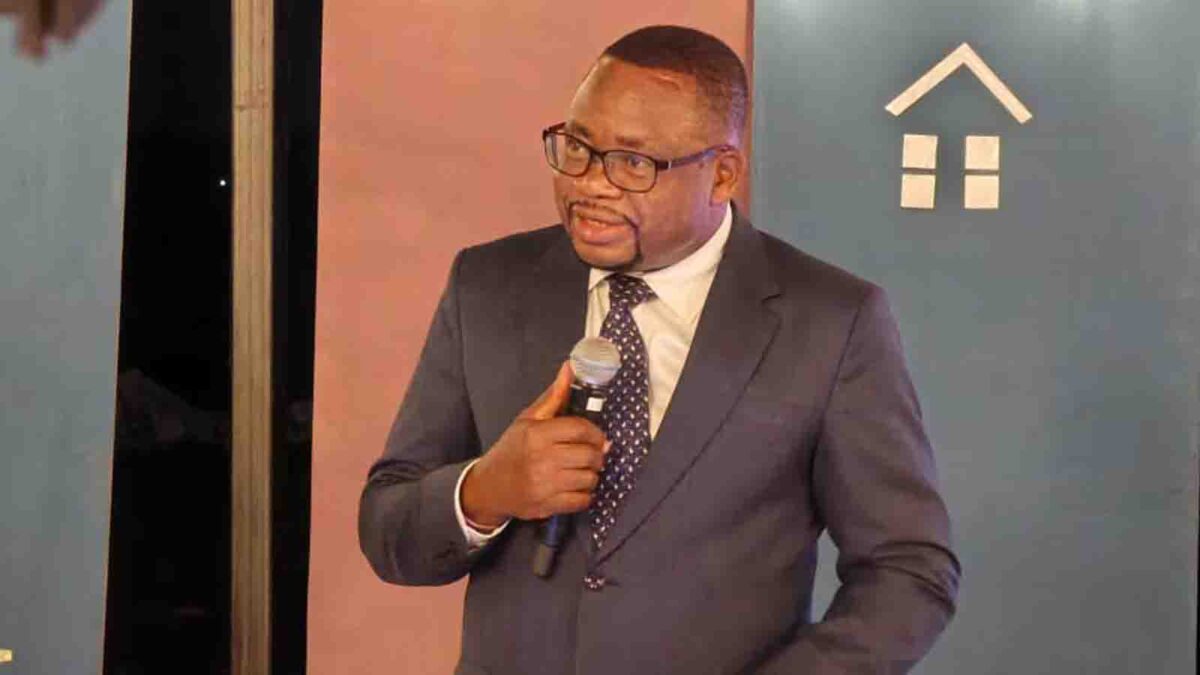
Speaking at the Africa Green Building Summit 2026 in Harare yesterday, Prof Mavima, who was represented by Deputy Minister Musa Ncube, said the continent was at a critical juncture as its urban population continued to grow rapidly.
Hosted for the first time in Zimbabwe by the Green Building Council of Zimbabwe (GBCZ), the summit brought together delegates from across the continent under the theme, “Building Africa’s Green Future: Policy, Practice and Finance for a Climate-Resilient Built Environment.” Prof Mavima said demographic projections showed that Africa’s population would surpass 2,5 billion by 2050, with more than 60 percent expected to live in urban areas.
“Crucially, industry data reveals a striking reality: more than 75 percent of the structures that will exist across Africa by 2050 are yet to be erected,” he said.
Unlike industrialised regions, which face the costly task of retrofitting centuries-old, high-emission infrastructure, Africa has an opportunity to embrace sustainable construction from the beginning, he said.
“We have the rare opportunity to conceptualise, fund and build our future habitats correctly, right from the foundational block.
“Inaction will lock our communities into carbon-heavy, resource-depleted cycles for generations. Hence, sustainable housing matters profoundly today,” he said.
In Zimbabwe, Prof Mavima said sustainable housing development was integral to the country’s broader economic transformation agenda under President Mnangagwa and aligned with the United Nations Sustainable Development Goals (SDGs).
“Our housing agenda actively champions SDG 11 by expanding access to safe, affordable and resilient dwellings, while advancing SDG 13 (Climate Action), SDG 6 (Clean Water and Sanitation), and SDG 7 (Affordable and Clean Energy),” he said.
He said Zimbabwe was also committed, under the Paris Agreement, to reducing economy-wide greenhouse gas emissions by 40 percent by 2030, a target that required the residential sector to move away from inefficient energy systems and carbon-intensive building materials.
“We synchronise our objectives with ‘The Africa We Want’, strongly backing the Africa Manifesto for Sustainable Cities and the Built Environment,” he said.
Prof Mavima said the Vision 2030 ambition of attaining upper-middle-income economy status, supported by the National Development Strategy frameworks, placed sustainable urban development at the centre of national planning.
Therefore, the Ministry of National Housing and Social Amenities is focusing on providing accessible, quality housing and essential facilities, including the renewal of established suburbs, modernisation of rural housing and development of smart cities.
“Our housing delivery model has fundamentally evolved from simply tallying completed structures to evaluating the longevity of sustainable units.
“We now mandate energy-efficient lighting, solar water heaters, rainwater harvesting mechanisms and eco-friendly regional materials as foundational criteria for public housing initiatives,” he said.
He said addressing the housing backlog, particularly in informal settlements, while meeting growing demand for accommodation required a combination of indigenous architectural knowledge and modern, low-carbon construction technologies.
Prof Mavima said achieving sustainable urban development targets would require close collaboration between policymakers, construction professionals and other industry players.
He described GBCZ as a key strategic partner to Government in providing technical expertise, professional training and certification systems to promote environmentally sustainable building practices.
“Let us construct an Africa that grows in absolute harmony with nature, fulfilling the promise of ‘The Africa We Want’,” he said.